International Sanctions on Taliban, Relief Efforts Delayed by Bad Weather
Taliban Government Ends Missing Persons Search After Two Days... Requests Help from International Community
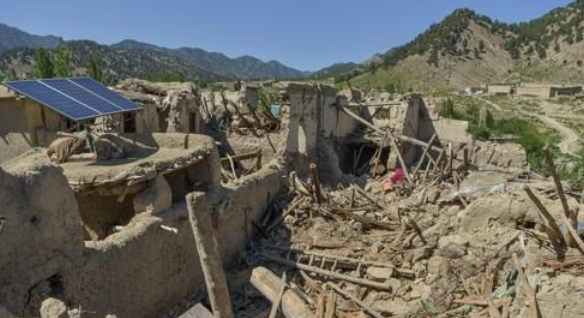
[Asia Economy Intern Reporter Kim Se-eun] Amid severe damage caused by a strong earthquake in Afghanistan, international relief efforts supported by the global community are also facing difficulties.
According to AP News on the 25th, international organizations such as the World Health Organization (WHO), World Food Programme (WFP), and United Nations Children's Fund (UNICEF) are sending support teams and relief supplies to the earthquake-affected areas in Afghanistan. Several countries including South Korea, Pakistan, Iran, Qatar, and Japan have also joined in providing aid.
However, relief operations are progressing slowly. The main reasons cited are the incompetent administration of the Taliban government and its status within the international community.
The Taliban, which took power in Afghanistan last August, is under international sanctions, making it difficult for relief organizations to send funds smoothly to the region. In particular, since cash cannot be delivered directly to the Taliban government, alternative routes must be found.
Moreover, since the Taliban assumed power, the activities of international relief organizations within Afghanistan have been significantly curtailed. Some organizations that had to leave Afghanistan have expressed caution about resuming operations locally despite the severe earthquake damage.
Kabul International Airport, the main entry point for relief personnel and equipment, is also not operating normally. Additionally, even before the Taliban took power, Afghanistan had been suffering from a severe economic crisis, resulting in a lack of medical infrastructure to support relief activities.
To make matters worse, the climate at the disaster site is also unsuitable for relief work. According to foreign media reports, storms and strong winds occasionally hit the earthquake-affected areas.
With multiple challenges striking the site simultaneously, the suffering of the victims is also severe.
According to AFP News, thousands have been without water and shelter for three days following the earthquake. If this situation continues, cholera could break out, prompting the United Nations (UN) to consider humanitarian aid.
Earlier, on the 22nd at approximately 1:24 a.m. local time, a magnitude 5.9 earthquake occurred in Paktika Province near the Pakistan border in southeastern Afghanistan. So far, over 1,150 people have died, and about 10,000 houses have been damaged.
Meanwhile, the Taliban government, the ruling power in Afghanistan, ended search and rescue operations for missing persons two days after the earthquake and has requested assistance from the international community.
The government plans to focus on treating the rescued individuals and restoring facilities.
© The Asia Business Daily(www.asiae.co.kr). All rights reserved.
![Clutching a Stolen Dior Bag, Saying "I Hate Being Poor but Real"... The Grotesque Con of a "Human Knockoff" [Slate]](https://cwcontent.asiae.co.kr/asiaresize/183/2026021902243444107_1771435474.jpg)















