Kiosk Market Rapidly Grows with Contactless Transactions Becoming Routine
Widely Used in Daily Life... Elderly Continue to Report 'Usage Inconvenience'
"Reusable Cups and Discounts Are Inconvenient," Say 20s and 30s
Global Kiosk Device Market Expected to Reach 40 Trillion Won by 2027
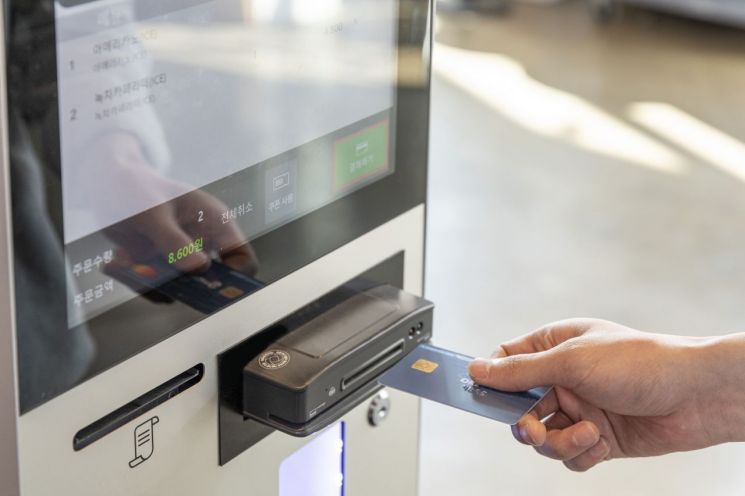 There are opinions among the 20s and 30s generations that kiosks, which have been criticized as 'inconvenient' mainly by the elderly, are also difficult to use for selecting tumblers and using discount benefits. The photo is unrelated to specific expressions in the article.
[Asia Economy Reporter Kim Jung-wan] #. Recently, Mr. Lee, a college student in his 20s who has started to take an interest in environmental issues, began carrying a tumbler. He uses it instead of disposable cups every time he goes to a cafe. When the staff asked him to use the kiosk to place his order, he waited in line only to find that the kiosk did not have a tumbler selection option. He then approached the staff again and was able to get his drink in the tumbler, but it was not very convenient. He felt like a "bothersome presence" in the busy store.
While kiosks have long been criticized as "difficult to use," especially among the elderly, recently, people in their 20s and 30s have also pointed out that they are cumbersome to use. Many kiosks lack a tumbler selection function, and applying discount benefits requires navigating through numerous screens, causing inconvenience.
The kiosk market has rapidly expanded as non-face-to-face transactions became routine due to the spread of COVID-19. According to data from the Science, Technology, Information and Broadcasting Communications Committee, the number of kiosks in private sectors such as food service and convenience facilities increased more than threefold from 8,587 units in 2019 to 26,574 units in three years.
Complaints about kiosks have been consistently raised, especially by elderly consumers who feel uncomfortable using them. When they struggle to use the kiosks and hear sighs from people behind them, some have expressed a desire to "run away."
According to the "Digital Competency Survey" conducted by the Seoul Digital Foundation in May last year with 5,000 Seoul citizens, only 45.8% of elderly respondents reported having experience using kiosks, less than half. The elderly showed low levels of digital technology competency, and reasons for not using kiosks included "not knowing how to use them or finding them difficult" (33.8%), "not needing to use them" (29.4%), and "feeling pressured by people waiting behind" (17.8%).
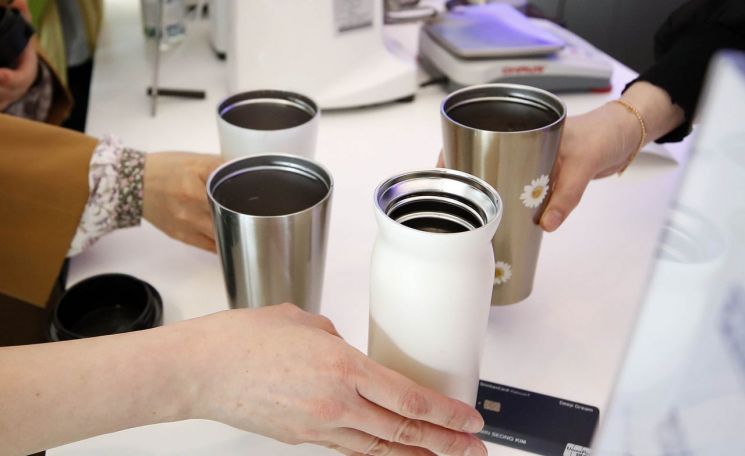 This is not the first time there have been complaints about the inconvenience of using reusable cups through kiosks.
 [Image source=Yonhap News]
While younger people in their 20s often rate kiosks as convenient, those who try to use reusable containers report considerable inconvenience. Mr. Lim (28), an office worker, said, "My job requires frequent movement, so I carry a tumbler and use cafes often. Many kiosks do not allow selecting reusable containers, so I go directly to the staff." He added, "It would be easier with just a word, but I wonder if these inconvenient kiosks really need to become the norm."
This is not the first time that the inability to use reusable cups via kiosks has been criticized. According to a report by the Green Consumer Network National Council in November last year, out of 41 coffee shops and fast-food outlets in Seoul, only eight had kiosks that allowed selecting tumblers.
There are also complaints about the hassle of receiving discount benefits. Mr. Kim (31), who works in Seoul, said, "Employees usually know better about card or telecom discounts. When ordering directly, I sometimes check the discounts, but when using kiosks, pressing the discount screen and entering information again makes me feel pressured by the people behind me. Ordering directly at the store seems much more convenient."
Meanwhile, the industry expects the kiosk market to grow further, calling for related measures. The Korea International Trade Association (KITA) forecasted that the global kiosk market size will grow from $17.63 billion (about 21 trillion KRW) in 2020 to $33.99 billion (about 40 trillion KRW) by 2027. In particular, self-order kiosks have shown an average annual growth rate of 12.2%, and domestic kiosk sales this year are expected to increase by more than 50% compared to last year.
© The Asia Business Daily(www.asiae.co.kr). All rights reserved.