Kia Niro EV Equipped with Chinese CATL Battery
Older Models Use Domestic Batteries
"Is It for Cost Reduction?" Some Consumers Complain
Kia States "No Performance Difference Between the Two Batteries"
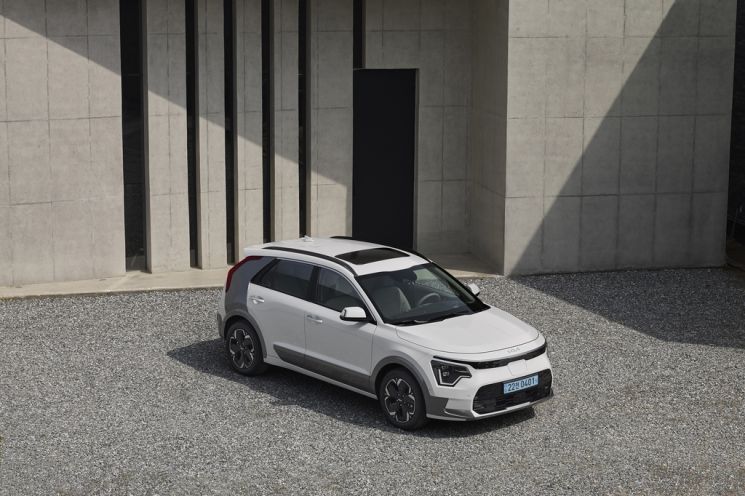
[Asia Economy Reporter Lim Juhyung, Intern Reporter Song Hyundo] Kia has equipped the newly released 'Niro EV' model this year with batteries from CATL, the world's number one Chinese electric vehicle battery manufacturer, which has led some consumers to express dissatisfaction, saying they will "cancel their pre-orders." These consumers claim that the Niro EV was originally supposed to be equipped with domestically produced batteries, but upon release, the batteries were switched to Chinese-made ones with inferior performance. However, Kia maintains that "there is no performance difference between the two batteries."
According to industry sources on the 24th, at least 18 members of online electric vehicle enthusiast communities have posted certification of their 'Niro EV' reservation cancellations. Posts include statements such as "I thought it was a domestic battery, but since it's actually Chinese-made, I can't trust it," "They effectively deceived consumers," and "The battery is the core of electric vehicle performance, so did they use low-quality parts to cut costs?"
The netizens who posted 'cancellation certifications' appear to have made pre-orders for the Niro EV after its release but canceled their contracts before the vehicles were delivered. Since it takes time for a finished vehicle to be manufactured at the factory, there is a gap between the reservation date and the actual delivery date. Kia began accepting pre-orders for the Niro EV from consumers starting on the 3rd of last month.
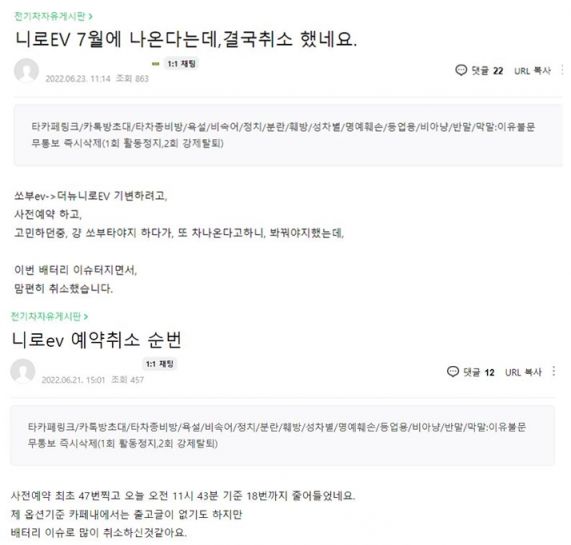 Some netizens expressed dissatisfaction with the Chinese-made lithium-ion battery installed in the Niro EV and posted that they canceled their pre-orders. / Photo by Naver Cafe, etc. (captured)
This is the first time Kia has installed Chinese-made batteries instead of domestic ones in vehicles for the domestic market. The first-generation Niro EV sold by Kia was equipped with batteries from SK Innovation (SK On). However, starting with the second-generation Niro EV released earlier this year, batteries manufactured by CATL have been installed.
According to energy market research firm 'SNE Research,' CATL held the number one global electric vehicle battery market share (33.7%) from January to April this year. This is significantly higher than the combined shares of the top two domestic companies, LG Energy Solution (14.9%) and SK On (7.0%). CATL is a verified company that has supplied batteries to well-known foreign automakers such as Mercedes-Benz, BMW, and Tesla.
Nevertheless, consumers express concerns because there could be a significant performance gap between the existing batteries produced by domestic companies and the CATL batteries supplied for the Niro EV.
When Kia previously released the Niro EV price list, it was specified that the vehicle would be equipped with 'lithium-ion polymer' batteries. Although the supplier's name was not explicitly mentioned, these batteries are primarily produced by domestic companies like LG. However, the actual vehicles released were equipped with CATL's 'lithium-ion' batteries.
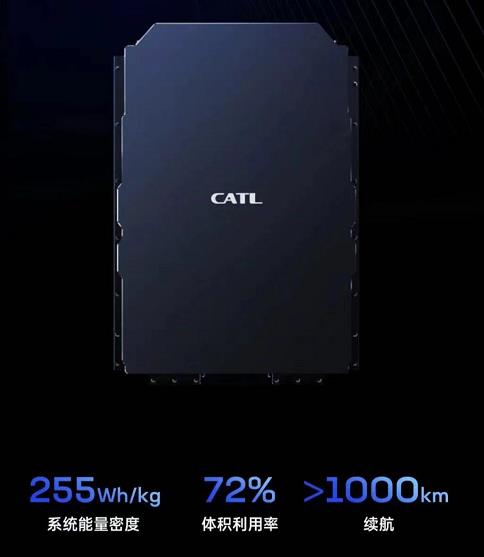 Chinese secondary battery manufacturer CATL is the world leader in market share for vehicle lithium-ion batteries. The photo shows CATL's newly unveiled 'Girin Battery' / Photo by CATL WeChat capture
The difference between lithium-ion polymer and lithium-ion batteries lies in the state of the electrolyte, which is one of the battery components. Lithium-ion batteries use a liquid electrolyte, whereas lithium-ion polymer batteries use a polymer (a solid or gel-type polymer compound) electrolyte. Because of this, lithium-ion polymer batteries are known to have a lower risk of explosion and to be more stable compared to lithium-ion batteries.
As a result, some consumers argue that Kia chose the relatively lower-performing Chinese batteries to reduce costs at the expense of vehicle safety.
However, Kia has explained that there is no performance difference between the two types of batteries. A Kia representative stated, "In the past, batteries were distinguished based on the presence or absence of polymer components in the electrolyte, but currently, lithium-ion batteries and lithium-ion polymer batteries have no differences in performance, operating principles, or structure, and are classified as the same category." The representative added, "Currently, the electrolytes in electric vehicle batteries supplied by LG do not contain polymer components, but the market commonly refers to them as lithium-ion polymer batteries. We ask that you consider this point."
© The Asia Business Daily(www.asiae.co.kr). All rights reserved.
![Clutching a Stolen Dior Bag, Saying "I Hate Being Poor but Real"... The Grotesque Con of a "Human Knockoff" [Slate]](https://cwcontent.asiae.co.kr/asiaresize/183/2026021902243444107_1771435474.jpg)

















