Surge in International Oil Prices, Trade Surplus from China and India Imports
Unemployment Rate Rises from 4.8% to 6.8%, Real Economy Deteriorates
Extreme Poverty Soars from 12 Million to 21 Million
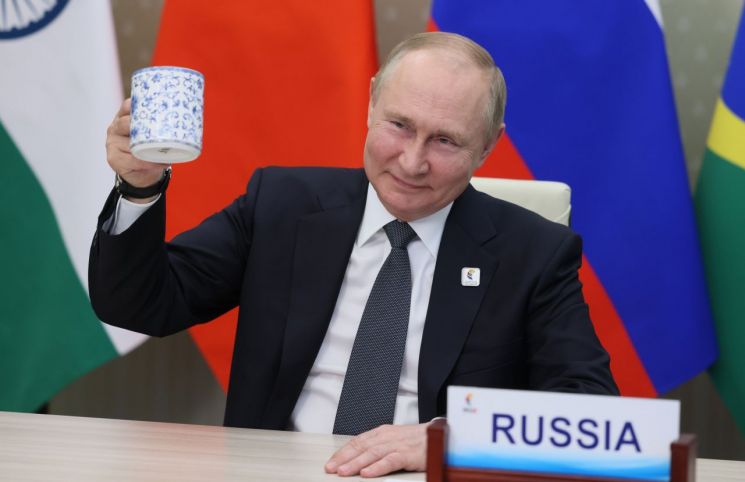
[Asia Economy Reporter Lee Hyun-woo] Russia's current account surplus this year has increased 3.5 times compared to the previous year amid Western sanctions following the invasion of Ukraine. Consequently, the ruble's value continues its soaring trend. The Russian government is flaunting this unusual current account surplus, mainly due to the sharp rise in international oil prices, as evidence that Western sanctions have no effect. However, there are concerns that the actual economy is rapidly deteriorating as Russia's unemployment rate soars and the number of people in extreme poverty sharply increases.
On the 23rd (local time), the Central Bank of Russia announced in a report that the current account surplus from January to May this year reached $110.3 billion (approximately 143.776 trillion KRW), more than 3.5 times higher than the same period last year. The value of the Russian currency, the ruble, also surged, reaching 52.3 rubles per dollar during trading, the highest level in seven years since May 2015.
The main reason for the massive current account surplus despite Western sanctions is attributed to the sharp rise in international oil prices. Since Russia's invasion of Ukraine in February, international oil prices have fluctuated between $100 and $120, rising more than 60% on average compared to last year's $60 to $80 range.
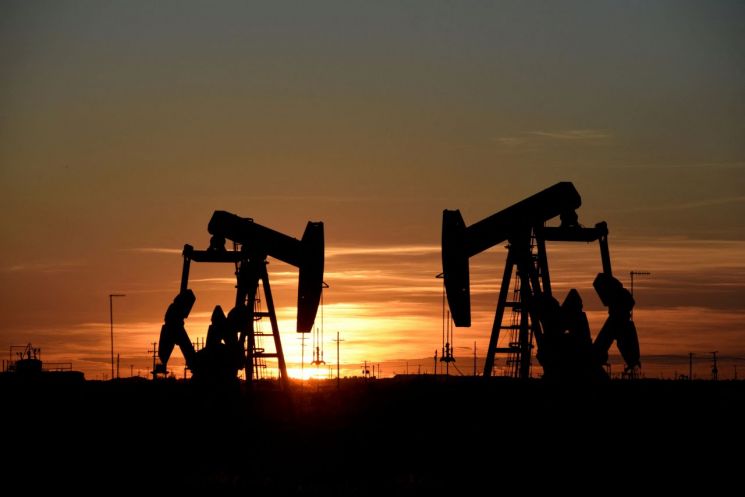
Additionally, although exports to Europe, a major export region, decreased somewhat due to strengthened sanctions against Russia, this was offset by increased imports from China and India. In particular, India dramatically increased its daily average Russian oil imports from about 30,000 barrels in January, just before the war, to 1 million barrels this month, emerging as a major oil export destination for Russia.
The Russian government is boasting about this unusual current account surplus and the ruble's strength as proof that Western sanctions are ineffective, but there are also concerns that the real economy is significantly worsening.
Max Hess, a researcher at the U.S. Foreign Policy Research Institute, told CNBC in an interview, "Considering the current record-high oil price surge and Russia's strong foreign currency outflow controls, the Russian ruble exchange rate is merely a 'Potemkin exchange rate' (a false exchange rate)." He added, "Even if Russia accumulates a huge amount of foreign currency reserves through oil exports, there is nowhere to use them due to Western sanctions, so ultimately the real economy will deteriorate and people's lives will worsen."
In fact, Russia's unemployment rate and the number of people in extreme poverty have been rising sharply. According to the Russian Ministry of Economic Development, Russia's average unemployment rate this year is 6.8%, significantly up from 4.8% last year, marking the highest level since 2010. The number of people living on less than 10,000 rubles (approximately 240,000 KRW) per month, classified as extremely poor, surged from 12 million last year to 21 million in the first quarter of this year.
© The Asia Business Daily(www.asiae.co.kr). All rights reserved.
![Clutching a Stolen Dior Bag, Saying "I Hate Being Poor but Real"... The Grotesque Con of a "Human Knockoff" [Slate]](https://cwcontent.asiae.co.kr/asiaresize/183/2026021902243444107_1771435474.jpg)
















