Announcement of Free Stock Issuance → 'Surge'... Eventually Back to Square One
Individual Investors "Absurd", "Is It Real to Return All Gains?" Frustrated
Experts "Analyze Corporate Competitiveness and Value... Careful Investment Needed"
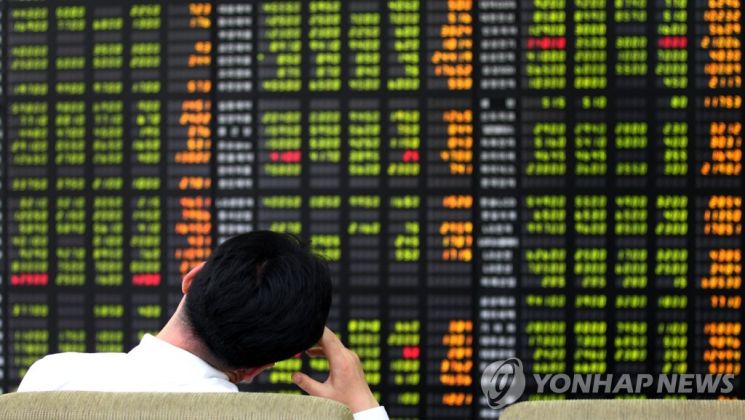
[Asia Economy Reporter Han Seung-gon] "Is this the reality of free capital increase?" , "In the end, all the gains were given back."
On the 22nd, the stock-related boards on portal sites were filled with heated debates condemning stocks related to free capital increase (FCI), to the extent that it could be seen as a battleground. One individual investor (retail investor) raised their voice, saying, "I somewhat knew that FCI could turn from good news to bad news, but these days, FCI seems to be nothing but bad news."
Meanwhile, Mr. Kim, a man in his 30s who recently invested in an FCI stock, complained, "It’s falling so much that it almost feels like a manipulation." On the other hand, another individual investor countered, "Don’t you know the saying that there is no trend in a bear market?" and added, "Whether it’s FCI or not, now is simply not the time to invest."
Recently, among retail investors, there have been voices of regret after investing in certain stocks riding on the FCI issue, only to face severe volatility and a downward trend. Capital increase literally means a company increasing the number of its issued shares. There are two types of capital increase: paid-in capital increase and free capital increase. Paid-in capital increase means issuing shares and selling them to buyers at a certain price. Experts advise that investors should analyze the core competitiveness and fundamentals of a company thoroughly and make proper investments.
◆ What is the difference between paid-in and free capital increase?
When a paid-in capital increase occurs, the total number of shares of the company increases, which can lead to a decline in the stock price. However, although the stock price may drop immediately, it can bring long-term positive effects. For example, if a company discovers new investment opportunities or announces innovative management plans and conducts a paid-in capital increase to secure funds, the market may perceive it as good news.
Free capital increase refers to issuing new shares and distributing them free of charge to existing shareholders in proportion to their shareholding. From the shareholders’ perspective, it can be seen as a form of compensation. It can also be interpreted as a signal that the company’s financial structure is sound, sometimes leading to a short-term surge in stock price. In the process, the increase in circulating shares through free capital increase and the ex-rights effect lowering the price per share can make stock trading more active.
◆ Despite the good news of free capital increase, the stock price eventually falls and gains are given back
The problem is that the stock prices of companies announcing free capital increases are fluctuating wildly. Since free capital increase is largely a form of compensation to existing shareholders, it cannot practically increase the company’s value, so the upward momentum tends to be weak. Pursuing buying to defend against stock price drops can also lead to similar results.
According to the Korea Exchange, last month, 'Notus' announced a free capital increase distributing 8 shares per existing share to shareholders and recorded the upper price limit for six consecutive days. Looking at the closing price alone, the stock price rose tenfold compared to before the FCI announcement. However, after the 13th, it fell for seven consecutive trading days and eventually returned to the pre-FCI price level.
Also, 'Gonggu Woman,' a big-size women's clothing company, announced on the 14th that it would distribute 5 new shares per existing share free of charge. On that day, Gonggu Woman recorded the upper price limit for two consecutive days including the next day. 'CS Bearing' also hit the upper price limit on the 20th, the day the ex-rights for free capital increase occurred, but on the 21st, it suffered a sharp drop of 10.30%. Earlier, on the 15th, 'Jokwang ILI' announced a free capital increase allocating 5 shares per share and immediately hit the upper price limit the next day but then turned to a downward trend.
Experts diagnose that the current announcements of free capital increases by companies can be seen as a kind of 'FCI theme stock.' They emphasize that investors need to conduct careful company analysis first. Hwang Se-woon, a research fellow at the Korea Capital Market Institute, said, "FCI is not an issue that can change a company’s fundamentals," adding, "It is necessary to focus on the intrinsic value of the company. Investors need to make decisions from a long-term perspective."
© The Asia Business Daily(www.asiae.co.kr). All rights reserved.
![Clutching a Stolen Dior Bag, Saying "I Hate Being Poor but Real"... The Grotesque Con of a "Human Knockoff" [Slate]](https://cwcontent.asiae.co.kr/asiaresize/183/2026021902243444107_1771435474.jpg)

















