'Unclaimed Deaths' 835 in 2017 → 1,385 in 2020, Continuous Increase
59.8% of Those Living Alone in Gosiwon and Small Rooms Are 50+ Years Old, 'At Risk of Solitary Death'
Serious Elderly Issues...Most Solitary Deaths Occur in Their 60s
Experts Say "Strong Social Networks Must Be Built in Local Communities"
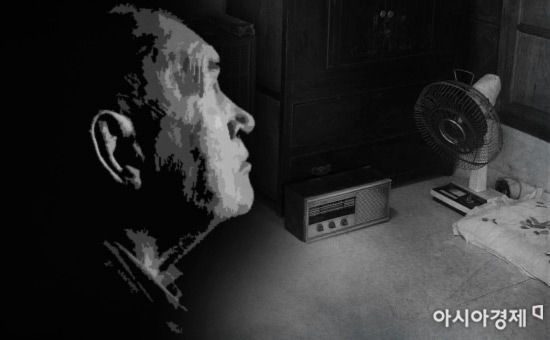 As aging and nuclear families intensify, the incidence of 'elderly solitary deaths' is increasing.
[Asia Economy Reporter Kim Jung-wan] The number of elderly people who pass away without their neighbors or even family knowing is increasing. Cases where the deceased are discovered only after several days or even months have become more frequent. This is interpreted as a result of the increase in 'single elderly households' living without relatives, due to the progression of aging and the intensification of nuclear families.
On the morning of the 16th of last month, a woman in her 60s, Ms. A, who lived alone in an apartment in Dongsam-dong, Yeongdo-gu, Busan, was found dead several months after her passing. The medical examiner who visited the scene opined that Ms. A had been deceased for at least six months. At the time of discovery, a pet dog that Ms. A had been raising was also found dead inside the house.
Ms. A's body was discovered by firefighters and administrative welfare center staff who responded to a report from the apartment manager stating "there has been no contact." According to investigations, Ms. A, a basic livelihood security recipient, had long suffered from schizophrenia and mental illnesses, and was known to have lived a reclusive life, cutting off ties with the outside world.
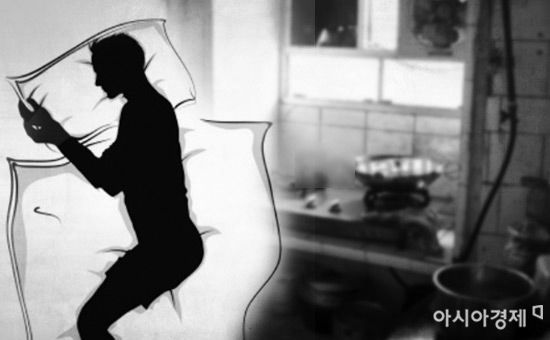 A significant number of middle-aged and elderly single-person households living in jjokbangchon (small rooms) and gosiwon (boarding rooms) are identified as being at risk of dying alone, raising concerns about the issue of elderly solitary deaths.
Concerns over the issue of elderly people dying alone in social isolation are growing. A significant portion of middle-aged and older individuals living alone in small rooms or boarding houses have been identified as 'high-risk groups for solitary death.' On the 20th, the Seoul Metropolitan Government announced, "According to the 'Survey on Single-Person Households Aged 50 and Over in Housing-Vulnerable Areas' conducted last year, among 60,677 people aged 50 and above living alone in small rooms, boarding houses, or inns, 36,265 (59.8%) were classified as high-risk for solitary death."
The survey was conducted among 60,677 respondents (42%) out of a total of 144,398 single-person households aged 50 and above living in housing-vulnerable areas in Seoul. Among non-respondents, 521 cases of death were identified. The high-risk group for solitary death was classified based on scores from 10 items, including whether they had experienced failure or loss in the past 10 years, the number of times they drank alone to the point of memory loss in the past week, and the average number of outings per day in the past week.
The number of officially classified solitary death cases has also increased. When there are no relatives or they are unknown, or when relatives refuse to claim the body, the deceased are classified as 'unclaimed deceased,' and funeral procedures are carried out accordingly. A significant number of deceased elderly living alone are classified as unclaimed deceased, and such unclaimed body handling is on the rise. According to data from the Ministry of Health and Welfare in September last year, the number of solitary deaths in South Korea has steadily increased: 835 in 2017, 1,067 in 2018, 1,204 in 2019, and 1,385 in 2020.
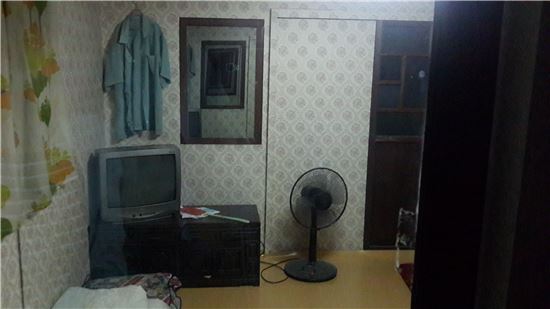 The increase in solitary deaths among the elderly is interpreted as being due to the growing number of elderly people living alone. The photo is unrelated to any specific expressions in the article.
Among these, the issue of elderly households is particularly serious. According to a report titled 'Analysis of Solitary Death Survey Data' released on the 20th by researcher Choi Soo-beom of the Seoul Institute of Technology, an analysis of 127 solitary death cases classified in Seoul over two years from 2020 showed that those in their 60s accounted for the largest share at 31.5% (40 people), followed by those in their 50s at 26.8% (34 people), 70s at 18.1% (23 people), and 40s at 13.4% (17 people).
This is interpreted as a result of the increase in elderly single-person households living without relatives due to the intensification of nuclear families amid aging. According to Statistics Korea data from the 8th of last month, the number of single-person households aged 60 and over residing in Seoul was 355,000 as of 2020. This represents an increase of nearly 30,000 from 326,000 in 2019 within just one year.
Experts emphasize the need for proactive approaches through social networks within local communities. Professor Seok Jae-eun of Hallym University’s Department of Social Welfare said, "Many elderly single-person households themselves fear solitary death," adding, "As family networks have weakened for various reasons, it is important to strengthen social networks within the community." She further explained, "By providing education that prepares elderly people for their later years so that those facing similar issues can prepare for a dignified death, a social network where people naturally look out for one another will be formed."
© The Asia Business Daily(www.asiae.co.kr). All rights reserved.
![Clutching a Stolen Dior Bag, Saying "I Hate Being Poor but Real"... The Grotesque Con of a "Human Knockoff" [Slate]](https://cwcontent.asiae.co.kr/asiaresize/183/2026021902243444107_1771435474.jpg)














