Ulsan Institute of Health and Environment Advises Following Precautionary Measures for Vaccinations and Outdoor Activities
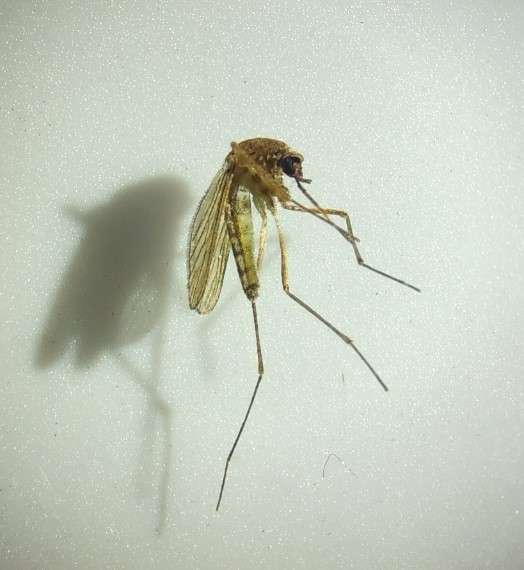
[Asia Economy Yeongnam Reporting Headquarters Reporter Kim Yong-woo] The 'small red house mosquito,' which transmits the Japanese encephalitis virus, has been found in Ulsan. Since it was first confirmed in Busan this April, it appears to be spreading nationwide, so caution is necessary.
The Ulsan City Health and Environment Research Institute announced on the 21st that the small red house mosquito, a vector of Japanese encephalitis, was discovered during a density survey of infectious disease vector mosquitoes conducted on the 17th.
The institute urged citizens to follow preventive measures such as vaccination and caution during outdoor activities.
To monitor infectious disease vectors, the Health and Environment Research Institute has selected two local livestock farms, one park, and one urban area to conduct mosquito density surveys twice a week from April to October.
The small red house mosquito is a small, dark brown mosquito that inhabits rice paddies, animal barns, and puddles, and mainly feeds at night.
Generally, their numbers begin to increase from June in southern regions, are observed throughout South Korea, peak in density from July to September, and can be seen until the end of October.
When bitten by a mosquito carrying the Japanese encephalitis virus, most cases are asymptomatic, but a very small number may develop acute neurological symptoms such as high fever, headache, seizures, and coma.
Since 20-30% of patients may die, special caution is required.
Nationwide, the Japanese encephalitis vector mosquito was first confirmed this year in the Busan area on April 7, prompting the Korea Disease Control and Prevention Agency to issue a 'Japanese Encephalitis Advisory.'
An institute official recommended vaccination, stating, "Children aged 12 months to 12 years should be vaccinated according to the standard immunization schedule. At home, use window screens or mosquito nets, and during outdoor activities, wear light-colored long clothing and use repellents to avoid mosquito bites through proper management and caution."
© The Asia Business Daily(www.asiae.co.kr). All rights reserved.
![Clutching a Stolen Dior Bag, Saying "I Hate Being Poor but Real"... The Grotesque Con of a "Human Knockoff" [Slate]](https://cwcontent.asiae.co.kr/asiaresize/183/2026021902243444107_1771435474.jpg)















