Launch of Sick Leave Allowance Pilot Project... Payment at 60% of Minimum Wage
Only 4 OECD Countries Without Sick Leave Allowance... Korea Sole Country Without Direct or Indirect Coverage
Public Opinion Divided: Guaranteeing Legitimate Rights VS Concerns Over Moral Hazard
Pilot Project to Proceed in 3 Phases Over 3 Years... Aiming to Establish Nationwide Sick Leave Allowance System
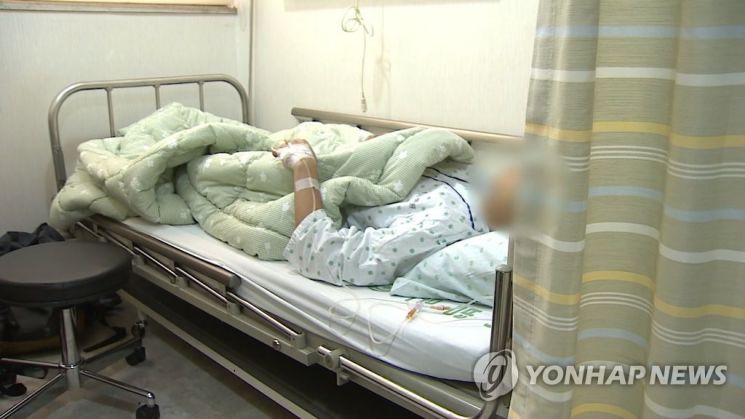 With the pilot implementation of 'Sangbyeong Allowance' starting next month, opinions are divided on the issue.
[Asia Economy Reporter Kang Woo-seok] The pilot project for "Sangbyeong Soodang" (sickness allowance), which provides 60% of the minimum wage to allow workers to take sick leave, will be implemented for one year starting from the 4th of next month. However, there are concerns that some may fabricate documents to fraudulently receive the allowance. Experts suggest that the policy's loopholes should be addressed through various institutional improvements, such as diagnoses from medical institutions that can guarantee objectivity.
Lee Sang-min, the 2nd Deputy Director of the Central Disaster and Safety Countermeasures Headquarters (CDSCH) and Minister of the Ministry of the Interior and Safety, said in his opening remarks at the CDSCH meeting on the 15th, "The government will implement the pilot project for Sangbyeong Soodang from early next month to enable workers to take sick leave for infection prevention and timely treatment," adding, "In six pilot areas including Jongno in Seoul, we plan to pay 60% of the minimum wage to eligible recipients during periods when work activities are difficult."
Sangbyeong Soodang refers to a system where the government compensates part of the income to workers who find it difficult to engage in economic activities due to illnesses such as COVID-19, allowing them to focus on treatment and recovery. In this pilot project, eligible recipients will receive 60% of the minimum wage during periods when working is difficult.
The pilot areas selected are six regions: Jongno-gu in Seoul, Bucheon in Gyeonggi Province, Cheonan in Chungnam Province, Changwon in Gyeongnam Province, Pohang in Gyeongbuk Province, and Suncheon in Jeonnam Province. These will be divided into three groups, each applying a different model to analyze the required budget and effectiveness per model.
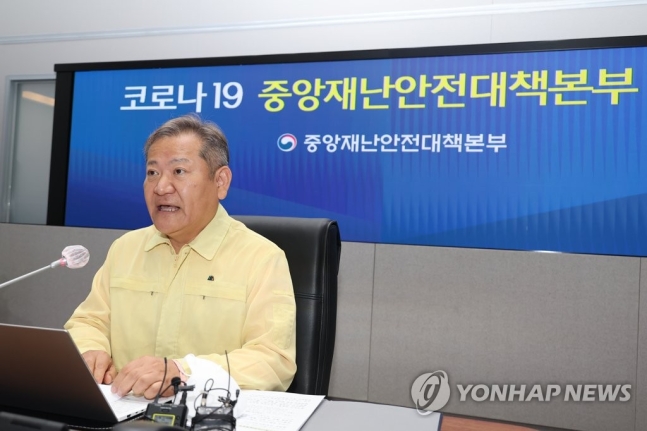 Minister of the Interior and Safety Lee Sang-min is speaking at the Central Disaster and Safety Countermeasures Headquarters meeting for COVID-19 response held at the Seoul Situation Center of the Central Disaster and Safety Situation Room in the Government Seoul Office Building on the morning of the 15th.
 [Photo by Yonhap News]
The launch of Sangbyeong Soodang is largely attributed to the recent increase in mandatory quarantines due to the spread of COVID-19, which has fostered a social culture that allows people to take sick leave when ill.
Previously, many workers found it difficult to use paid sick leave, often resorting to using their personal vacation days or continuing to work despite illness. According to a 2020 research report by the Korea Institute for Health and Social Affairs, an analysis of employment rules from 493 large and small private companies nationwide showed that only 7.3% explicitly provided paid sick leave.
Additionally, the proportion of workers in Korea who reported going to work while sick (23.5%) was 2.37 times higher than those who reported taking sick leave (9.9%). This figure is three times higher than the average of other European countries (0.81 times).
The introduction of Sangbyeong Soodang is a global trend. Among OECD member countries, only four countries?Korea, Israel, Switzerland, and the United States?do not provide sickness allowance through public funds. Even among these, except for Korea, the other three countries indirectly or directly guarantee workers' rights to take sick leave. The U.S. guarantees unpaid sick leave, while Switzerland and Israel regulate paid sick leave funded by employers.
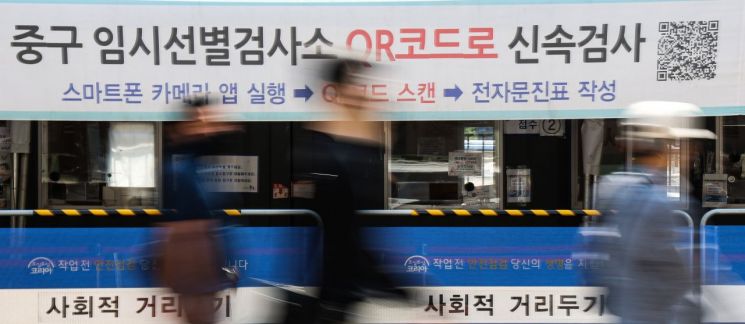
There are voices welcoming the introduction of Sangbyeong Soodang. Kim, a 26-year-old office worker, said, "Self-employed people or workers in poor conditions often cannot properly take sick leave, so I believe Sangbyeong Soodang will help address these difficulties," adding, "Before COVID-19, there might have been some resistance, but nowadays, due to mandatory quarantine, it even feels natural."
A person in their 40s said, "Although I think the introduction is late, it is a welcome development," emphasizing, "I hope the concept of welfare will firmly take root in our society going forward."
On the other hand, some citizens anticipate cases of abuse exploiting institutional loopholes. A university student, A, said, "Of course, there will be cases of malingering and abuse of Sangbyeong Soodang. There will likely be many cases of fraudulent claims through various methods," warning, "If clear response standards are not established, it could cause significant social confusion."
Experts suggest that to prevent fraudulent claims, the issuance of medical certificates related to illness must be strictly managed. An insurance industry official said, "Regarding Sangbyeong Soodang, it will likely be implemented by recognizing medical certificates issued by medical institutions and paying a certain percentage of the minimum wage," adding, "Although cases of collusion with doctors to issue false certificates may not be many, they will certainly exist. It is necessary to detect such loopholes through medical consultations and require re-diagnosis at objective medical institutions."
Meanwhile, the Sangbyeong Soodang pilot project is planned to proceed in three stages over three years. This project is the first stage, and based on the analysis of the advantages, disadvantages, and effects of the three models in this stage, the government will design the next pilot project. Through this three-year process, the government aims to finalize a nationwide Sangbyeong Soodang system.
© The Asia Business Daily(www.asiae.co.kr). All rights reserved.
![Clutching a Stolen Dior Bag, Saying "I Hate Being Poor but Real"... The Grotesque Con of a "Human Knockoff" [Slate]](https://cwcontent.asiae.co.kr/asiaresize/183/2026021902243444107_1771435474.jpg)

















