More than double compared to 98,118 cases in January
Stricter regulations on speed limits and school zones
Expansion of enforcement camera installations also impacts
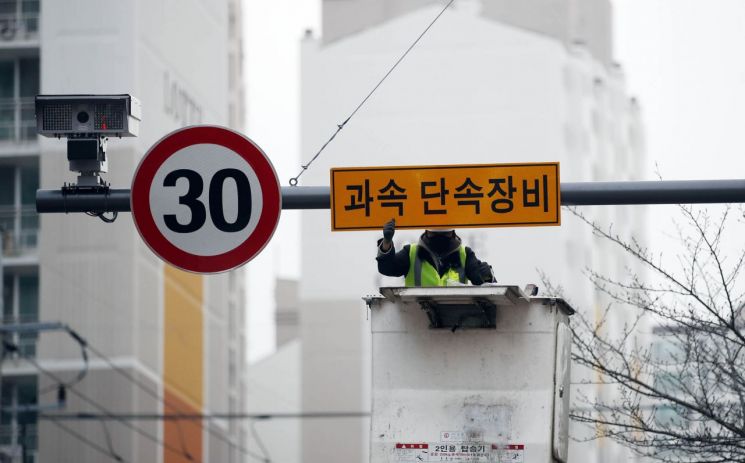
The number of people caught speeding is increasing due to growing road regulations and speed cameras. Although public dissatisfaction is rising, experts emphasize that even if related regulations are adjusted, the broader framework of pedestrian safety must be maintained.
According to the Seoul Metropolitan Police Agency on the 16th, the number of speeding violations in Seoul last May was 219,308 cases. This is more than double compared to January (98,118 cases) and over 40,000 cases higher than the previous month (April, 170,767 cases).
The number of speeding violations has been gradually increasing since last year. In 2019, there were 1,268,103 speeding violations, and 1,164,435 in 2020, but last year recorded 1,358,210 cases. Although the average daily traffic volume in Seoul last year was about 9.93 million vehicles, a 1.6% decrease from the previous year, speeding violations increased.
This is contrary to the intent of the urban vehicle speed limit (5030) implemented since April last year and the strengthened penalties in school zones. The police believe that the significant increase in the installation of speed cameras, rather than drivers’ lack of safety awareness, has influenced this trend. As of last month, there are a total of 1,450 speed cameras operating in Seoul. In 2018, there were only 625 speed cameras, but last year the number rose to 1,141, more than doubling over four years. The police plan to increase the number of speed cameras in Seoul to 2,000 within this year.
A police official explained, "Since last year, speed cameras have been installed mainly in school zones," and added, "The 5030 policy and the increase in speed cameras are unrelated." In fact, following the enactment of the Min-sik Law, the budget for improving child protection zones increased by 100 billion won in 2020, including additional funding for speed cameras in school zones.
Among drivers, there are voices criticizing excessive regulations. Along with the Min-sik Law in 2020, a 30 km/h speed limit in school zones was implemented, and the 5030 safe speed policy was enforced in April last year. With the recent lifting of social distancing restrictions and increased mobility, many citizens have become more aware of these regulations. As a result, calls for easing regulations are growing. The government is proposing measures such as revising the 5030 policy to a 6040 policy or setting different speed limits depending on the time of day.
Experts also suggest waiting to see the effects of the regulations. Professor Park Mu-hyuk of the Korea Road Traffic Authority said, "Citizens are still in the transitional period of regulations such as school zone speed limits and the 5030 policy, which seems to have caused the increase in speeding violations," and added, "In the long term, citizens will adapt to the regulations, so even if restrictions are eased, the broader framework of pedestrian safety must not be compromised."
© The Asia Business Daily(www.asiae.co.kr). All rights reserved.

















