[Seoul District News] Dobong-gu Installs 891 Color Solar Modules on South Exterior Wall of District Office, Operating from 20th to Produce About 89MWh Eco-Friendly Electricity Annually, Raising Office Power Self-Sufficiency from 1% to 4%... Seongdong-gu Runs 'Digital Fashion Solution Employment & Startup' Program Linking Unemployed Youth Aspiring for Fashion Industry Jobs to Employment and Entrepreneurship... Jung-gu Holds 'Welcome Back Myeongdong' Event to Revitalize Myeongdong Commercial Area... Jongno-gu Expands Crime Prevention Facilities in Gahoe-dong Area...
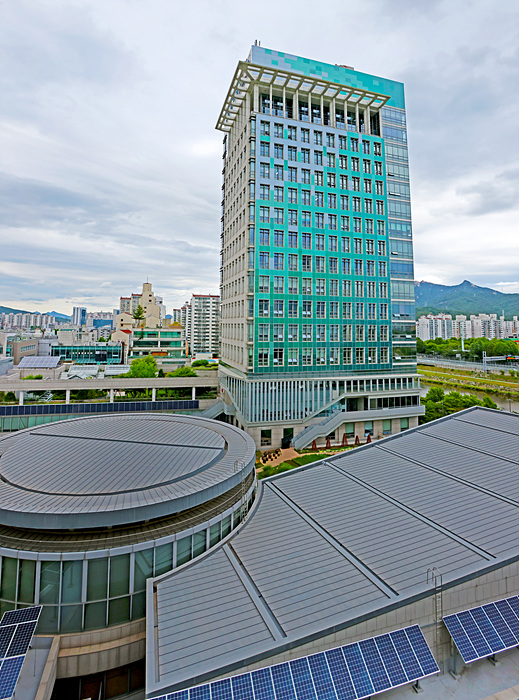 Building-integrated photovoltaics (BIPV) installed on the entire south-facing exterior wall of Dobong-gu Office building
[Asia Economy Reporter Park Jong-il] Dobong-gu (Mayor Lee Dong-jin) has completed the installation of a 100kW Building Integrated Photovoltaic System (BIPV) that simultaneously functions as solar power generation and building material on the entire south exterior wall of the district office building (completed in 2003), and will begin operation from June 20.
The project to make the public office building a BIPV landmark was selected as the best work in the '2021 Autonomous District Solar Power Special Project' contest hosted by the Seoul Metropolitan Government's Green Energy Division last year, and was fully funded by the city.
The total solar panel area installed on the south side of the office building is 751㎡, the largest single surface area in Korea. From the 5th to the 16th floor of Dobong-gu Office, the existing stone exterior walls and rooftop finishing materials were completely removed, and 891 color solar modules in four shades of green and gray were attached. The module arrangement forms a geometric gradation and a QR code pattern.
This design is evaluated as realizing an abstract, modern building facade with the significance of an eco-friendly zero-energy building. The exterior appearance changes moment by moment throughout the day depending on the solar altitude and viewing direction from east, west, south, and north.
In particular, the color modules applied this time are made of non-flammable material developed purely with domestic technology by KOES using the G2G (Glass to Glass) method. Unlike commercial products, it is difficult to visually confirm whether it is solar power, making it aesthetically excellent.
A Dobong-gu official explained, “The solar panel facade faces due south, has sufficient distance from the front buildings, and is tall enough to avoid shadow effects from surrounding buildings even during the winter solstice when daylight is shortest. Through this installation, approximately 89MWh of eco-friendly electricity is produced annually, raising the office building’s power self-sufficiency rate from about 1% to 4%.”
Dobong-gu has been implementing the ‘2050 Dobong-gu Greenhouse Gas Reduction 7 Major Strategies’ for two years since 2021 to achieve carbon neutrality, including ▲Green Buildings ▲Green Transportation ▲Green Energy ▲Green Waste ▲Green Forests ▲Green Living ▲Green Education.
This solar power installation is also part of the core task of the ‘Green Buildings’ strategy, specifically the ‘Dobong-gu Office Zero Energy Building (ZEB) Conversion Landmark Promotion.’ The district plans to continue increasing the office building’s energy self-sufficiency rate by adding more renewable energy installations such as solar power and reducing heating and cooling energy use.
Mayor Lee Dong-jin of Dobong-gu said, “Dobong-gu Office is reborn as a carbon-neutral office building with improved appearance through building-integrated solar power combining new technology and design, while producing eco-friendly electricity. We hope Dobong-gu’s pioneering efforts will spread to other public institutions and private buildings in the future.”
Dobong-gu plans to hold a ‘Dobong-gu Office Building Integrated Photovoltaic (BIPV) Landmark Completion Ceremony’ on June 20 at the outdoor garden on the 3rd floor of the office building, with participation from city and district officials and environmental organizations.
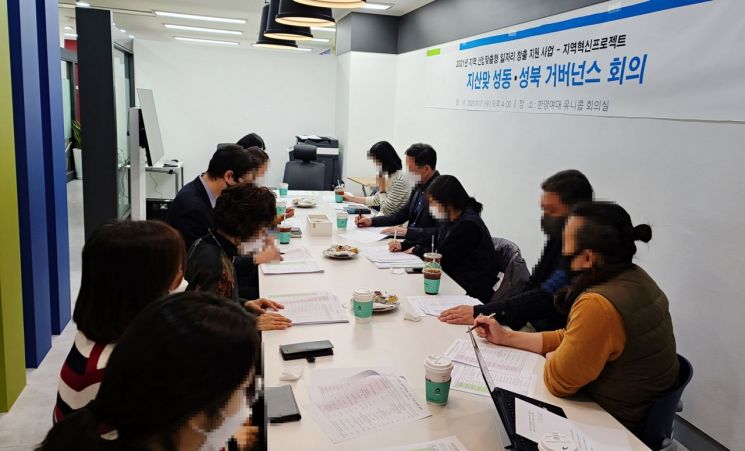 Governance Meeting of Project Implementing Organizations for the Regional Industry Customized Job Creation Support Project - Regional Innovation Project Conducted Last Year
Seongdong-gu (Mayor Jung Won-oh) is operating a 'Digital Fashion Solution Employment and Entrepreneurship' program that provides specialized training for unemployed youth who want to work in the fashion industry, linking them to employment and entrepreneurship after completion.
The district has prepared an ‘employment succession support program’ where trainees who complete the education are immediately connected to the employment field through company-customized on-site training targeting those wishing to work in the fashion sector.
After recruiting 20 unemployed youth under 39 years old, including fashion-related graduates, current industry workers, and women with experience in related industries, intensive fashion-related specialized training will be conducted from July 4 to August 12.
The six-week training will cover practical design work based on digital fashion platforms and fashion trend data, spanning from production to design and sales. Practical skills training will include CAD-based design and 3D CLO (3D fashion design graphic tool) virtual clothing production practice to enhance adaptability to the field.
Following this, a two-week on-site internship at fashion-related companies will be conducted. Based on evaluations of the training and internship, selected participants will be hired through an internship recruitment process from September to December.
Additionally, the district will support companies hiring graduates by covering 90% of youth labor costs through the ‘2022 Seongdong-gu Regional Youth Job Creation Project,’ reducing corporate burdens and promoting actual job creation.
To apply, candidates must submit separate application documents via the website by the 23rd of this month and then submit them by email or visit the Hanyang Women’s University Industry-Academic Design Center, the project executing institution.
Last year, the district was honored with the ‘2021 National Local Government Job Award,’ marking the first time in Seoul to win for seven consecutive years. This year, it plans to create 8,000 jobs through direct public sector job creation, customized vocational training, and job seeker employment support, continuing efforts to create sustainable quality jobs.
Mayor Jung Won-oh of Seongdong-gu said, “Active matching according to the specific needs of job seekers and companies is very important for job creation. We will continue to foster an employment market suited to the local industry and prepare various educational programs to help job seekers adapt to the changing employment environment.”
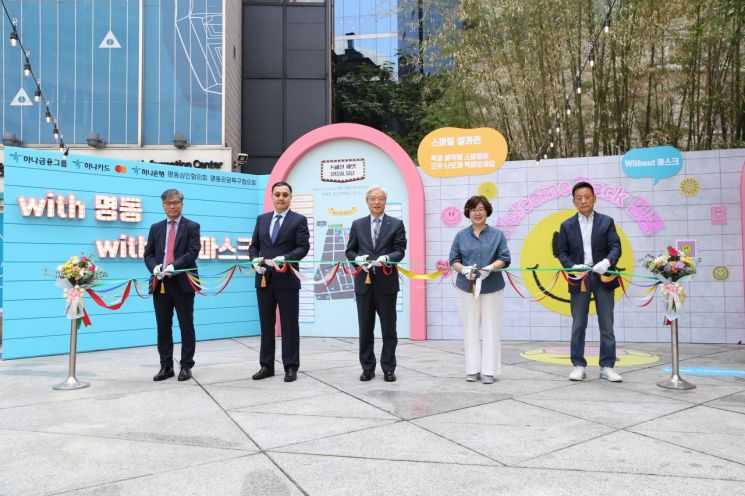
Jung-gu, Seoul is holding the 'Welcome Back Myeongdong' event to mark the transition to the COVID-19 endemic phase.
Held from the 10th to the 24th in the Myeongdong area and at the rest area and stage behind the Hana Financial Group Myeongdong building, this event aims to revive the vitality of Myeongdong, which had been stagnant due to COVID-19, and reactivate the local commercial district under the slogan ‘With Myeongdong, Without Mask.’ The event was planned jointly by the Myeongdong Merchants Association, Myeongdong Tourism Special Zone Council, Hana Card, Hana Bank, and Mastercard.
During the event period, various activities such as on-site discounts, free photo printing, and busking performances will be held. First, when paying at 35 selected affiliated stores chosen by the Myeongdong Merchants Association and others based on certain criteria, customers can receive up to a 20% billing discount. The participating businesses range from restaurants and cafes to optical shops, esthetics, therapy, and saunas.
Various events will also take place at the main ‘Welcome Back Myeongdong’ venue. Visitors who take photos at the photo zone and upload them to SNS will receive instant free printing services. Every Friday at 11:50 a.m., busking performances by Jipseom Band, DOU S.J, Band Ash, Yoon Ji-soo Band, and others will be held.
Additionally, instant lottery tickets with a 100% winning chance will be available.
More detailed information, including participating stores, can be found by accessing the event page on the Hana Card website or the mobile Hana Card app.
A district official said, “Myeongdong merchants have been facing great difficulties due to COVID-19, and we hope this event will provide enjoyable memories and various benefits not only to the merchants but also to many visitors to Myeongdong.”
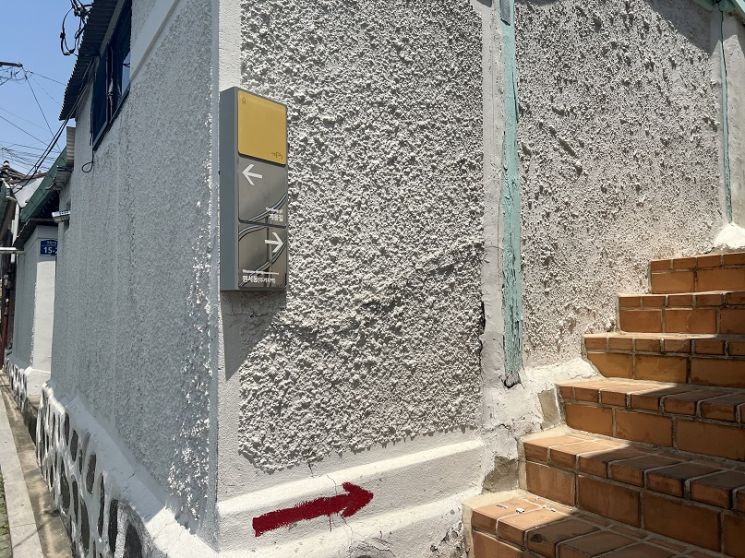
Jongno-gu has completed the ‘Gahoe-dong Customized Safe Living Design Project,’ which has been underway for 10 months since last September, receiving positive responses from residents.
This project aims to improve residents’ quality of life by creating a safe village environment where anyone can live with peace of mind through the installation of facilities applying Crime Prevention Through Environmental Design (CPTED) techniques in residential areas vulnerable to crime.
The project target area was selected as a villa-dense area on the east side of Gahoe-dong. According to the prior ‘Jongno-gu Crime Prevention Environmental Design Basic Plan’ survey and analysis, this area showed high psychological anxiety among residents due to old and deteriorated security facilities and concerns about safety accidents.
Accordingly, the district carefully analyzed the issues, identified residents’ anxiety factors, and categorized them into four fields: fire safety, crime prevention, pedestrian safety, and living safety. It then derived improvement directions and solutions, installing or supplementing 10 types of safety facilities developed considering local characteristics at about 80 locations.
Visually threatening wire fences were removed and replaced with simple-shaped safety fences to provide a neat image and contribute to preventing intrusion crimes and fall accidents. Old walls were repainted to reduce anxiety.
In narrow alleys difficult for fire trucks to access, emergency fire extinguisher boxes were installed for quick initial response in case of fire, and the visibility of visible fire extinguishers was improved by relocating and replacing old enclosures.
Additionally, alleyway guide signs with reflective mirrors to aid direction recognition and blind spot improvement were installed in narrow, winding alleys, and small resting spots were created for residents to take breaks.
Since 2018, Jongno-gu has been implementing related projects applying crime prevention environmental design in various areas such as Myeongnyun-dong, Unni and Ikseon-dong, Donui-dong lodging areas, and Sungin-dong.
The ‘Heart-to-Heart Myeongnyun-dong Safe Village Creation Project’ involved installing safety facilities around residential areas and main school routes near Sungkyunkwan University to reinforce local basic order. The ‘Unni and Ikseon-dong Alleyway Regeneration Project,’ completed in January last year, included ‘pedestrian environment improvement’ to create alleys people want to revisit, ‘storefront improvement’ through mutual agreements, and ‘Ikseon Gonggam’ (a community space and pocket garden) utilizing vacant lots.
The crime prevention environmental design project in the Donui-dong lodging area, long stigmatized as a high-crime area, is also noteworthy. It facilitated crime and fire reporting by installing window intrusion prevention facilities and road name plates with different colors for each alley, while also improving urban aesthetics, receiving favorable reviews. A district official said, “A survey conducted among Gahoe-dong residents after installing the design facilities showed that 81% of respondents found it effective in creating a safe community. We will continue efforts to create crime prevention environments that residents can feel and be satisfied with. We are planning to first implement a customized safe living design project in Sajik-dong, which has become a slum due to delayed redevelopment.”
© The Asia Business Daily(www.asiae.co.kr). All rights reserved.
![Clutching a Stolen Dior Bag, Saying "I Hate Being Poor but Real"... The Grotesque Con of a "Human Knockoff" [Slate]](https://cwcontent.asiae.co.kr/asiaresize/183/2026021902243444107_1771435474.jpg)


















