[Seoul District News] Eunpyeong-gu, First Supplementary Budget of the Year Focused on Four Key Areas: Livelihood Stability, Daily Life Recovery, Quarantine & Safety, and Current Projects... Seongbuk-gu, Village Market Opening Ceremony at Jeongneung Market on the 11th... Gwangjin-gu, Bus Route 2227 Extended to Connect Disconnected Sections: Junggok 4-dong↔Hwayang-dong, Gwangjang-dong↔Hwayang-dong... Dongdaemun-gu, ‘Memory Cafe’ and ‘Dementia Safe Village, Let's Join’ Campaign at Jangan Neighborhood Park on the 14th
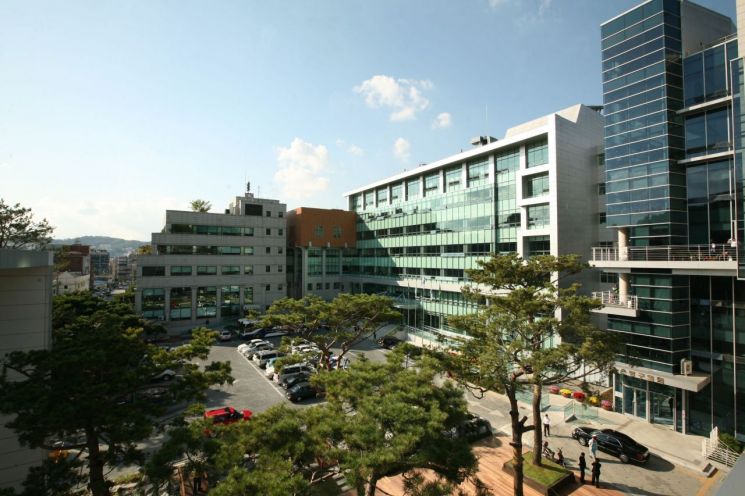
[Asia Economy Reporter Park Jong-il] Eunpyeong-gu (Mayor Kim Mi-kyung) has prepared an additional supplementary budget of 15.8 billion KRW this year to support residents' livelihood stability and daily recovery in the COVID-19 endemic era, and submitted it to the district council on the 10th.
The funding for this supplementary budget was secured through the 2021 fiscal year’s net surplus, general adjustment grants, national and city subsidies, and adjustments to the existing expenditure budget.
Earlier, the district prepared the largest-ever main budget this year of 1.011 trillion KRW, focusing on strengthening the social safety net, securing future growth engines, and investing to enhance urban competitiveness.
This supplementary budget continues the basic direction of the main budget while emphasizing concentrated investment in four major areas: ▲livelihood stability ▲daily recovery ▲quarantine and safety ▲current projects.
First, a total of 4.9 billion KRW was allocated to strengthen residents’ livelihood stability. The breakdown includes ▲2.5 billion KRW for disability activity support to promote independent living and social participation of persons with disabilities ▲300 million KRW for fund project expenses to expand loan support for small and medium enterprises and small business owners struggling due to prolonged COVID-19 ▲300 million KRW for support to participating facilities to establish eco-friendly meal supply ▲200 million KRW for diaper and infant formula support for low-income families ▲200 million KRW for establishing an oral health center ▲200 million KRW for expanding public daycare centers, among others.
A total of 2.7 billion KRW was allocated to support COVID-19 daily recovery. The breakdown includes ▲600 million KRW for constructing a multi-purpose facility in Surimaru village to foster a communicative and participatory community ▲500 million KRW for creating an observatory at Bongsan Sunrise Park to provide a healing space in nature to overcome COVID blues ▲300 million KRW for developing Nokbeon-dong neighborhood park ▲200 million KRW for maintenance of playground facilities at Geumam Cultural Park ▲200 million KRW for extending public library opening hours, etc.
The quarantine and safety environment budget totals 5.2 billion KRW. Specifically, ▲4.2 billion KRW for living support expenses to assist confirmed and quarantined COVID-19 patients in response to the government’s supplementary budget ▲200 million KRW for operating screening clinics to ensure uninterrupted infectious disease response were included.
A total of 2.7 billion KRW was allocated for urgent current projects in the second half of the year. To expand opportunities for cultural and artistic enjoyment and enhance the status of the literary city, ▲1.8 billion KRW was allocated for the construction of the Lee Ho-cheol Unification Road Literature Museum ▲20 million KRW for operational expenses related to collecting residents’ opinions for the redevelopment project planning of the station area urban maintenance-type redevelopment project.
Kim Mi-kyung, Mayor of Eunpyeong-gu, said, “With this first supplementary budget, we hope to restore the dynamism of the stagnant local economy and support livelihood stability and daily recovery to help our residents.” She added, “Once the budget is confirmed, we will proceed with follow-up procedures such as budget execution as quickly as possible so that the effects of the projects can appear immediately.”
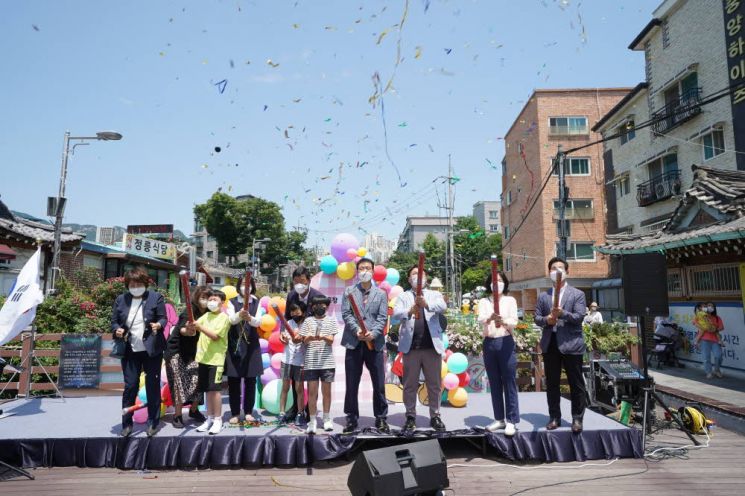
Seongbuk-gu (Mayor Lee Seung-ro)’s famous ‘Village Market Stream Market’ in Jeongneung has returned after 2 years and 6 months since COVID-19. The opening ceremony to welcome and celebrate the long-awaited return of the Stream Market was held on the 11th at Jeongneung Market.
The Stream Market takes place from June to October on the second and fourth Saturdays of each month around Jeongneung Market and Jeongneungcheon Stream. It is Seongbuk-gu’s representative local festival, rich with food, sights, and entertainment, started in 2014 to revitalize the traditional market and local community through harmony between traditional market merchants and residents. Residents participate as sellers of handmade crafts and secondhand goods operating a flea market, with specialized food sales and resident participation programs such as spinning tops, jegichagi (Korean shuttlecock kicking), eco-bag decorating, and busking performances.
At the opening ceremony, an introduction to the Stream Market and the ‘Promise to Keep the Beautiful Stream Market’ campaign were presented, along with an awards ceremony for the Jeongneung Market and Jeongneungcheon drawing contest held for children from May 16 to 20. Yoo Hyung-gon, president of the Jeongneung Market Merchants Association, said, “It was regrettable that we couldn’t hold face-to-face events for a long time, but now that the Stream Market has opened and the market is bustling, it feels very meaningful. We will prepare various market experience programs so that more residents can visit and enjoy the market, and we ask for your interest.”
Resident Kim** (Donam-dong, 40), who visited the Stream Market with their child, said, “Due to COVID-19, there were few opportunities for outdoor activities with my child, so I felt sorry and sad, but with the local festival held after a long time, I enjoyed a pleasant weekend looking at the paintings displayed along Jeongneungcheon and participating in various cultural experience activities with my child.”
Lee Seung-ro, Mayor of Seongbuk-gu, said, “Both small business owners and residents must have felt economically and psychologically constrained and difficult due to COVID-19, but with the opening of the Stream Market at Jeongneung Market, I hope the stagnant traditional market overcomes the crisis and becomes a place of coexistence and cooperation between residents and merchants.” He added, “The district will also do its best in various ways to help traditional markets and small business owners recover.”
To participate as a seller at the Stream Market, add ‘Jeongneung Market Baesisi’ as a friend on KakaoTalk. Applications are accepted for one week starting two weeks before the market day, and selections are made after screening. Detailed information can be obtained via KakaoTalk or at the office of the Together Value Jeongneung Market Cooperative.
Gwangjin-gu (Mayor Kim Seon-gap) has extended city bus route number 2227 to connect previously disconnected public transportation sections within the district.
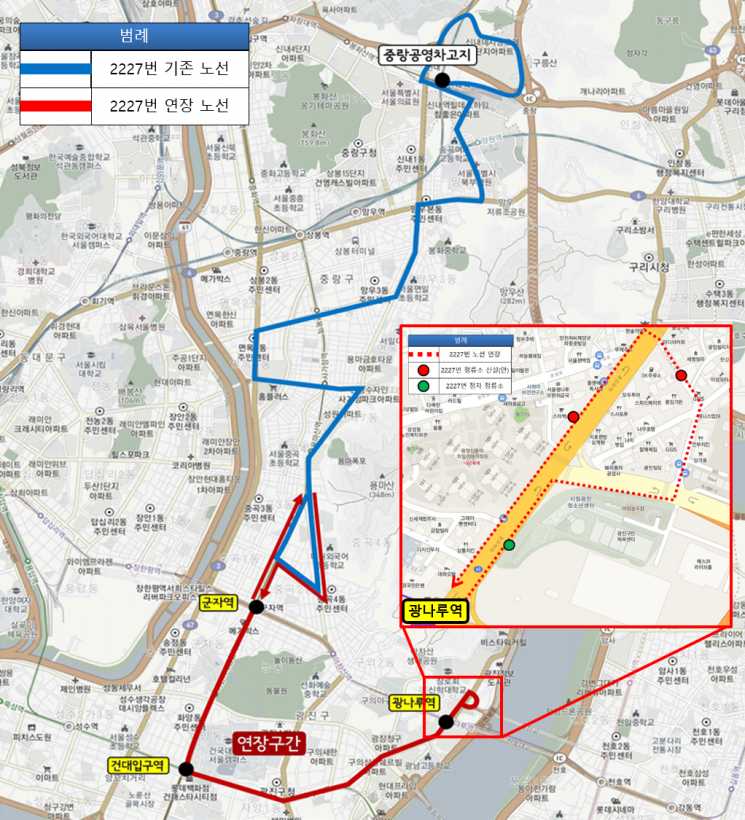
This route extension connects Junggok 4-dong (Junggok Station) to Hwayang-dong (Konkuk University Station) and Gwangjang-dong (Gwangnaru Station) to Hwayang-dong (Konkuk University Station), resolving a long-standing public complaint.
Accordingly, the existing route of bus 2227 will be extended to include ‘Yongma Intersection~Gunja Station~Children’s Grand Park Station~Konkuk University Station~Guui Station~Gwangnaru Station,’ with operations starting on the 27th.
Previously, in 2021, the district conducted a public transportation system service improvement project using big data on Gwangjin-gu transportation, identifying various issues and preparing improvement plans.
Based on the results of this project, a field survey was conducted to address the inconvenience residents experienced due to the lack of public transportation routes connecting Junggok 4-dong and Gwangjang-dong to Guui Station and Konkuk University Station. Surveys were also conducted through each neighborhood community center to gather residents’ opinions. After several consultations with Seoul City, the 2227 bus route was adjusted.
With this adjustment, bus 2227 will be rerouted from Junggok 4-dong through Gunja Station, Children’s Grand Park Station, Konkuk University Station, Guui Station, and finally to Gwangnaru Station.
The bus will continue to use existing city bus stops, and the district is reviewing and promoting the establishment of new stops to improve public transportation accessibility for Gwangjang-dong residents.
The district plans to conduct advance publicity through banners, flyers, the district website, and social media to prepare for any confusion among users.
For further details regarding the bus route adjustment, inquiries can be made to the Transportation Administration Division of Gwangjin-gu Office.
Through this extension, accessibility to the district office, Konkuk University Hospital, Gwangjin Culture and Arts Center, Lotte Department Store, and the Municipal Gwangjin Youth Center is expected to improve for residents of Junggok 4-dong, Gwangjang-dong, and Hwayang-dong, enhancing convenience in using public transportation.
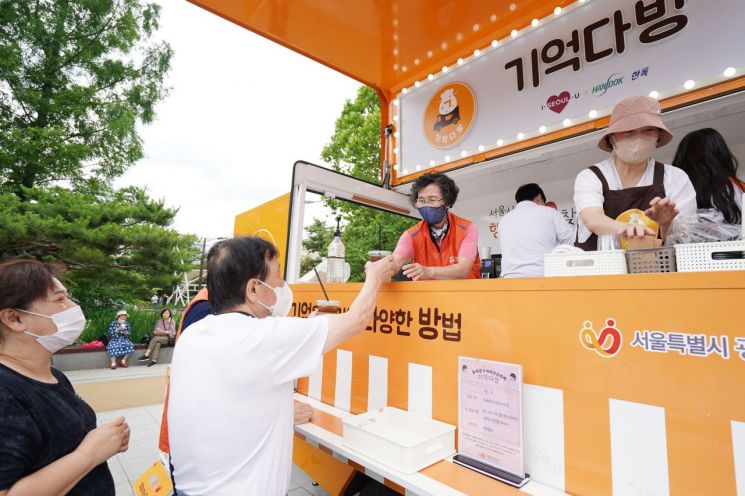
“It was difficult at first, but as I did it, it became fun and helpful,” said a senior participating as a barista at the Memory Cafe, smiling as they shared their experience of becoming a barista.
Dongdaemun-gu (Mayor Yoo Deok-yeol) Dementia Safety Center (Director Kim Jong-woo) held a mobile cafe ‘Memory Cafe’ where seniors with mild cognitive impairment participated as baristas, along with the ‘Dementia Safe Village, Let’s Be Together’ campaign, on the 14th from 10 a.m. to 4 p.m. at Jangan 2-dong Jangan Neighborhood Park.
The mobile cafe ‘Memory Cafe,’ meaning ‘various ways to protect memories,’ was bustling with people waiting for drinks made directly by seniors with mild cognitive impairment. Even if the ordered drinks were delayed or different from the order, it was a basic rule for users to naturally understand, and all visitors waited with bright expressions.
Alongside the ‘Memory Cafe,’ the ‘Dementia Safe Village, Let’s Be Together’ campaign featured experience booths that attracted many visitors. Early dementia screening and professional counseling were provided, along with programs such as the computer-based group rehabilitation cognitive program CoTras-G, bracelet making, and dementia awareness surveys.
Kim Jong-woo, Director of Dongdaemun-gu Dementia Safety Center, said, “I hope the restarted Memory Cafe after COVID-19 remains a good memory for the participating seniors. We will continue to support seniors with dementia and do our best to provide various programs to improve dementia awareness.”
© The Asia Business Daily(www.asiae.co.kr). All rights reserved.
![Clutching a Stolen Dior Bag, Saying "I Hate Being Poor but Real"... The Grotesque Con of a "Human Knockoff" [Slate]](https://cwcontent.asiae.co.kr/asiaresize/183/2026021902243444107_1771435474.jpg)


















