[Asia Economy Intern Reporter Kim Se-eun] Health authorities are on high alert as cases of infection caused by the Severe Fever with Thrombocytopenia Syndrome (SFTS) virus, for which there is no exact treatment, have occurred consecutively.
The microorganism causing Severe Fever with Thrombocytopenia Syndrome is the SFTS virus, which infects people through bites from the small brown tick during the relatively warm months from April to October.
This year as well, a 69-year-old Mr. A living in Donghae City, Gangwon Province, developed symptoms such as sore throat, decreased consciousness, and slurred speech after working in a field in front of his house last month. He visited the emergency room but died during treatment. On the 5th and 6th of this month, an octogenarian woman and a woman in her 50s who had been outdoors were confirmed positive consecutively, indicating signs of spread.
According to the Korea Disease Control and Prevention Agency, as of the 9th, there have been 22 SFTS patients nationwide this year, including 2 in Seoul, Busan, Gwangju, and Jeonnam, 3 in Jeju, and 4 in Chungbuk.
Infection with the SFTS virus can cause high fever, vomiting, and diarrhea, and in severe cases, can lead to death. There is no treatment or preventive vaccine, and the fatality rate reaches 17.4%.
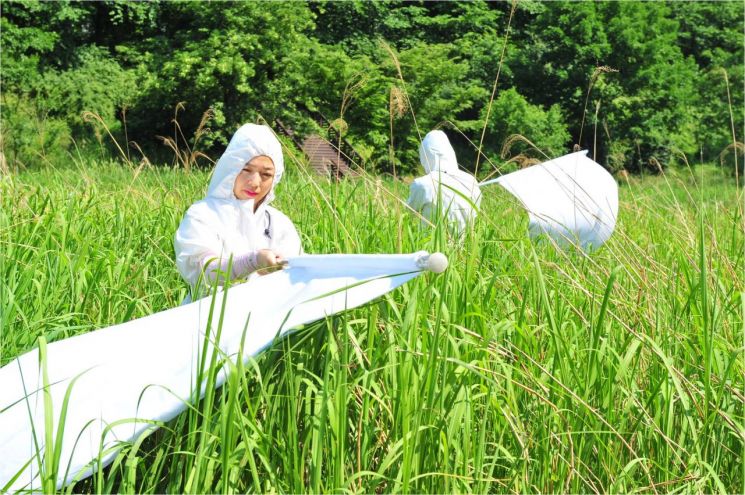
Health authorities urge people to wear long-sleeved clothing that minimizes skin exposure during outdoor activities, and to wash clothes and take a shower immediately after returning home to prevent SFTS infection.
They also advised that if high fever or gastrointestinal symptoms appear within two weeks after outdoor activities, individuals should immediately visit a medical institution, inform medical staff of their outdoor activity history, and receive medical care.
© The Asia Business Daily(www.asiae.co.kr). All rights reserved.
![Clutching a Stolen Dior Bag, Saying "I Hate Being Poor but Real"... The Grotesque Con of a "Human Knockoff" [Slate]](https://cwcontent.asiae.co.kr/asiaresize/183/2026021902243444107_1771435474.jpg)
















