Response to Russia-Ukraine Crisis Impact
Hyundai Motor Operates Integrated Risk Management Team... Overseeing Development, Production, and Sales Processes
Samsung and LG Also Establish Dedicated Organizational Positions
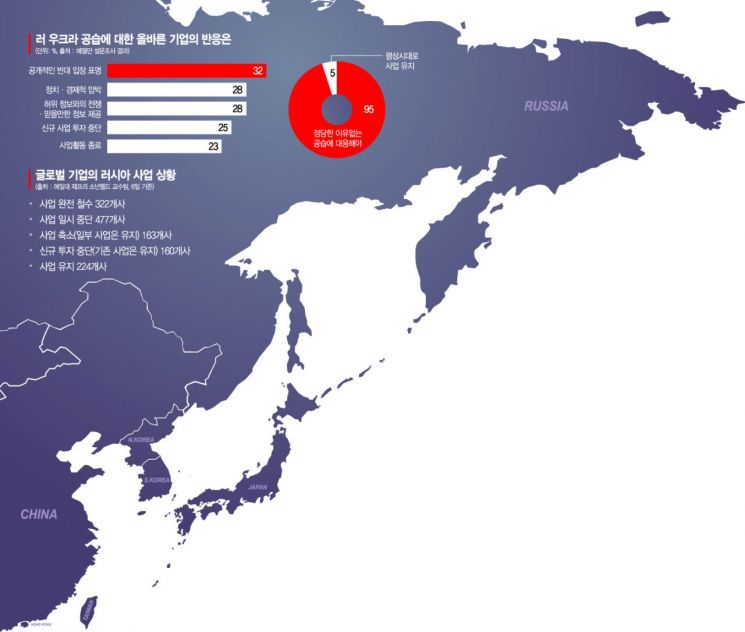
[Asia Economy reporters Choi Dae-yeol, Jung Hyun-jin, Kim Jin-ho, Moon Chae-seok] Domestic and international companies have taken preparedness measures in response to the major geopolitical risk posed by Russia's airstrikes on Ukraine because they judged that crisis management is a key factor determining the rise and fall of future business. Companies are expected to collect extensive information on supply chain issues, logistics, and labor shortages through related teams, while also preparing response strategies from the perspective of brand management.
According to the industry on the 7th, Hyundai Motor Company established and has been operating an Integrated Risk Management Working Committee (Cross Functional Team, CFT) since April. This is a consultative body involving representatives from related departments such as strategy, planning, purchasing, and development to respond more quickly to recent domestic and international risks. It is a direct organization under Hyundai Motor CEO Jang Jae-hoon, led by Kim Tae-eon, head of Genesis Global Planning Office, who previously worked at a foreign consulting firm.
Since the automotive industry involves numerous partner companies as well as close connections with upstream and downstream industries, supply chain management, where key value chains are intricately intertwined, has always been an important task for Hyundai Motor. The creation of a company-wide CFT involving multiple departments is interpreted as a recognition that risk management throughout the entire process of vehicle development, production, and sales, including the supply chain, has become much more important recently. Paradigm shifts surrounding the automotive industry, such as electrification and autonomous driving, are causing sudden variables that are difficult to handle solely at the individual company level.
In its recent corporate governance report, Hyundai Motor stated, "Due to future mega trends, the automotive industry is facing the greatest change in history, and automotive industry policies are also rapidly changing, making appropriate risk response a more important task," adding, "The prolonged COVID-19 pandemic, the Russia-Ukraine war causing unstable international conditions, and imbalanced semiconductor supply for key parts are also major risks."
The company has organically responded by, for example, redirecting key parts such as vehicle semiconductors to other regions for production when its vehicle assembly plant operating in Russia stopped due to delayed parts supply. This is why its core European plants were relatively less affected despite shutdowns. The company said, "For risk factors deemed important, we plan to develop response directions through scenario analysis, analyze the background and causes of major risks, and establish systematic countermeasures to address these risks."
Samsung Electronics recently established a comprehensive risk management dedicated organization called ‘BRM (Business Risk Management).’ To actively respond to global supply chain risks triggered by Russia's invasion of Ukraine, it changed from managing risks separately by division to a method that comprehensively reviews and coordinates risks in one place. If situations such as raw material price surges due to supply chain crises occur in the future, the company plans to form a task force (TF) by gathering related departments for swift response.
LG Electronics also reportedly held a first-half business report meeting for the first time in three years to discuss measures against various internal and external uncertainties. Given the recent sharp rise in logistics costs due to the Ukraine crisis and China's lockdowns, alternatives to these issues were likely a focus of discussion. Previously, in November last year, LG created the position of Chief Risk Officer (CRO), directly handled by top management. Vice President Bae Doo-yong, appointed as the inaugural CRO, is currently responsible for establishing LG Electronics’ company-wide crisis management system. LG Electronics has emphasized crisis management by, for example, newly establishing a ‘Safety, Environment, and Health Policy’ since early last year to strengthen Environmental, Social, and Governance (ESG) management.
Korea Shipbuilding & Offshore Engineering has operated a Foreign Exchange and Raw Material Risk Management Committee since 2019 under separate risk management regulations. Most of the ships it builds are exported to overseas shipping companies in Europe and other regions, and the global shipping market is directly affected by international geopolitical conditions. Hyosung, which has many overseas business sites and sales networks, also has overseas sales teams by region responding to country-specific issues, while Hanwha Group holds frequent meetings of presidents by major affiliates or similar business sectors to cope with geopolitical risks. POSCO International started on-site management last month, with CEO Joo Si-bo personally visiting overseas business sites to inspect local supply chains.
Japanese companies have also begun to view economic security as a core risk factor. According to the Nihon Keizai Shimbun, Hitachi Ltd. established an Economic Security Office within its procurement division in April. This office aims to collect information related to economic security and analyze geopolitical risks. Heavy industry company IHI established an Economic Security General Department in October last year to develop business plans in response to the Economic Security Promotion Act, including stable supply of strategic materials.
Additionally, Kirin Holdings conducted training on geopolitical risks for its management, Itochu Corporation refined its risk management guidelines last year, and Mitsubishi Electric established an Economic Security General Office directly under the president’s office in 2020 before the outbreak of the Ukraine war. Nihon Keizai reported, "Most Western companies have specialized organizations for risk analysis. For example, British Shell introduced scenario analysis with scientific forecasting since the 1970s and appears to have based its decision to withdraw from Russian operations on this."
© The Asia Business Daily(www.asiae.co.kr). All rights reserved.
![Clutching a Stolen Dior Bag, Saying "I Hate Being Poor but Real"... The Grotesque Con of a "Human Knockoff" [Slate]](https://cwcontent.asiae.co.kr/asiaresize/183/2026021902243444107_1771435474.jpg)

















