Patent Settlement and Price Reduction
All-Out Effort with New Strategies
Avastin's Market Share Continues to Decline
Due to Successive Biosimilar Launches
Stelara Patent Expiring Soon
Intense Development Competition Among Celltrion, Epics, and Others
[Asia Economy Reporter Lee Chun-hee] As the patents for major biopharmaceuticals are nearing expiration, competition to develop biosimilars (biopharmaceutical generics) to capture new markets is intensifying. To enter the market quickly, some companies are reaching early patent agreements with the original developers, while others are adopting bold strategies such as lowering drug prices to maintain the competitiveness of the original products.
Avastin’s Market Share Declines Amid Successive Biosimilar Launches
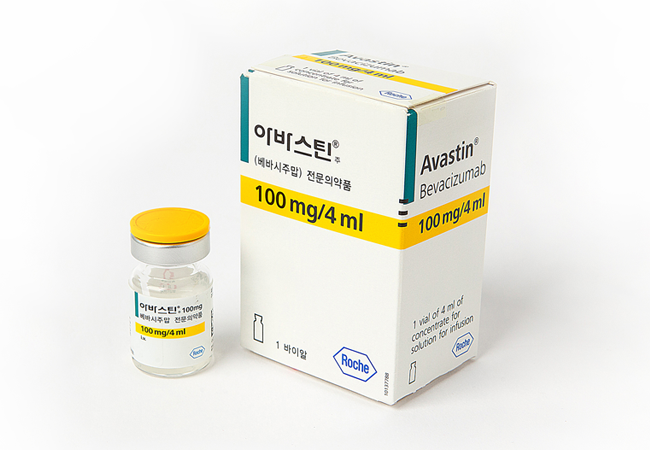
According to industry sources on the 3rd, Avastin (active ingredient: Bevacizumab), an anticancer drug developed by Roche (Genentech), is a blockbuster drug that generated $5.1 billion (approximately 6 trillion KRW) in sales last year. It has various indications including non-small cell lung cancer, ovarian cancer, colorectal cancer, and lung cancer. Its patent expired in the U.S. in 2019 and is expected to expire in Europe this year.
Overseas, biosimilars such as Pfizer’s Zirabev, Amgen’s Mvasi, and Amneal’s Arimis have already been approved. Since these biosimilars offer equivalent efficacy at lower prices, Avastin’s market share continues to decline. According to U.S. market research firm Symphony Health, Avastin’s share in the bevacizumab market has dropped to 25.9%. Mvasi holds a 48.4% share, while Zirabev has secured a market share similar to Avastin.
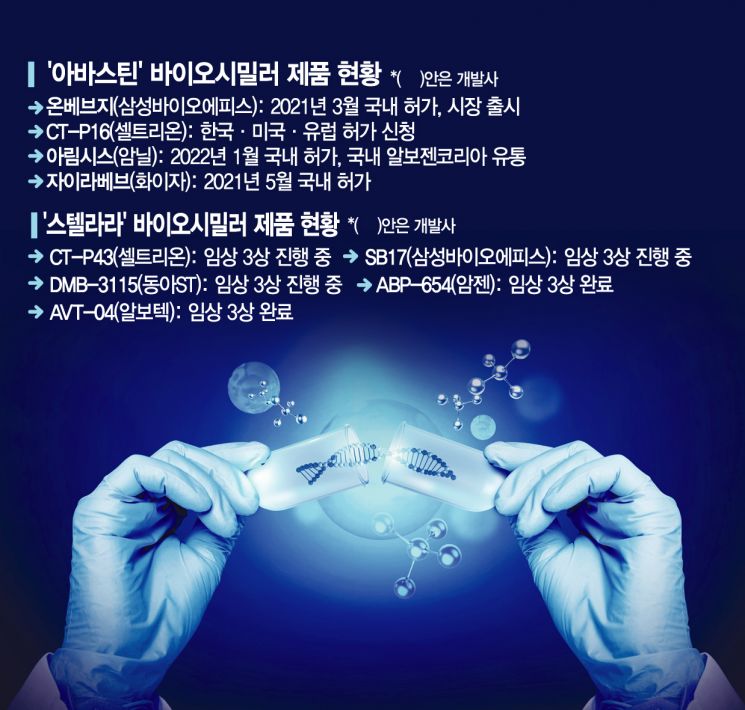
Domestically, Samsung Bioepis’s Onbevzi has been approved and is expanding its market presence. After its launch in September last year, it recorded sales of 500 million KRW in the fourth quarter alone, with plans to further expand prescriptions this year. The strategy is to rapidly increase market share by taking advantage of the fact that Zirabev and Arimis have been approved but have not yet been launched in the market.
From the perspective of Korea Roche, sales are declining not only due to the drop in market share but also because of price reductions following the launch of biosimilars. After Onbevzi was listed on the National Health Insurance reimbursement list last year, Avastin’s domestic price was directly cut by 30%, followed by an additional 5% reduction recently due to expanded reimbursement criteria. However, the fact that the price difference with Onbevzi has virtually disappeared through these price cuts is seen as a positive sign for maintaining market share.
Additionally, domestically, Celltrion has completed the development of the biosimilar CT-P16 and applied for marketing authorization in Korea, the U.S., and Europe last year. To enter the market quickly after approval, Celltrion reached a patent agreement with Genentech last month. The company plans to respond swiftly to major indications still under patent protection, such as ovarian cancer, to aggressively pursue the market as a latecomer.
Stelara: Three Companies Conducting Phase 3 Clinical Trials Only in Korea
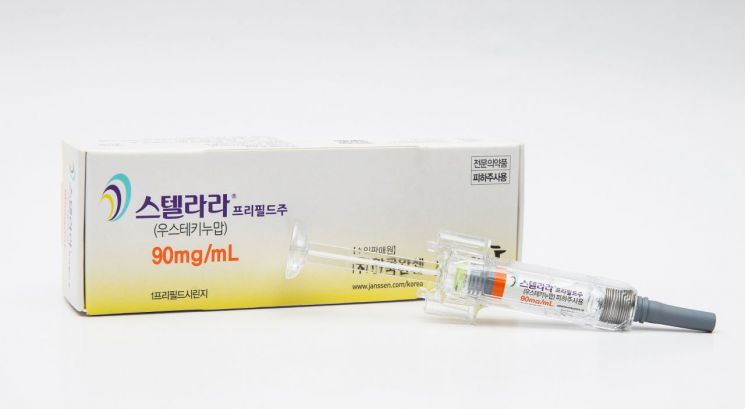
Competition surrounding Stelara (active ingredient: Ustekinumab), whose patent expires next year, is also fierce. Developed by Janssen, a subsidiary of Johnson & Johnson, Stelara is a treatment for autoimmune diseases such as psoriasis, arthritis, Crohn’s disease, and ulcerative colitis, generating $9.1 billion (approximately 11 trillion KRW) in sales last year alone. The substance patent expires in the U.S. in September next year and in Europe in July 2024.
Among overseas big pharma companies, Amgen was the first to succeed in Phase 3 clinical trials. In April, Amgen announced that its Phase 3 trial of ABP-654 met the primary efficacy endpoints and confirmed no clinically meaningful differences compared to the original drug. Alvotech also announced on the 24th of last month (local time) that its Phase 3 clinical trial results for the Stelara biosimilar AVT-04 met the primary endpoints and confirmed equivalence to Stelara.
Domestically, Celltrion, Samsung Bioepis, and Dong-A ST are developing biosimilars. Celltrion’s CT-P43 entered global Phase 3 clinical trials in December 2020 and completed patient recruitment in May last year. Samsung Bioepis started a Phase 3 clinical trial for SB-17 targeting psoriasis patients in eight countries with 464 participants in July last year. Dong-A ST and DM Bio, part of the Dong-A Socio Group, are jointly developing DMB-3115, which completed the registration of 605 patients for global Phase 3 trials in November last year and plans to complete the trials within this year.
© The Asia Business Daily(www.asiae.co.kr). All rights reserved.
![Clutching a Stolen Dior Bag, Saying "I Hate Being Poor but Real"... The Grotesque Con of a "Human Knockoff" [Slate]](https://cwcontent.asiae.co.kr/asiaresize/183/2026021902243444107_1771435474.jpg)

















