Russia's Production Plummets Due to US Sanctions, Shares Increased Output Burden
US Oil Stocks Plunge... Consumption Expected to Rise Further
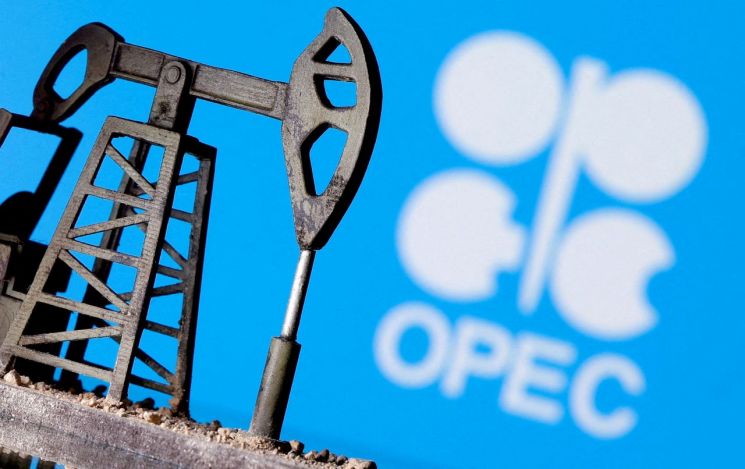
[Asia Economy Reporter Hyunwoo Lee] Although the Organization of the Petroleum Exporting Countries (OPEC) and the major oil-producing countries' coalition including Russia, known as OPEC+, announced an agreement to increase production by about 50% more than previously planned, doubts about the actual increase in production have grown, causing international oil prices to rise instead.
On the 2nd (local time) at the New York Mercantile Exchange (NYMEX), the price of West Texas Intermediate (WTI) crude oil closed at $116.87 per barrel, up 1.40% from the previous session. Brent crude oil from the North Sea on the London ICE exchange also traded at $118.35 per barrel, up 1.77%.
International oil prices rose on the day despite the additional production increase agreed upon at the OPEC+ regular meeting. Earlier that day, OPEC+ member countries held a regular meeting and announced an agreement to increase production by 648,000 barrels per day in July and August. This figure represents about a 50% increase compared to the previous production increase of 432,000 barrels per day.
However, due to Western sanctions against Russia following its invasion of Ukraine, Russia's oil production has decreased by more than 1 million barrels per day, leading to assessments that the production increase is not significant. Additionally, much of the agreed production increase is to be borne by Russia, which is unable to increase production due to sanctions, causing continued disappointment in the market.
Jeff Curry, Global Head of Commodity Research at Goldman Sachs, described the announcement as "effectively changing nothing," stating, "It is merely a plan to carry out the previously planned production increase, which was to be done in three phases, over two months."
Amid forecasts that a substantial expansion of oil supply is unlikely, consumption is expected to increase significantly, further fueling the upward trend. The weekly crude oil inventory reported by the U.S. Energy Information Administration (EIA) was 414.733 million barrels, down 5.068 million barrels from the previous week. With the summer heat intensifying, increased electricity demand for air conditioning and more vehicle movement during the vacation season are expected to drive consumption even higher.
© The Asia Business Daily(www.asiae.co.kr). All rights reserved.
![Clutching a Stolen Dior Bag, Saying "I Hate Being Poor but Real"... The Grotesque Con of a "Human Knockoff" [Slate]](https://cwcontent.asiae.co.kr/asiaresize/183/2026021902243444107_1771435474.jpg)















