[Asia Economy Reporter Hwang Yoon-joo] Investors in exchange-traded funds (ETFs) listed in May, when the U.S. Federal Reserve (Fed) implemented a 'big step' (raising the benchmark interest rate by 50 basis points at once), were found to have diversified their investments into short-term bonds and large-cap stocks.
As the Fed announced it would maintain a tightening stance until inflation subsides, it appears that bargain-hunting sentiment has flowed in. It is also notable that crude oil inverse ETFs appeared among the top 10 ETFs by fund inflow.
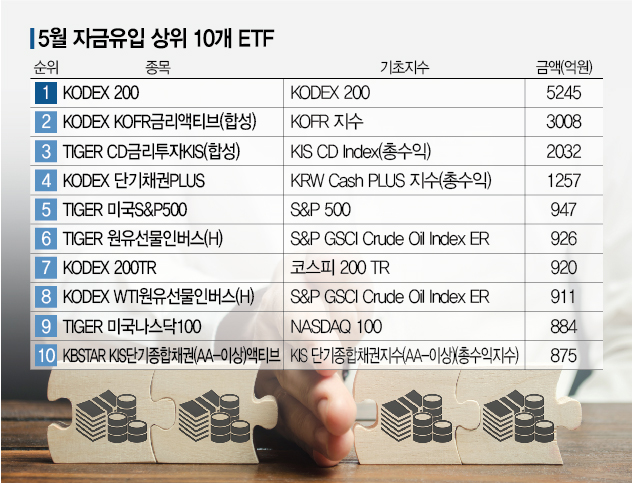
According to the Korea Exchange on the 2nd, among the top 10 ETFs by fund inflow in May, four were bonds and four were large-cap stocks (KOSPI, S&P 500, Nasdaq 100).
Looking in detail, the ETF that attracted the most funds was 'KODEX 200' with 524.5 billion KRW inflow. This was followed by 'KODEX KOFR Interest Rate Reactive (Synthetic)' with 300.8 billion KRW, 'TIGER CD Interest Rate Investment KIS (Synthetic)' with 203.2 billion KRW, 'KODEX Short-term Bond PLUS' with 125.7 billion KRW, and 'TIGER U.S. S&P 500' with 94.7 billion KRW.
The ETFs ranked 6th to 10th were 'TIGER Crude Oil Futures Inverse (H)' with 92.6 billion KRW, 'KODEX 200TR' with 92.0 billion KRW, 'KODEX WTI Crude Oil Futures Inverse (H)' with 91.1 billion KRW, 'TIGER U.S. Nasdaq 100' with 88.4 billion KRW, and 'KBSTAR KIS Short-term Comprehensive Bond (AA or higher) Active' with 87.5 billion KRW.
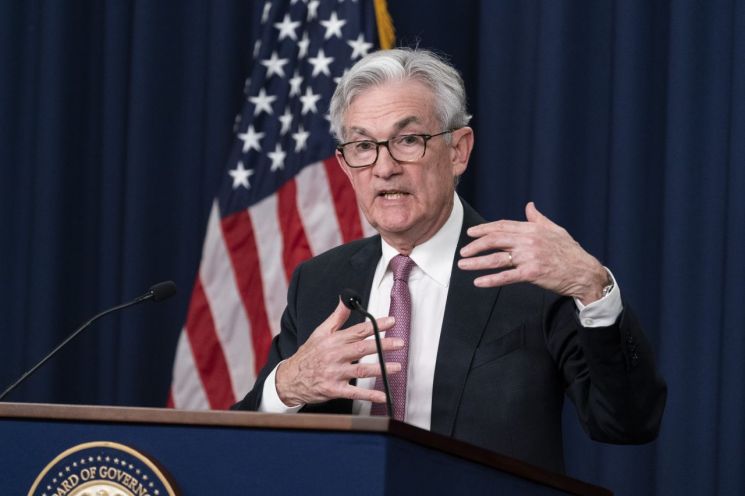
The concentration of funds in short-term bonds is interpreted as institutions taking a wait-and-see stance amid the Fed's ongoing tightening moves. The U.S. Consumer Price Index (CPI) for April rose 8.3% year-on-year, marking a slowdown in the inflation rate for the first time in eight months.
However, concerns about inflation remain unabated. Mary Daly, President of the San Francisco Fed, expressed support for 0.6 percentage point rate hikes in June and July during an interview with the media on the 1st (local time), demonstrating a commitment to tightening. It is analyzed that money flowed into short-term bond ETFs mainly from institutions sensitive to benchmark interest rates. Bond ETFs are products primarily attracting institutional funds.
Individual investors appear to have engaged in phased buying while paying close attention to the Fed's moves. Notably, funds flowed into U.S. indices that had recently experienced significant declines. TIGER U.S. Nasdaq 100 peaked at 88,317 KRW on January 4th closing price and fell to a low of 66,905 KRW on May 25th. Similarly, TIGER U.S. S&P 500 peaked at 14,363 KRW on January 4th closing price and recorded a low of 12,485 KRW on May 24th.
A representative from Samsung Asset Management explained, "Investors seem to be accepting that tightening will proceed with a 'big step' rather than a 'giant step.' They believe that uncertainties such as inflation, interest rate hikes, and war have been somewhat reflected, leading them to enter bargain buying."
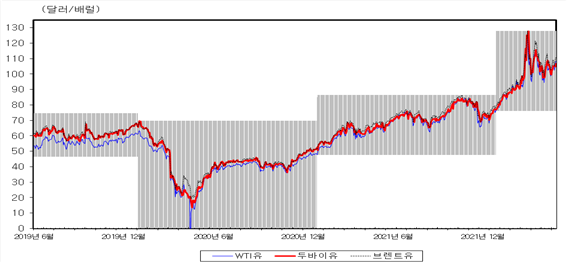
The outlook for crude oil inverse ETFs is expected to change starting in June. In May, the perception that international oil prices had peaked expanded, but recently, due to sanctions on Russian oil exports, forecasts of international oil prices reaching $150 have emerged. Market experts point out that oil price forecasts are meaningless.
A securities firm official said, "For the Fed to control inflation, energy prices, that is, international oil prices, must be suppressed. In the past, control was possible through OPEC, but now, due to diplomatic and security variables such as war, prediction has become impossible."
© The Asia Business Daily(www.asiae.co.kr). All rights reserved.
![Clutching a Stolen Dior Bag, Saying "I Hate Being Poor but Real"... The Grotesque Con of a "Human Knockoff" [Slate]](https://cwcontent.asiae.co.kr/asiaresize/183/2026021902243444107_1771435474.jpg)

















