Increasing Outings After Social Distancing Lifted
"Proper First Aid Methods Should Be Learned in Advance"
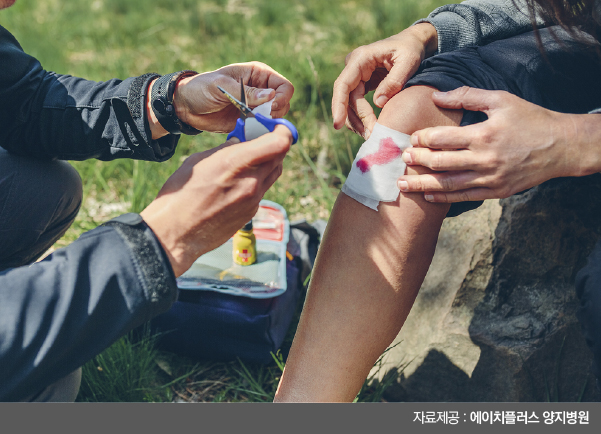
[Asia Economy Reporter Lee Gwan-joo] With social distancing measures effectively lifted, the number of outing visitors is rapidly increasing. As outdoor activities such as water play and hiking increase, the risk of safety accidents also rises. Knowing how to respond in emergency situations can be very useful in times of crisis.
Falls to Watch Out for in the Mountains... Emergency Treatment for Fractures and Bleeding
According to the Fire Agency, there were a total of 11,952 mountain accidents last year. Among these, falls were the third most common accident after getting lost (3,206 cases) and slips/falls (2,769 cases). Injuries from falls often lead to fractures and bleeding. Fracture patients should not move recklessly as broken bones can damage blood vessels, causing secondary injuries. Use tree branches or hiking poles to immobilize the fractured area to prevent secondary injuries, and check the immobilized area every 10 minutes for changes in skin color or sensation. Heo In-young, head of the Emergency Medicine Center at H Plus Yangji Hospital, explained, "Falls can cause bleeding along with fractures, and wounds can become infected by contaminants like soil, so the wound should be washed with clean water and then pressure applied with a clean cloth to stop the bleeding."
Burn accidents can often occur at campsites due to the use of fire for barbecues and other activities. If burned, the affected area should be cooled under running water for 15 to 20 minutes. Using soju or toothpaste can actually worsen the burn.
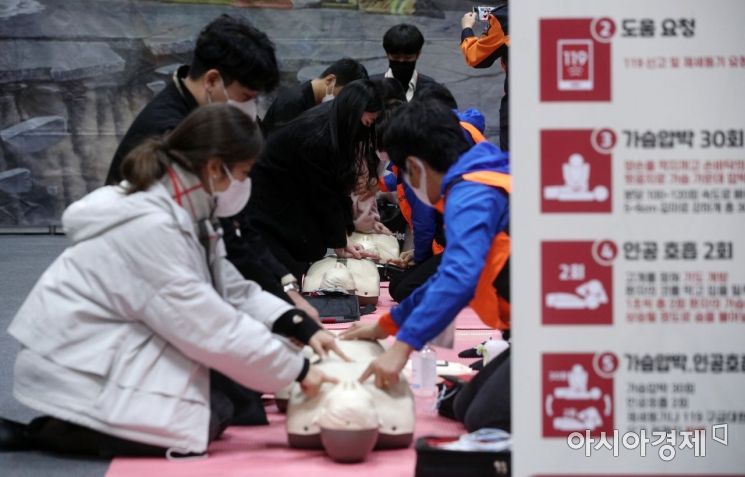
Drowning Victims Should Be Moved to a Flat Surface and Breathing Checked
As the heat intensifies, more people are enjoying water activities. The most important thing to watch out for during water play is drowning accidents. When a drowning victim is found, the correct response is to move the patient to a flat surface, avoiding sloped areas, so that cardiopulmonary resuscitation (CPR) can be performed. Emergency treatment varies depending on the patient’s condition. If the patient is breathing, maintain a recovery position by turning them on their side to prevent aspiration of foreign substances. If the patient is not breathing, perform CPR and continue until paramedics arrive. Drowning victims exposed to cold water for a long time may suffer from hypothermia, so remove wet clothes and keep the patient warm with a blanket.
Choking incidents can also occur while eating during travel. The Heimlich maneuver is an emergency treatment method that can be applied to patients with airway obstruction. Stand behind the patient, place the thumb side of a clenched fist between the patient’s navel and rib cage near the solar plexus, grasp the fist with the other hand, and push upward in a sweeping motion.
Center head Heo In-young emphasized, "Performing emergency treatment incorrectly can put the patient at risk, and since treatment methods vary depending on the emergency patient’s condition and age, such as pregnant women or infants, it is best to learn the correct methods in advance. When an accident occurs, it is important to perform emergency treatment according to the situation and immediately call 119 to request prompt assistance."
© The Asia Business Daily(www.asiae.co.kr). All rights reserved.
![Clutching a Stolen Dior Bag, Saying "I Hate Being Poor but Real"... The Grotesque Con of a "Human Knockoff" [Slate]](https://cwcontent.asiae.co.kr/asiaresize/183/2026021902243444107_1771435474.jpg)
















