Korea Hydro & Nuclear Power Succeeds in Producing Nuclear Power Plant Parts with 3D Printing Technology
Enhances Production Efficiency and Minimizes Supply Chain Risks
Recognized as a Core Next-Generation Nuclear Technology Alongside SMR
Commercialization Expected to Take Time Due to Lack of Domestic Regulations
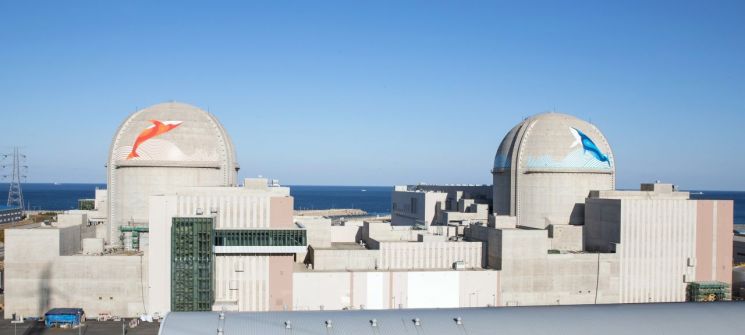
[Asia Economy Sejong=Reporter Lee Junhyeong] Korea Hydro & Nuclear Power (KHNP) has succeeded in manufacturing nuclear power plant components using 3D printing technology. The development of nuclear power plant components utilizing 3D printing technology is considered a core area of next-generation nuclear power technology, alongside Small Modular Reactors (SMRs). However, since there are no existing standards or regulations for nuclear power plant 3D printing technology, it is expected to take considerable time before commercialization.
According to related government departments on the 27th, KHNP recently developed a technology to produce nuclear power plant impellers using 3D printing technology. The impeller is a secondary system component used in pumps that supply cooling water to the reactor. Previously, KHNP began research and development (R&D) on 3D printed impellers in 2020 in collaboration with the Korea Institute of Nuclear Graduate Studies (KINGS). A KINGS official stated, “The research has been successfully conducted,” adding, “Tests on mechanical strength and other factors showed no significant difference compared to conventional impellers.”
KHNP ventured into 3D printing technology development to maximize the economic efficiency of nuclear power plants. Applying 3D printing to nuclear power plant processes can shorten the manufacturing time of components. Large-scale projects like nuclear power plants incur additional costs of at least tens of billions of won if the process is delayed by even one to two months. Therefore, reducing the time required for component procurement increases economic benefits.
There are already several cases where efficiency was improved using nuclear power plant 3D printing technology. The Korea Atomic Energy Research Institute produced heat-resistant materials for nuclear power plants using 3D printers in 2018, increasing process speed by about 20 times. The United Kingdom produced key components for Small Modular Reactors (SMRs) using 3D printers, reducing the manufacturing period from the previous three years to six months.
3D printing technology also has the advantage of minimizing supply chain risks. A large nuclear power plant contains about 2 million components per unit. Due to the impact of the nuclear phase-out policy over the past five years, the domestic nuclear power supply chain has been disrupted, causing KHNP to face difficulties in component procurement. However, the situation changes when using 3D printing. An industry official said, “3D printing is a production method optimized for small-volume, multi-variety manufacturing,” adding, “It can produce complex components even when suppliers have disappeared, saving time and costs in building supply chains.”
However, it is expected to take some time before entering the commercialization stage. This is because there are no technical standards or regulations for nuclear power plant components made by 3D printing. Accordingly, it is reported that KHNP has not yet been able to consider the commercialization of nuclear power plant 3D printing technology.
© The Asia Business Daily(www.asiae.co.kr). All rights reserved.
![Clutching a Stolen Dior Bag, Saying "I Hate Being Poor but Real"... The Grotesque Con of a "Human Knockoff" [Slate]](https://cwcontent.asiae.co.kr/asiaresize/183/2026021902243444107_1771435474.jpg)















