[Asia Economy Reporter Yoo In-ho] A resolution for additional sanctions against North Korea in response to military provocations such as missile launches was blocked due to opposition from China and Russia. The confrontation between ‘South Korea, the U.S., and Japan VS North Korea, China, and Russia’ over strengthening sanctions on North Korea appears to be intensifying.
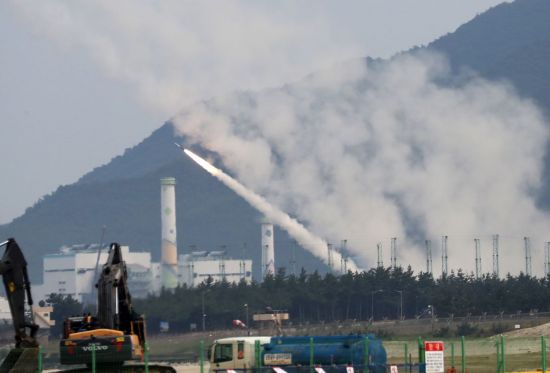
According to the Ministry of Foreign Affairs on the 27th, the United Nations Security Council held a meeting on the 26th (local time) at the UN headquarters in New York and voted on a resolution for additional sanctions against North Korea, including reducing the cap on North Korea’s oil imports, but it was rejected. This Security Council meeting was the first vote on a North Korea sanctions resolution since the unanimous adoption of Resolution 2397 on December 22, 2017.
The voting result was 13 countries in favor and 2 against, far exceeding the approval threshold (9 votes in favor). However, the problem was that the two opposing votes came from the permanent members China and Russia.
For a Security Council resolution to pass, at least 9 of the 15 member states must vote in favor, and none of the five permanent members can veto it.
This resolution was pushed forward under U.S. leadership in response to North Korea’s multiple test launches of ballistic missiles, including intercontinental ballistic missiles (ICBMs), this year.
The ‘oil trigger’ clause in Security Council Resolution 2397, which mandates automatic discussion of strengthening oil supply sanctions if North Korea launches an ICBM, served as the basis for pursuing additional sanctions.
The U.S. drafted the resolution in March and discussed it with Security Council members. On the 25th, near the end of President Joe Biden’s visit to South Korea and Japan, North Korea launched three ballistic missiles, including an ICBM, prompting the U.S. to immediately push for a vote on the resolution. The U.S. holds the Security Council presidency in May.
The failed resolution aimed to reduce North Korea’s crude oil import cap from the existing 4 million barrels to 3 million barrels, and the refined oil import cap from 500,000 barrels to 375,000 barrels.
The resolution also included provisions to prohibit North Korea from exporting mineral fuels, mineral oils (hydrocarbon mixtures obtained from petroleum), their distilled products, watch products, and parts. Measures to block exports of tobacco leaves and tobacco products to North Korea were also pursued.
The additional sanctions included freezing assets of the hacking group Lazarus, known to be linked to North Korea’s Reconnaissance General Bureau; the Chosun Namgang Trading Company responsible for dispatching North Korean overseas workers; the Haegumgang Trading Company supporting North Korea’s military technology exports; and Kim Su-il, the Vietnam representative of the Ministry of Military Industry leading ballistic missile development.
The resolution also banned acquiring or facilitating the acquisition of information and communication technology or related services from North Korea.
Meanwhile, there is an analysis that North Korea is highly likely to conduct a nuclear test during the U.S. Memorial Day week on the 30th.
Victor Cha, Vice President of the U.S. think tank Center for Strategic and International Studies (CSIS), said on the 26th (local time) in an article titled “North Korea’s Provocations During U.S. Holidays,” “Our satellite image analysis shows that the third tunnel at North Korea’s Punggye-ri nuclear test site is almost ready, and North Korea has shown a pattern of disrupting major U.S. holidays.”
He predicted, “It seems highly likely that North Korea will conduct a nuclear test during the upcoming U.S. Memorial Day week (May 30).”
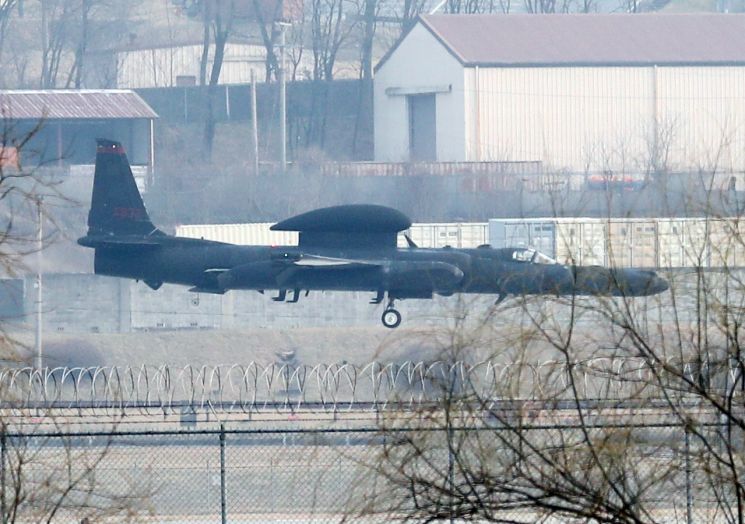
Earlier, at a CSIS-hosted forum on the 23rd, Cha also mentioned the possibility of provocations during Memorial Day week, saying, “North Korea loves U.S. national holidays.”
According to Cha, North Korea launched a short-range ballistic missile on September 1, 1984, just before the U.S. Labor Day on September 3, and has carried out 21 military provocations on major holidays since then.
Most recently, on January 17 this year, North Korea launched a short-range missile on Martin Luther King Jr. Day, and on November 28, 2019, just before Thanksgiving, it also launched a short-range missile. On September 4, 2017, the day before Labor Day, North Korea conducted its sixth nuclear test.
Regarding Memorial Day, North Korea conducted missile tests seven times in total?in 1990, twice in 1993, 1997, 2007, 2009, and 2017. Around the U.S. Independence Day on July 4, North Korea also staged military demonstrations in 2017, 2009, and 2006.
© The Asia Business Daily(www.asiae.co.kr). All rights reserved.
![Clutching a Stolen Dior Bag, Saying "I Hate Being Poor but Real"... The Grotesque Con of a "Human Knockoff" [Slate]](https://cwcontent.asiae.co.kr/asiaresize/183/2026021902243444107_1771435474.jpg)
















