Samsung 450 trillion, SK 247 trillion, Hyundai Motor 63 trillion, LG 106 trillion, Lotte 37 trillion
5 major groups' investment over next 3-5 years totals 903 trillion
Including Hanwha, GS, Doosan, Hyundai Heavy Industries, POSCO, total 1,041.6 trillion
1.6 times this year's national budget... Focused domestic investment, vital for nurturing future growth engines
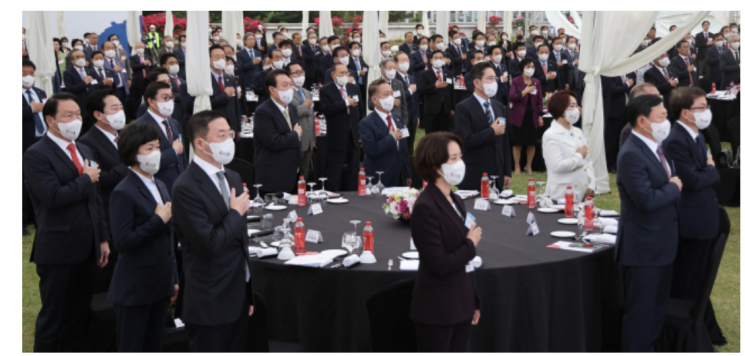 President Yoon Suk-yeol is saluting the national flag with attendees at the 2022 Korea Small and Medium Business Conference held on the lawn square in front of the Yongsan Presidential Office building in Seoul on the 25th. Attending the event were the heads of the five major conglomerates, including Koo Kwang-mo, Chairman of LG Group; Chey Tae-won, Chairman of SK Group; Lee Jae-yong, Vice Chairman of Samsung Electronics; Chung Eui-sun, Chairman of Hyundai Motor Group; and Shin Dong-bin, Chairman of Lotte Group. (Photo by Yonhap News)
[Asia Economy Reporters Sunmi Park, Hyungil Oh, Donghoon Jung] On the 26th, SK and LG Groups finalized their investment plans for the next five years, revealing that the total investment scale of the five major groups including Samsung, Hyundai Motor, and Lotte amounts to 903 trillion won. The number of new hires announced by these groups alone exceeds 260,000, marking an unprecedented scale of investment.
Including POSCO, GS, Hanwha, Hyundai Heavy Industries Group, and Doosan, the total investment by major domestic groups surpasses 1,020.6 trillion won. This 1,000 trillion won figure is 1.6 times the annual budget of South Korea (607 trillion won) and more than half (52%) of the country's Gross Domestic Product (GDP, 1,911 trillion won).
The large-scale investment announcements by domestic conglomerates on this day are interpreted as a proactive response to the restructuring of the global economic framework, such as the Korea-US technology alliance, by enhancing competitiveness in advanced industries. This means that all major conglomerates are staking their lives on investments to nurture future growth industries ahead of others. Analysts also suggest that alongside astronomical investments and large-scale hiring, these moves reflect a commitment to fulfilling corporate roles and responsibilities in response to the pro-business stance emphasized continuously since the Yoon Suk-yeol administration took office.
According to the business community on the 26th, SK Group announced investment plans focusing on the so-called BBC industries: semiconductors (Chip), batteries (Battery), and bio (Bio) as core growth engines. Judging that semiconductors are the core of the 4th Industrial Revolution, including AI and digital transformation, SK allocated more than half of its total investment, 142 trillion won, to semiconductors and semiconductor materials.
Additionally, to achieve the group's goal of reducing 200 million tons of carbon by 2030, which is 1% of the global carbon reduction target (21 billion tons), SK plans to invest 67 trillion won in eco-friendly future industries such as electric vehicle batteries and materials, hydrogen, wind power, and renewable energy. It will also invest 25 trillion won in the digital sector and 12 trillion won in the bio sector. An SK Group official said, "We focused on strengthening core growth engines by concentrating 90% of the total investment on BBC," adding, "The main agents of growth are ultimately talents, so we plan to actively create jobs by hiring 50,000 people."
On the same day, LG Group also announced plans to invest 106 trillion won domestically over the next five years, focusing on future growth sectors. In particular, 48 trillion won will be concentrated on research and development (R&D). By sector, 43 trillion won will be spent on future growth areas. Nearly half of that, 21 trillion won, will be focused on R&D in batteries and battery materials, automotive electronics, next-generation displays, AI and data, bio, and eco-friendly clean tech.
LG plans to directly hire about 10,000 people annually until 2026. Over three years, more than 3,000 new hires, accounting for over 10% of total recruitment, will be in R&D fields such as AI, software, big data, eco-friendly materials, and batteries, centered on new advanced businesses.
POSCO Group also announced on the same day that it will invest 53 trillion won globally, including 33 trillion won domestically, over the next five years and plans to directly hire about 25,000 people. With the launch of POSCO Holdings in March, POSCO Group has operated a holding company system for the first time in its history and plans to focus on strengthening competitiveness in core businesses such as green steel, secondary battery materials and hydrogen eco-friendly future materials, eco-friendly infrastructure, and future technology investments. The group aims to solidify its status as a leading eco-friendly future materials company, contribute more to the development of the domestic economy and industry, and actively lead future industry trends.
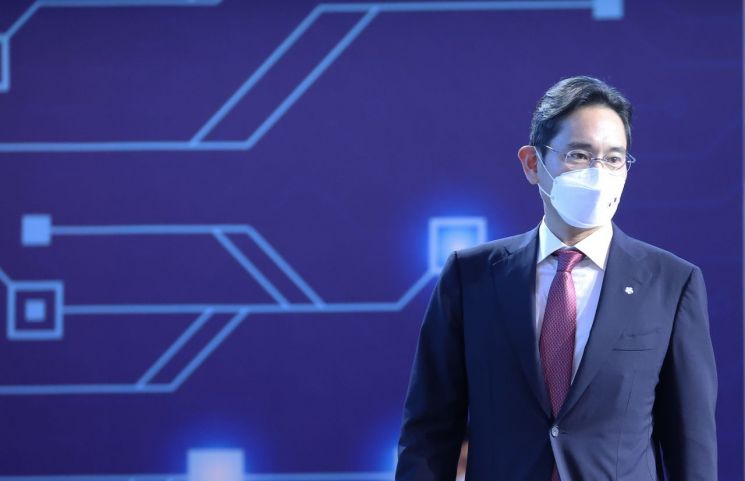
In the steel business, POSCO plans to invest about 20 trillion won to further solidify its world-class competitiveness by establishing electric furnaces and introducing eco-friendly facilities for transitioning to an eco-friendly production system, as well as strengthening technology for steel products used in electric vehicle motors. Approximately 5.3 trillion won will be invested in the ‘eco-friendly future materials’ business sectors such as secondary battery materials and hydrogen for stable raw material procurement, facility expansion, and securing next-generation technologies.
Additionally, about 5 trillion won will be invested in the ‘eco-friendly infrastructure’ sectors such as energy, construction and infrastructure, and food businesses. The group also plans to invest about 2.7 trillion won in venture investments and R&D to discover future businesses and secure new technologies, promoting balanced growth at the group level.
Along with large-scale investments, POSCO Group will also focus on securing talents suitable for nurturing group businesses. By 2026, it plans to directly hire about 25,000 people in key business areas such as eco-friendly steel production and technology development, secondary battery materials, and hydrogen.
Hyundai Heavy Industries Group also announced on the same day that it will invest a total of 21 trillion won over the next five years in eco-friendly transition and digital transformation, which it identified as fields responsible for the group’s future. To build the core foundation that will support the group’s next 50 years and strengthen the competitiveness of its core businesses, it will invest 12 trillion won in building smart shipyards that can improve production efficiency and quality, establishing smart construction machinery infrastructure focused on automation and unmanned technology development in the construction sector, and investing in smart energy businesses.
It will invest a total of 7 trillion won in eco-friendly R&D. In the shipbuilding sector, it plans to build a hydrogen transport value chain including eco-friendly ship materials, carbon capture technology, and hydrogen and ammonia-powered ships. In the construction machinery sector, it will focus on developing battery-based machinery equipment, and in the energy business, it will concentrate on carbon reduction technologies and eco-friendly bio technology development.
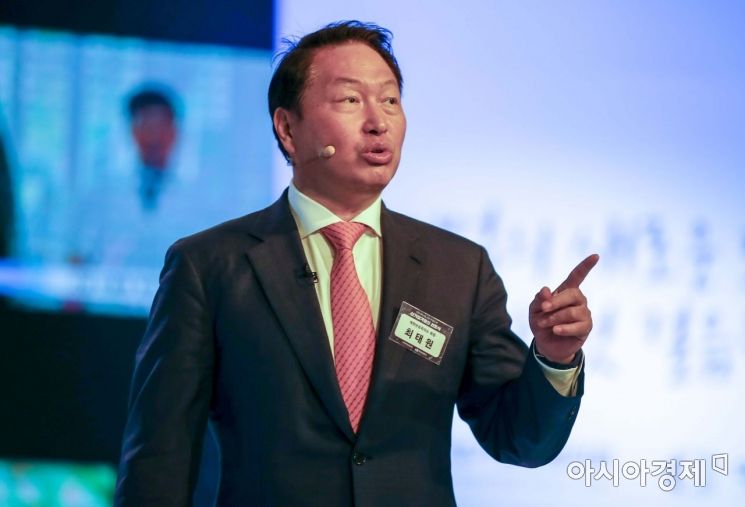 Choi Tae-won, Chairman of the Korea Chamber of Commerce and Industry, is giving a presentation on the Entrepreneurial Spirit Council (ERT) at the Entrepreneurial Spirit Declaration Ceremony held at the Korea Chamber of Commerce and Industry in Jung-gu, Seoul, on the morning of the 24th. Photo by Kim Hyun-min kimhyun81@
GS also confirmed an investment of 21 trillion won over five years until 2026 to secure future growth engines and strengthen core business competitiveness. During this period, it plans to hire 22,000 new employees. By sector, 14 trillion won will be invested in the energy sector, including GS Caltex’s petrochemical materials business expansion, GS Energy’s eco-friendly energy new technologies and overseas resource development investments, and renewable power generation investments by GS EPS and GS E&R. The distribution and service sector will receive 3 trillion won for store expansion, digitalization, and accelerating new business growth at GS Retail. The construction and infrastructure sector will receive 4 trillion won for new growth businesses and social overhead capital investments by GS Construction and GS Global.
GS Chairman Huh Tae-soo told employees, "Consistent will and execution to leverage changes in the business environment such as digital and eco-friendly trends are the keys to GS’s future growth," adding, "We will create a healthy business ecosystem through active venture investments and open innovation."
Earlier on the 24th, Samsung, Hyundai Motor, and Lotte Group also simultaneously announced their investment plans for the next three to five years. Samsung plans to invest 450 trillion won over the next five years in future food sources and new growth IT sectors. This is an increase of 120 trillion won, or more than 30%, compared to the previous five-year investment amount of 330 trillion won.
Domestic investment will increase by 110 trillion won, or more than 40%, from 250 trillion won to 360 trillion won. Investment areas include future new businesses such as semiconductors, bio, AI, and 6G (next-generation communications).
Samsung plans to hire 80,000 new employees over the next five years. It intends to expand hiring centered on core businesses such as semiconductors and bio, which are foundational technologies of the 4th Industrial Revolution, contributing to the creation of good jobs. This large-scale investment is known to be driven by Vice Chairman Lee Jae-yong’s determination. Lee has emphasized that through more investment and better job creation, he will inject dynamism into society as a whole and meet public expectations.
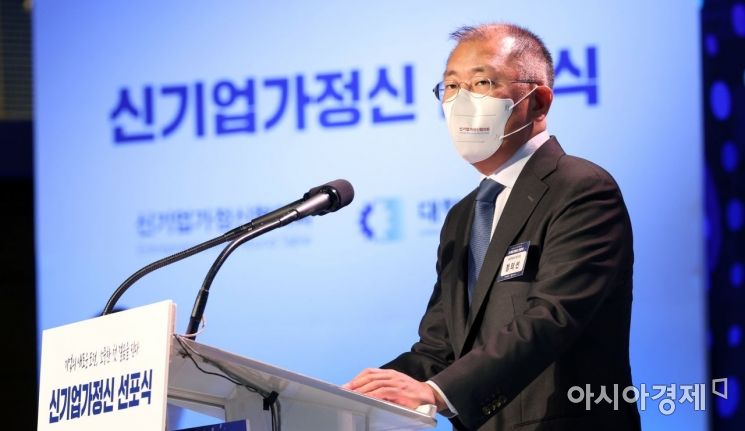 On the 24th, at the Korea Chamber of Commerce and Industry in Jung-gu, Seoul, Chung Euisun, Chairman of Hyundai Motor Group, is delivering a congratulatory speech at the New Entrepreneurship Declaration Ceremony. Photo by Kim Hyun-min kimhyun81@
Hyundai Motor Group plans to invest 63 trillion won domestically by 2025 for electrification and eco-friendly initiatives, new technologies and new businesses, and strengthening competitiveness of existing businesses. It will focus on advancing electrification and eco-friendly businesses, which are the core pillars of future growth. Hyundai Motor, Kia, and Mobis will invest a total of 16.2 trillion won in these areas. Through this investment, the group aims to secure technological superiority across all electrification and eco-friendly fields, including pure electric vehicles, hydrogen fuel cell vehicles, and plug-in hybrids.
To systematically promote future new technology development and new businesses such as robotics, Advanced Air Mobility (AAM), connectivity, autonomous driving, mobility services, and artificial intelligence (AI), it will invest 8.9 trillion won. It will also invest 38 trillion won in existing advanced research, vehicle performance, and improving product competitiveness and customer service for internal combustion engine vehicles.
Lotte Group will concentrate a total of 37 trillion won over five years in core industries such as chemicals, food, and infrastructure, including new growth themes like Health & Wellness (HW), mobility, and sustainability. In the HW sector, Lotte, preparing to enter the bio-pharmaceutical CDMO business, plans to build a domestic factory worth about 1 trillion won following overseas factory acquisitions. Lotte Chemical will invest more than 1.6 trillion won over five years in hydrogen and battery materials businesses. It will also invest 7.8 trillion won in facility investments and production expansions to strengthen competitiveness in high-value specialty businesses and general petrochemical businesses. The distribution business group will invest 8.1 trillion won.
Hanwha Group and Doosan also finalized and announced their investment plans for the next five years on the 24th and 25th. Hanwha Group will invest a total of 37.6 trillion won, including 20 trillion won domestically, in future industries such as energy, carbon neutrality, defense, and aerospace. The domestic investment scale of 20 trillion won matches the total investment Hanwha Group made domestically and internationally over the past five years. Doosan Group announced plans to invest 5 trillion won over the next five years in next-generation energy businesses such as small modular reactors (SMR), gas turbines, and hydrogen fuel cells, aiming to revitalize the domestic energy industry ecosystem including nuclear power.
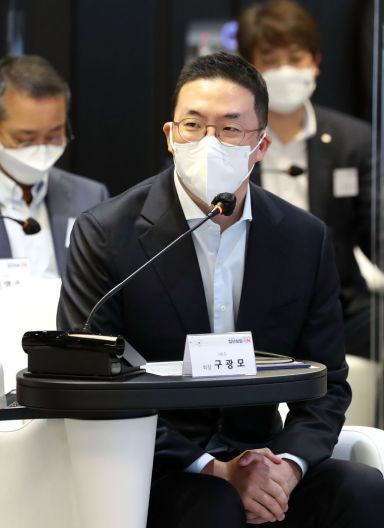 Koo Kwang-mo, Chairman of LG Group, is giving a greeting at the Youth Hope ON Project meeting held on the 21st at LG Science Park in Gangseo-gu, Seoul. Photo by Hyunmin Kim kimhyun81@
The simultaneous large-scale investment announcements by conglomerates are interpreted as a strong backing for the Yoon Suk-yeol administration’s core economic policy of ‘private sector-led growth.’ A notable feature is the emphasis on domestic investment. Since the launch of the Yoon administration, a business-friendly environment has been created, and these investments and hiring expansions are seen as responses to that environment, increasing domestic employment and investment.
© The Asia Business Daily(www.asiae.co.kr). All rights reserved.
![Clutching a Stolen Dior Bag, Saying "I Hate Being Poor but Real"... The Grotesque Con of a "Human Knockoff" [Slate]](https://cwcontent.asiae.co.kr/asiaresize/183/2026021902243444107_1771435474.jpg)


















