KAIST Research Team
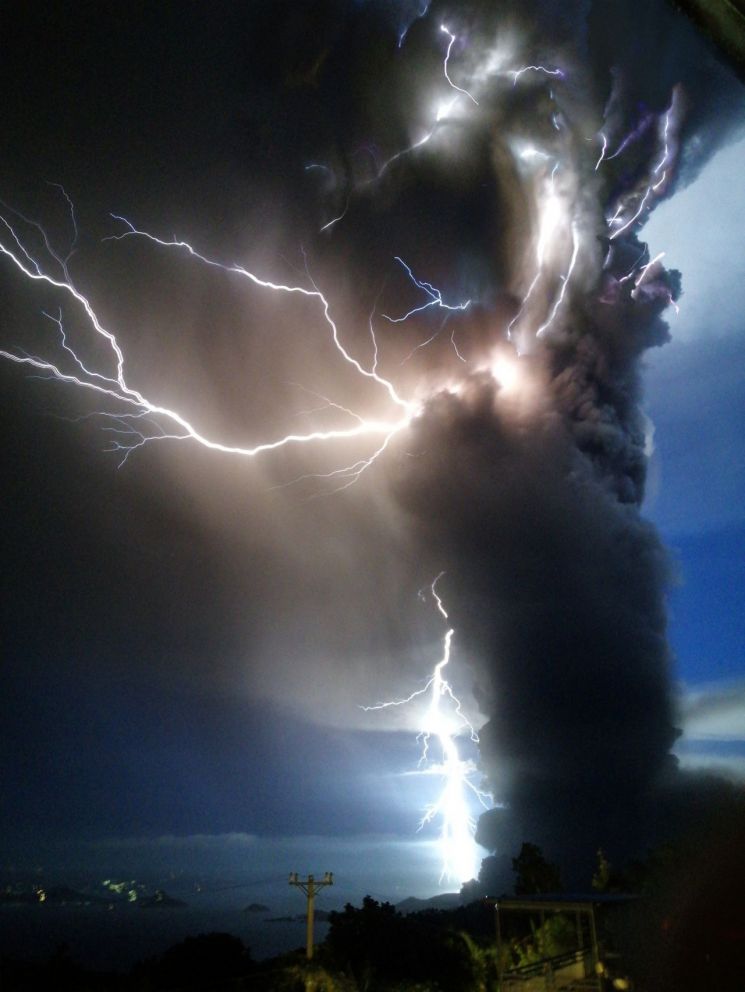
[Asia Economy Reporter Kim Bong-su] Domestic researchers have, for the first time in the world, unveiled the mechanism behind the generation of triboelectricity, which causes phenomena such as lightning and static electricity.
KAIST announced on the 26th that Professor Kim Yong-hyun's research team in the Department of Physics has identified the principle of triboelectricity generation, a long-standing unsolved problem for thousands of years, for the first time worldwide.
Based on the idea that charge can move due to heat generated at the interface when two materials are rubbed together, the research team solved the 'first-principles electronic structure calculations' and the 'heat transfer equation' to discover the microscopic operating principle of triboelectricity. They were able not only to qualitatively describe previously known experimental facts but also quantitatively explain the amount of charge transfer. Until now, there was no theory that could quantitatively explain triboelectricity.
The new theory of triboelectricity can contribute to a revolutionary increase in the efficiency of triboelectric nanogenerators (TENG), one of the recently spotlighted energy harvesting technologies. It is expected to enable microscopic control of static electricity, which causes unwanted problems in various daily life and semiconductor industries or is positively used in devices like touchscreens.
Triboelectricity is a phenomenon with a very long history, dating back 2,600 years when humanity first recognized electricity. Recently, it has been regarded as an important energy harvesting technology and is widely used in masks to prevent COVID-19 infection and air purification technologies. Although it is a natural phenomenon very familiar in daily life through lightning and static electricity, until now, there was no quantum mechanical or nanotechnology theory that could quantitatively explain the generation of triboelectricity.
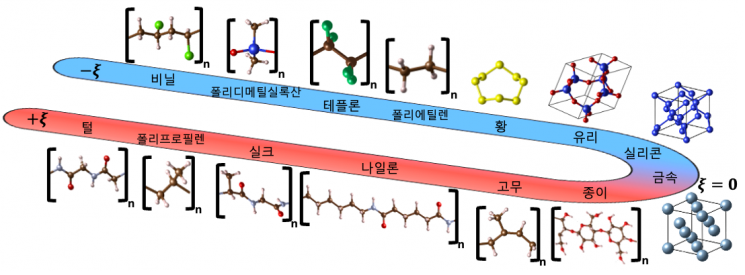
The research team focused on the fact that a sudden temperature change can occur at the interface between two materials while developing thermal imaging measurement technology in 2014. They expected that when heat is generated at the interface due to friction, charge can move by the thermoelectric effect, providing a clue to uncovering the principle of triboelectricity. However, even with two to three doctoral students working on it, the problem was not easily solved, and after about seven years, most obstacles were overcome, allowing humanity to finally taste the secret of triboelectricity for the first time.
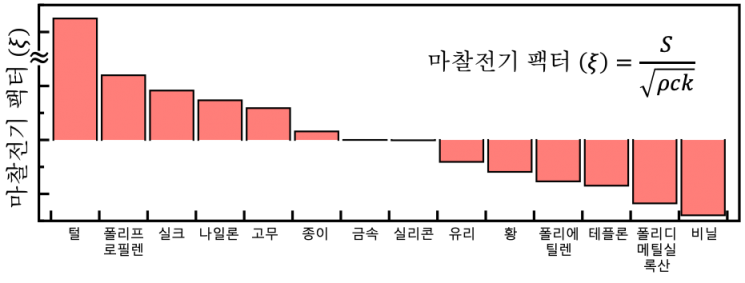
The team derived the formula for the 'triboelectric factor,' which can predict the direction of charge transfer in triboelectricity, and used it to construct the world's first theoretical triboelectric Seebeck coefficient. The triboelectric factor consists of material properties such as the Seebeck coefficient (voltage induced per unit temperature difference), density, specific heat, and thermal conductivity. Additionally, the research team was the first to propose a physical quantity K called 'triboelectric power,' which predicts the magnitude of voltage drop that can be generated by triboelectricity.
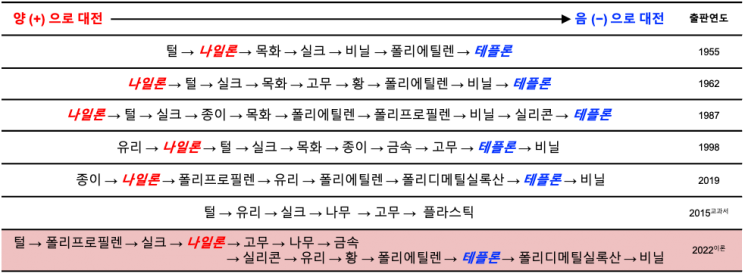
The triboelectric Seebeck coefficient was covered in the curriculum for second-year middle school students but is no longer included in the revised 2015 curriculum textbooks. This is because the triboelectric Seebeck coefficient, determined by empirical methods, showed inconsistent results among researchers, leading to a perception of inaccuracy. However, since the research team quantitatively constructed the Seebeck coefficient using the microscopically and quantum mechanically defined triboelectric factor for the first time, there is now an opportunity for the triboelectric Seebeck coefficient to be reintroduced into textbooks.
Professor Kim Yong-hyun said, "Because we were studying thermoelectric phenomena in the microscopic world quantum mechanically, we were fortunate to solve the triboelectricity problem, a long-standing challenge for humanity. I am grateful to the students and colleagues who persevered without giving up for a long time." He added, "Through a microscopic understanding of triboelectricity, it is now possible to design more efficient triboelectric nanogenerators at the material level, and I hope it will be widely used to control static electricity in daily life and industry."
The research results were published on the 17th in the American Physical Society's open-access international journal, Physical Review Research.
© The Asia Business Daily(www.asiae.co.kr). All rights reserved.
![Clutching a Stolen Dior Bag, Saying "I Hate Being Poor but Real"... The Grotesque Con of a "Human Knockoff" [Slate]](https://cwcontent.asiae.co.kr/asiaresize/183/2026021902243444107_1771435474.jpg)

















