[War-Triggered Supply Chain Crisis Reality⑥]
Construction Material Price Surge Delays Sales, Halts Groundbreaking and New Orders
Government Tweaks Sale Price Ceiling and Standard Construction Costs
"Every time I check the material price market, I am shocked. With safety management costs and labor costs all rising, now that material prices have also gone out of control, how can we even start digging?"
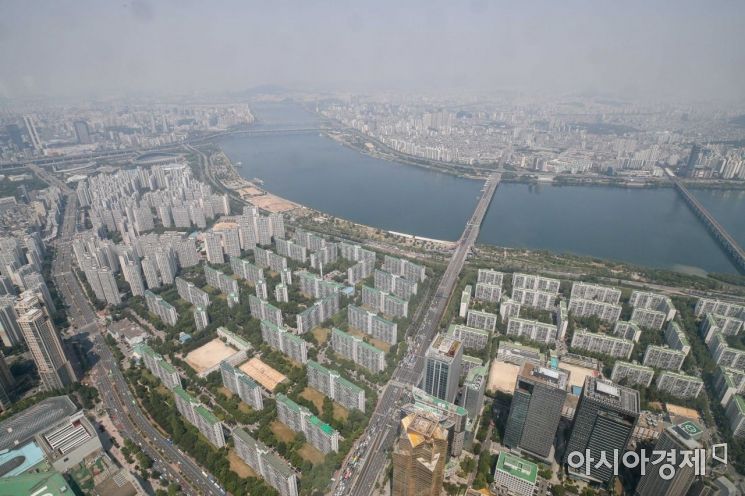
Construction sites nationwide are coming to a halt due to soaring prices of construction raw materials. Breaking the industry's unwritten rule that 'reconstruction and redevelopment are a race against time,' associations are postponing sales, and construction companies are reluctant to start projects or take on new contracts due to skyrocketing construction costs. Housing supply is already falling far short of expectations. There are growing concerns that if the situation prolongs, even the government's large-scale housing supply plans could be derailed.
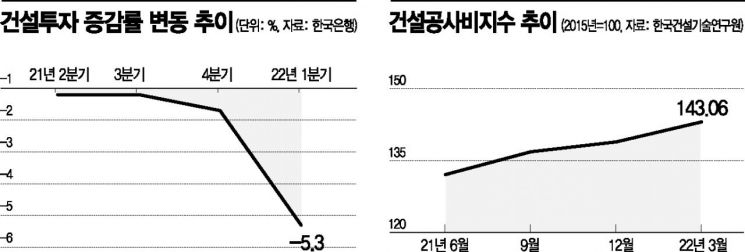
◇Construction costs skyrocket... Numerous bid withdrawals due to 'loss-making construction' = According to the construction and materials industry on the 25th, prices of major building materials such as rebar, ready-mixed concrete, and cement are soaring to unprecedented levels. The price of rebar (SD400·D10 standard) rose from 1,062,600 KRW per ton in December last year to 1,152,800 KRW last month, an increase of 90,200 KRW (8.4%). Recently, the price of ready-mixed concrete in the Changwon area was agreed to increase from 84,040 KRW to 93,830 KRW, a rise of 9,790 KRW (11.6%), and in the Yeosu area from 81,510 KRW to 94,710 KRW, an increase of 13,200 KRW (16.1%). Cement prices were raised last month from the previous 78,800 KRW per ton to 90,800 KRW, an increase of 12,000 KRW (15.2%). The Construction Cost Index, which reflects comprehensive construction costs including materials, labor, and equipment, rose from 132.08 in June last year to 143.06 in March this year, an increase of 10.98.
As raw material prices and labor costs surge, construction companies are hesitant to take on new contracts. While construction costs have increased, the amounts offered by associations or developers do not reflect these rises, leading construction companies to fear 'loss-making construction' and withdraw from bidding. A representative from a mid-sized construction company said, "As raw material prices have risen sharply, subcontractors are demanding increases in construction unit prices, causing many construction sites to be delayed," adding, "With labor costs also rising, the burden of new contracts is growing, but there is no suitable solution to address this."
◇"Should we continue apartment projects?" Deepening concerns = According to the real estate information platform Real Estate R114, the number of households sold in Seoul from the beginning of this year until the 20th of this month totals 3,390 units, which is only 23.5% of the planned 14,447 units at the start of the year. A sales industry official said, "Since before the presidential election, expectations for easing the price ceiling on sales have spread, creating a widespread perception that there is no need to rush sales," adding, "If the government issues clear guidelines, the sales schedule is likely to become more concrete."
One of the core reasons behind the disruption in apartment supply is conflicts over sales prices caused by rising raw material costs. As risks in the housing market increase, more construction companies are turning away from housing projects and looking toward non-residential new businesses. A construction company official said, "Since problems caused by the Ukraine war are difficult to resolve at the government level, the industry atmosphere is that sticking only to housing projects will not be sustainable," adding, "Many construction companies are gradually reducing the proportion of unstable housing projects and shifting their systems toward non-residential businesses such as energy and data."
◇New government supply policies hindered... Considering price ceiling and basic construction cost measures = There are also concerns that this situation could hamper the large-scale housing supply policies proposed by the new government. On the 23rd, Land, Infrastructure and Transport Minister Won Hee-ryong presented a specific goal of "2.5 million housing starts during the Yoon Seok-youl administration," but the raw material crisis is seriously threatening this target. This is why calls for institutional improvements at the government level are emerging.
The first measure being considered is the price ceiling on sales. Minister Won also said, "The price ceiling on sales is the first system that needs to be revised to promote supply," and "We will announce improvement plans within June to encourage housing supply." This acknowledges the possibility that the price ceiling could suppress supply.
Additionally, measures are being pursued to ensure that material prices are properly reflected in construction costs. Although prices of major materials such as rebar and cement have risen by more than 10% in the past year, the basic construction cost has only increased by a single digit (around 8%). The basic construction cost is a key indicator used in reviewing apartment sales prices. The low increase rate and the timing of reflecting the increase are problematic. It is regularly announced on March 1 and September 15 each year, but there is inevitably a significant time lag in reflecting the rapidly rising material prices in real time.
© The Asia Business Daily(www.asiae.co.kr). All rights reserved.
![Clutching a Stolen Dior Bag, Saying "I Hate Being Poor but Real"... The Grotesque Con of a "Human Knockoff" [Slate]](https://cwcontent.asiae.co.kr/asiaresize/183/2026021902243444107_1771435474.jpg)
















