[Seoul District News] Five New Parking Lots Created at Daehyeonsan Reservoir Park Entrance, Pilot Operation Until Next Month 12... Daehyeonsan Reservoir Park Spanning 695,168㎡ (Approx. 210,000 Pyeong) Popular Among Citizens, Enhancing Resident Convenience... Dongjak-gu Seeks Owners of 774 Sado Site Parcels... Jongno-gu Builds Eco-Friendly Sidewalk on Jahamun-ro, the Largest Road Leading to Seochon, Reflecting Jongno's Historical and Cultural Characteristics
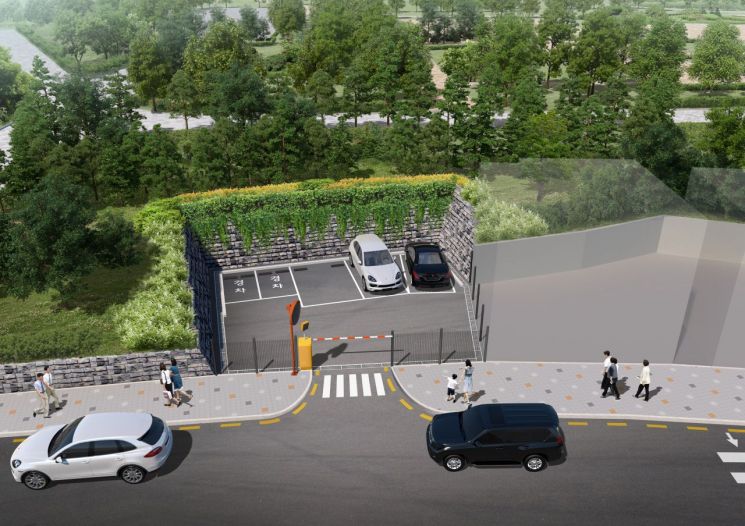
[Asia Economy Reporter Park Jong-il] Seongdong-gu has newly established a parking lot at Daehyeonsan Water Reservoir Park and will conduct a pilot operation from the 25th until the 12th of next month.
The so-called ‘Seongdong So-hwak-haeng’ parking lot, located at 101 Geumho-dong 1-ga and one other parcel, consists of a total of 5 parking spaces, including 2 spaces for compact cars.
The parking lot is located at the entrance of Daehyeonsan Water Reservoir Park, which covers a large area of 695,168㎡, approximately 210,000 pyeong. Although it is a small-scale space, selecting the site and completing the final construction was by no means an easy task.
Daehyeonsan Water Reservoir, covered with concrete, has various sports and leisure spaces as well as green areas. The park, which attracts many citizens, features sports facilities such as a lawn plaza, a multipurpose stadium, and a jogging track.
With numerous facilities including the main plaza, outdoor stage, children’s playground, pergola, and picnic tables, the park draws many residents, resulting in high demand for parking spaces.
However, there was a lack of large-scale parking lots nearby. Since the park spans Seongdong-gu and Jung-gu and is a city-owned facility, selecting a site for the parking lot was also challenging.
Accordingly, in June 2020, the district purchased the site at 172 Geumho-ro and, after consultations and approval for site use with the Waterworks Headquarters and discussions with the Urban Park Committee, proceeded with the project. Through four rounds of Urban Park Committee submissions and conditional approvals, the existing building was demolished and temporary construction was carried out by the end of last year. From February this year, ground and parking lot construction took place. The construction was completed over about 50 days, creating a parking lot that is like a timely rain for residents during a drought.
The district plans to conduct a pilot operation (free access) until June 12, add supplementary facilities, and officially open the parking lot on the 13th.
Following the establishment of a 47-space parking lot at Oksuyu Water Reservoir in November last year, and a total of 461 public parking spaces at Majang-dong Livestock Market and Seongsu-dong Ttukseom Water Reservoir last month, the district is solving local parking difficulties and plans to actively implement transportation policies that meet residents’ needs, including convenient parking facilities.
A Seongdong-gu official said, “We are very fortunate to be able to establish a parking lot that residents have long awaited,” adding, “We hope this parking space will become a ‘So-hwak-haeng parking lot’ for those using vehicles.”
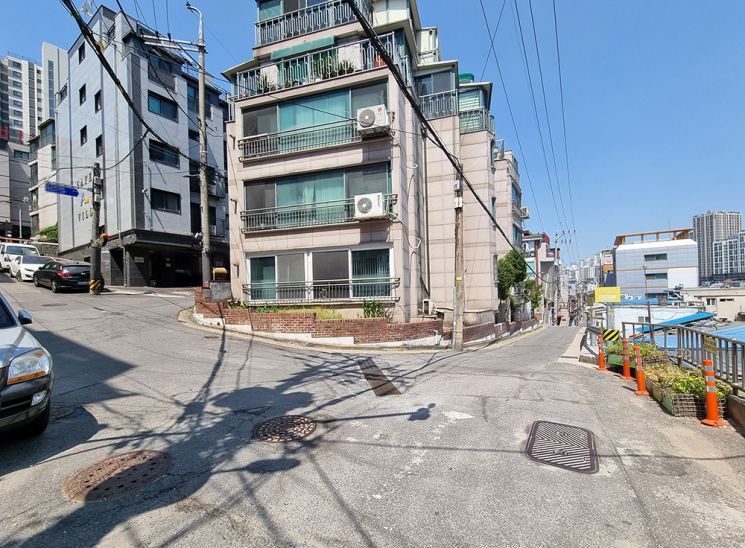
The area around Sangdo-dong in Dongjak-gu is a shared private road land owned by 21 people since a housing development project in 1959. Since then, there has been no change in ownership, and the land has been neglected, making it impossible to verify owners when pursuing private construction projects. Moreover, since the land was developed before the Resident Registration Act was enacted in 1975, resident registration numbers are not recorded.
Dongjak-gu (Mayor Lee Chang-woo) is working to update ownership information for 774 parcels of such neglected private road land, which have been left unattended for over 60 years without changes in ownership or address due to past land readjustment and housing development projects.
Private roads have been exempt from property tax and left unattended due to unchanged addresses and untransferred ownership, making it difficult to verify owners when pursuing private projects such as construction, causing difficulties in project implementation.
Therefore, the district is undertaking this project to resolve issues such as construction delays or cancellations caused by the inability to find owners of neglected private road land.
The district will conduct the project in phases to activate construction and protect residents’ property rights by sharing and collaborating with related departments to update inheritance and address changes for 774 parcels (69,253.3㎡) of private road land in the area.
For private roads with owners’ resident registration numbers recorded, the district will notify owners and heirs about address changes and inheritance registration based on the registry. For private roads without resident registration numbers, the district will search for owners using data related to land readjustment projects and resident registration databases.
Currently, after reviewing the resident registration numbers of owners for 404 parcels with recorded numbers, it was confirmed that a total of 418 owners are either deceased or alive. The district plans to notify these owners and heirs about inheritance and address change registration and also find ownership information for 370 parcels without recorded numbers.
Oh Bok-seok, head of the Real Estate Information Division, said, “This project will greatly help secure the reliability of cadastral records and protect owners’ property rights,” adding, “Once actual owners are found, redevelopment and reconstruction projects can proceed more smoothly.”
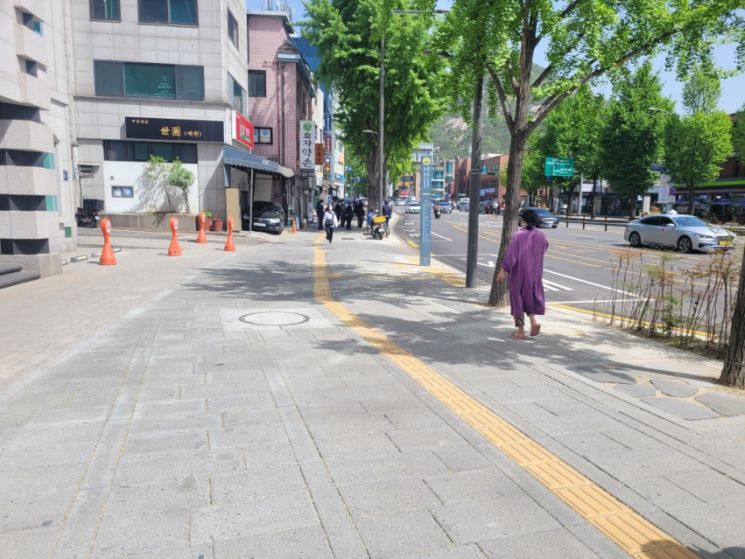
Jongno-gu has completed pedestrian environment improvement works targeting the ‘Jahamun-ro’ and ‘Donhwamun-ro’ areas this month. The project prioritizes consideration for people with disabilities and pedestrian safety, as well as improving urban aesthetics.
With the lifting of social distancing, the opening of the Blue House, and the creation of the new Gwanghwamun Plaza, the number of tourists visiting the Jongno area is expected to increase. This construction is anticipated to secure citizen safety and greatly enhance satisfaction.
First, the pedestrian environment improvement on the west side of Jahamun-ro was carried out because the sidewalk, which was first constructed over 20 years ago, had become aged, sunken, and damaged.
Instead of the existing concrete processed blocks, the project created an eco-friendly sidewalk using Boseong stone with a jade color that reflects Jongno’s historical and cultural characteristics, along with recyclable stones and sand.
Since this was done on Jahamun-ro, the main road leading into Seochon, the district expects tourists to enjoy walking on this stone path filled with traditional beauty along with the Blue House and Gwanghwamun, savoring its old-fashioned charm.
Additionally, the pedestrian environment improvement on Donhwamun-ro 11-gil, located in the Ikseon-dong area which is gaining attention thanks to the retro trend, is also noteworthy.
Known to residents as ‘Hanyang-gil,’ this area connects Donhwamun-ro, Seosunra-gil, Pimak-gil, Ikseon-dong Hanok Street, Songhae-ro, Gugak-ro, and the jewelry district, preserving traces of long-standing historical culture.
Centered on the target area, Insadong lies to the west, and to the north are Ikseon-dong, alley restaurants, and street food stalls. Due to increased foot traffic from the revitalization of the Ikseon-dong commercial district, the need for pedestrian environment improvement has grown.
Taking this opportunity, the sidewalk width was expanded from 2m to 3.5m, creating a pedestrian-friendly walking path. Through dozens of meetings and on-site consultations with various stakeholders including nearby building owners and tenants, consensus on the improvement plan was reached.
Moreover, the district installed the ‘Ikseon Smart Pole,’ a smart city infrastructure combining public Wi-Fi, Internet of Things (IoT), media boards, and speakers into road facilities.
© The Asia Business Daily(www.asiae.co.kr). All rights reserved.