Card Company Revolving Balance Increased by 17.8% in One Year
Expert: "Increase in Revolving Balance? Influenced by Loan Regulations"
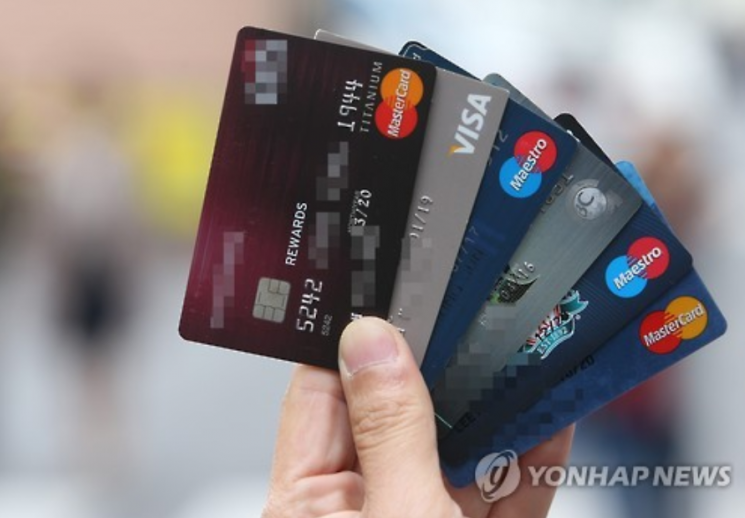
[Asia Economy Reporter Heo Midam] # Graduate student Jeon Mo (26) sighed after checking a credit card statement of 2 million won last month. Despite ongoing expenses such as rent, maintenance fees, and various living costs, he had only about 1 million won left, making it impossible to repay the debt. Jeon said, "I'm worried that my credit score will drop due to overdue card payments," adding, "Since my situation is difficult, I plan to use revolving credit to put out the urgent fire first."
The balance of credit card revolving payments (partial payment amount carried over) significantly increased last year. According to the Financial Supervisory Service, the revolving payment balance for seven major credit card companies excluding BC Card (Shinhan, KB Kookmin, Samsung, Hyundai, Lotte, Woori, Hana) stood at 14.8489 trillion won as of the end of last year. This represents a 17.8% increase compared to the previous year, the second-highest growth rate since the global financial crisis in 2008 (26.3%). This is interpreted as the prolonged COVID-19 pandemic recession affecting credit card users as well.
Revolving credit is a payment method where consumers pay a certain percentage or minimum payment of their credit card usage amount, and the remaining balance is carried over to the next month with interest charged on the carried-over balance. From the consumer's perspective, it reduces the burden of lump-sum repayment of the card bill.
Revolving credit may seem similar to installment payments since only part of the payment is made first and the rest is carried over. However, installments have a fixed repayment period and are paid back on each payment date, whereas revolving credit divides the total amount without a set installment period.

The problem is that the revolving credit interest rate approaches the legal maximum annual rate of 20%. In the first quarter, the weighted average interest rate on revolving balances by card companies reached as high as 18.52% (Lotte). KB Kookmin Card (17.76%) and Woori Card (17.60%) also had high rates. While using revolving credit can reduce immediate overdue burdens, caution is needed due to the accompanying high interest rates.
Users seem to use revolving credit services to reduce immediate card payment burdens and avoid overdue payments. However, long-term use of revolving credit can increase card debt and pose a risk of lowering credit scores later, so caution is required.
On financial online communities, posts expressing regret about using revolving credit services are appearing. One netizen lamented, "I used revolving credit for my card payment. I didn't know what revolving credit was, and after using it, I realized the interest is so expensive. I will never use revolving credit again."
Another netizen said, "The first time was scary, but once I started, I kept using revolving credit, and my debt kept increasing, which was frustrating. Since I started it, I have to finish it, but my salary remains stagnant, so I didn't know what to do. Fortunately, with the help of an acquaintance, I was able to get out of the revolving credit trap. I was anxious for months because of revolving credit. I will never use revolving credit again."
Experts analyze that users driven to a loan cliff due to tightened loan regulations have turned to revolving credit services. Professor Kim Taegi of Dankook University's Department of Economics said, "The increase in demand for revolving credit seems related to the previous government's loan regulations. Since there are few places to get loans, financially vulnerable groups are using revolving credit services."
© The Asia Business Daily(www.asiae.co.kr). All rights reserved.
![Clutching a Stolen Dior Bag, Saying "I Hate Being Poor but Real"... The Grotesque Con of a "Human Knockoff" [Slate]](https://cwcontent.asiae.co.kr/asiaresize/183/2026021902243444107_1771435474.jpg)
















