[Asia Economy Reporter Kim Hyunjung] Due to the impact of city lockdowns under the zero-COVID policy and the real estate slump, Chinese people are focusing on 'hoarding cash.' While the prevailing trend had been to invest most of their money in real estate and the remainder in the stock market to grow their assets, increasing market uncertainty has led them to believe that holding cash is a better option.
According to Bloomberg on the 23rd (local time), as of the end of April, China's savings deposits reached 109.2 trillion yuan (approximately 2,692 trillion won), marking a 5.5% increase compared to the previous year.
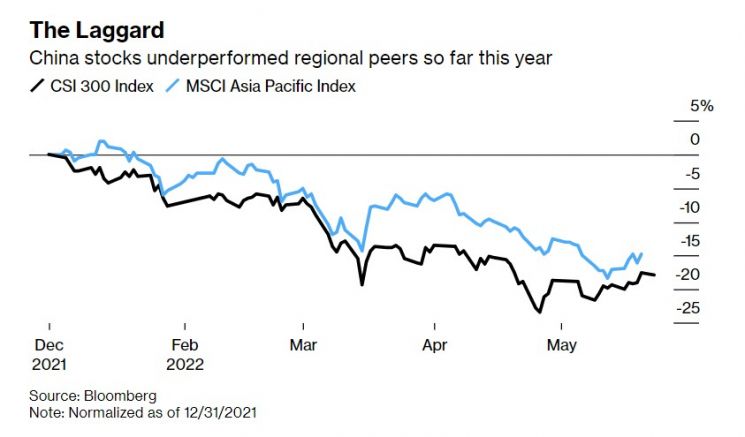
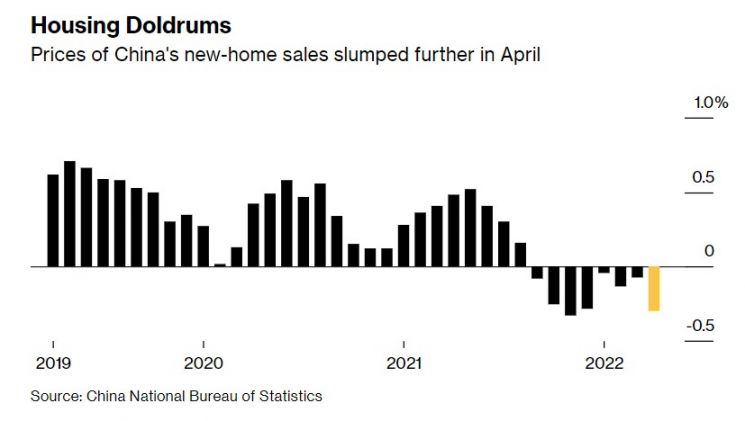
The biggest reason for the growing preference for cash in China, which already boasts the highest savings rate in the world, is the contraction of the asset market. Housing prices in China have been continuously falling since September last year, and external and internal adversities such as zero-COVID lockdowns and the Ukraine war have deepened losses in the stock market. The CSI300 index has plunged 18% since the beginning of this year. The report noted that despite benchmark interest rates nearing their lowest point, Chinese people are increasingly funneling cash into their accounts for these reasons.
Harry Kong, an executive at a bank in Shanghai, told the news agency that he lost all the profits he made in the stock market last year this year. He has been investing in stocks for the past 20 years but described the current market as the most pessimistic. He said, "All I can do is just lie down and save money in a major bank," adding, "No matter how low the interest rates are, at least it's safe." Wei He, an economist at GabeCal Research, a market research firm based in Beijing, pointed out, "Whether you have a lot or little net worth, the golden age of storing money and growing wealth is over."
This outlook and sentiment are expected to contribute to further increases in Chinese people's savings deposits. The report stated, "As China's economy developed and prospered, buying a house was the most certain way for most of the middle class to invest for the future over the past few decades," but "this view began to change as the government regulated the housing market to curb excessive borrowing and speculation." It added, "This issue was further shaken by major developers' defaults, including the China Evergrande Group crisis, which undermined investor confidence and triggered a decline in new home sales," reminding that as of the end of March, the growth rate of real estate loans was at a record low.
© The Asia Business Daily(www.asiae.co.kr). All rights reserved.
![Clutching a Stolen Dior Bag, Saying "I Hate Being Poor but Real"... The Grotesque Con of a "Human Knockoff" [Slate]](https://cwcontent.asiae.co.kr/asiaresize/183/2026021902243444107_1771435474.jpg)
















