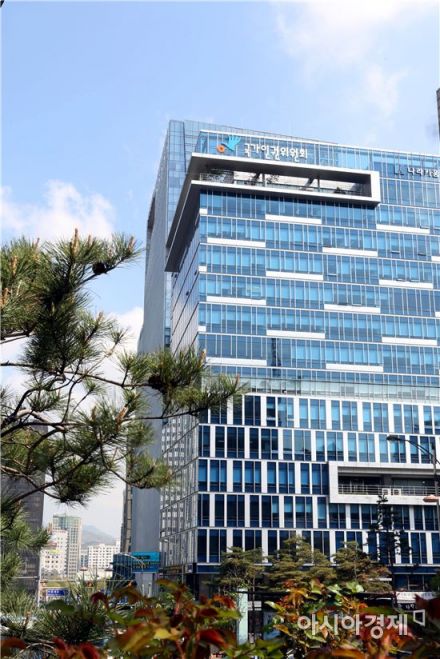
[Asia Economy Reporter Seongpil Jo] The National Human Rights Commission has determined that it is necessary to establish related guidelines to allow confirmed COVID-19 patients who test positive to request a retest using polymerase chain reaction (PCR) testing.
On the 23rd, the Human Rights Commission announced that it expressed its opinion to the Director of the Korea Disease Control and Prevention Agency (KDCA) that it is desirable to promptly establish and implement specific retesting guidelines for suspected COVID-19 cases. The Commission added, "We judged that the KDCA needs to establish specific regulations or guidelines for retesting and create an objection procedure for confirmed diagnoses."
Earlier, the Commission received a petition from a high school teacher who was placed under a two-week self-quarantine after close contact with a confirmed COVID-19 student and was diagnosed positive in a PCR test conducted one day before the quarantine was lifted. The teacher claimed, "I tested negative before self-quarantine, and despite no new infection concerns afterward, I was suspicious of the positive diagnosis and requested a retest, but the public health center refused, stating that 'there is no possibility of PCR test error.' After being transferred to a residential treatment center, I tested negative and was confined for three days until the quarantine was lifted, during which my personal freedom was infringed."
The Human Rights Commission’s Second Committee for Remedy of Rights Violations dismissed the petition, stating that whether to allow retesting for those confirmed positive by PCR is a discretionary matter to be decided by quarantine authorities based on advanced medical knowledge and official quarantine policies, and thus is not subject to the Commission’s investigation. However, the Commission explained that it separately expressed this opinion because the lack of protective measures for potential victims such as false positives during the isolation of suspected infectious disease cases could seriously infringe on personal freedom.
© The Asia Business Daily(www.asiae.co.kr). All rights reserved.
![Clutching a Stolen Dior Bag, Saying "I Hate Being Poor but Real"... The Grotesque Con of a "Human Knockoff" [Slate]](https://cwcontent.asiae.co.kr/asiaresize/183/2026021902243444107_1771435474.jpg)
















