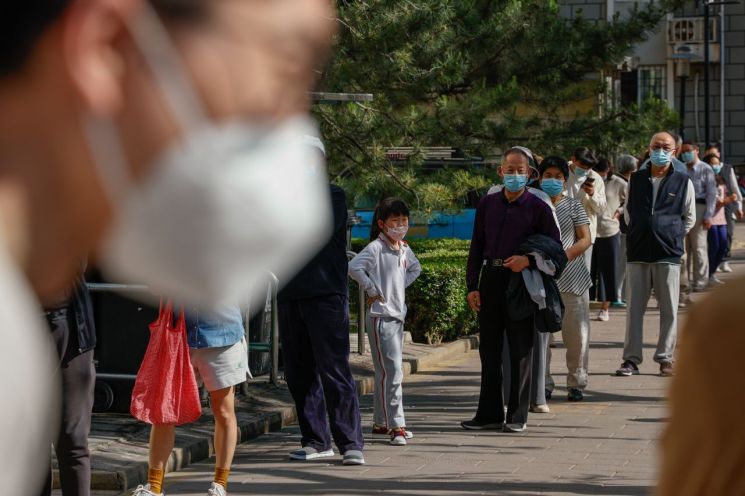
[Asia Economy Reporter Kim Hyunjung] China, which is implementing a strong 'Zero COVID' policy, is introducing various incentive measures to increase the vaccination rate among high-risk groups for COVID-19, specifically the elderly aged 60 and above. Amid economic damage caused by high-intensity lockdowns, and research results suggesting a large number of deaths may occur between May and July, this appears to be an effort to minimize the shock of the pandemic.
According to Bloomberg News, Chinese authorities are offering various incentives to increase vaccination rates among the elderly. In Beijing, they are distributing groceries such as cooking oil, eggs, and milk to this group. In some regions, elderly people who agree to receive their first vaccine dose can receive cash rewards of up to 1,000 yuan (approximately 190,000 KRW).
According to recent data from the National Health Commission of China, about 216 million Chinese aged 60 and above have received the COVID-19 vaccine. This corresponds to 82% of the population in that age group (approximately 260 million). The number of people who have completed the second dose is around 164 million. This means that about 44 million elderly people aged 60 and above have not received even a single vaccine dose. Vaccination rates decrease with increasing age; China Daily reported on the 18th of last month that only 15% of urban residents aged 80 and above had been vaccinated.
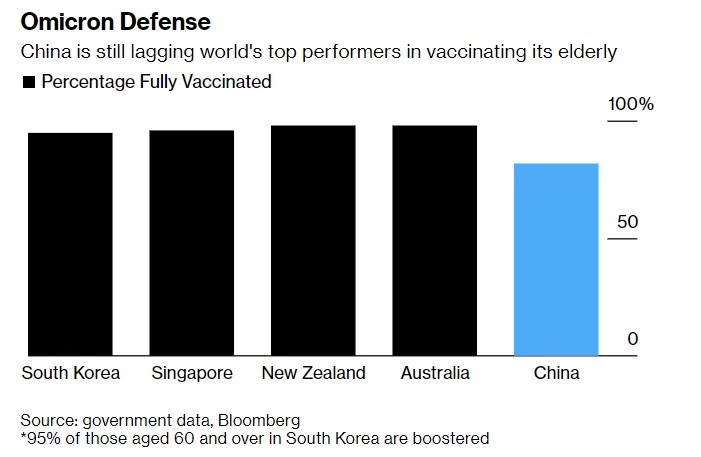
However, the vaccination rate among the elderly in China is closely related to the risks posed by the spread of COVID-19. Especially considering a study from Fudan University in Shanghai, which suggests that if the Zero COVID policy is withdrawn without the distribution of treatments, about 1.6 million deaths could occur between May and July due to the Omicron variant. The researchers estimated that about three-quarters (74.7%) of the deaths would be among the elderly.
The researchers suggested that if the vaccination rate among the elderly reaches around 97% and antiviral drugs treat more than half of confirmed cases, deaths could be reduced to the level of seasonal flu.
In Western countries and other Asian nations, elderly people were prioritized for vaccination. However, Hong Kong and China were exceptions and did not prioritize them. For example, as of March, over 90% of the population aged 80 and above in South Korea had completed their second vaccine dose. In the United States, 86% of those aged 75 and above had completed vaccination.
Zheng Yixin, Deputy Director of the National Health Commission of China, explained that China is making efforts to improve vaccination rates among the elderly. In addition to incentives, they are lowering psychological barriers by sufficiently explaining the safety of vaccines and their effects on underlying diseases through major nursing homes and other channels.
© The Asia Business Daily(www.asiae.co.kr). All rights reserved.
![Clutching a Stolen Dior Bag, Saying "I Hate Being Poor but Real"... The Grotesque Con of a "Human Knockoff" [Slate]](https://cwcontent.asiae.co.kr/asiaresize/183/2026021902243444107_1771435474.jpg)
















