LNG Ship Record-Breaking Orders but No Remarkable Performance
Oil Price Volatility Persists... Carbon Neutral Transition in Oil Development Also a Burden
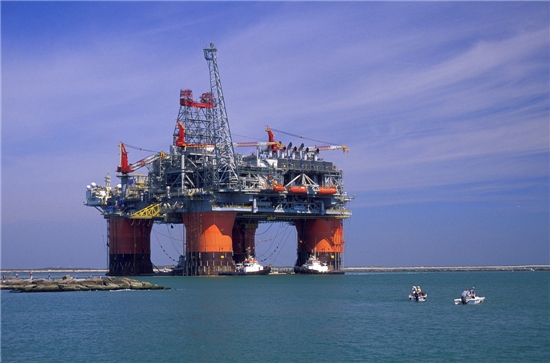
[Asia Economy Reporter Oh Hyung-gil] "Can offshore plants revive amid prolonged high oil prices?"
Although oil prices have recently soared to unprecedented levels, the prospects for offshore plants to regain attention appear slim.
Offshore plants, once a high value-added sector in the shipbuilding industry during past periods of high oil prices, face a completely different situation now. Despite a continuous streak of orders for shipbuilders since last year, offshore plants are barely visible.
According to industry sources on the 20th, while domestic shipbuilders are securing record-breaking orders mainly for LNG (liquefied natural gas) carriers, there are no notable orders related to offshore plants.
The only order was in January when Daewoo Shipbuilding & Marine Engineering secured one gas field control system (FCS) from Chevron, the world's largest oil company based in the U.S. It functions to supply power to currently operating deep-sea facilities and control gas, with the order size reported to be worth about 650 billion KRW.
Last year, Hyundai Heavy Industries and Daewoo Shipbuilding each secured one floating production storage and offloading (FPSO) unit worth 5 trillion KRW, ordered by Petrobras, Brazil's state-owned energy company.
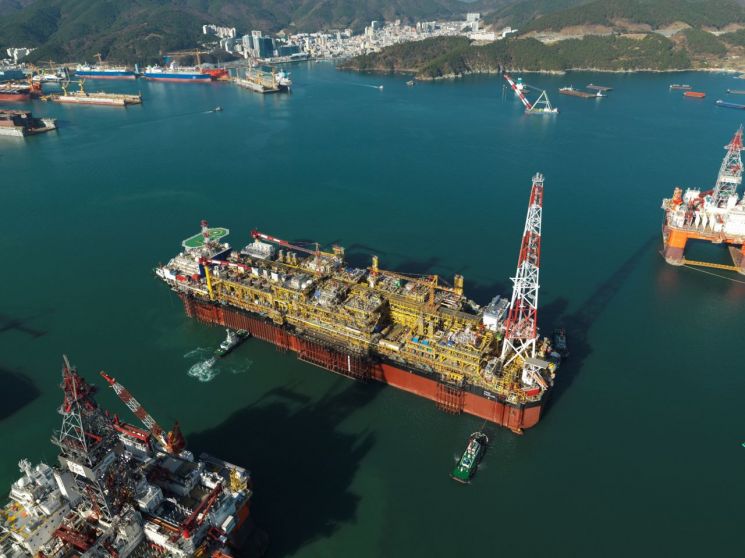
In the market, expectations for offshore plant investments have emerged as international oil prices have remained above $100 following the Russia-Ukraine war, but the mood in the shipbuilding industry remains cold.
Offshore plants are facilities that extract, drill, and produce resources such as oil and gas buried under the sea, and they enjoyed a boom in the early 2010s when international oil prices rose. At that time, the price of one unit reached as high as 2 to 3 trillion KRW, making them very popular. However, following the foreign exchange crisis and a sharp drop in international oil prices, projects were halted, leading to a prolonged downturn.
Recent oil price fluctuations are largely due to geopolitical factors, and prices could plummet again once the Ukraine situation ends. Additionally, growing concerns about inflation and the possibility of a long-term economic recession exert downward pressure on oil prices.
The transition to carbon neutrality is also a burden. Global oil majors such as Total, Shell, and ExxonMobil are currently focusing on reducing carbon emissions, switching to renewable energy sources, and developing low-carbon and carbon-neutral products. In a situation where large-scale refinery investments like in the past are difficult, orders for offshore plants naturally decrease.
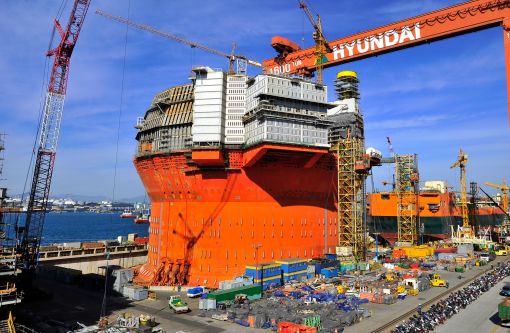
Above all, the aftermath of excessive order competition among domestic shipbuilders in the past is significant. Shipbuilders, including Daewoo Shipbuilding, are still recovering from losses caused by low-price orders for offshore plants after the global financial crisis.
An industry official said, "The capacity or willingness to jump into the offshore plant business like before is not strong," adding, "We plan to participate in bids by prioritizing profitability and carefully reviewing the scale of the business and contract conditions."
© The Asia Business Daily(www.asiae.co.kr). All rights reserved.
![Clutching a Stolen Dior Bag, Saying "I Hate Being Poor but Real"... The Grotesque Con of a "Human Knockoff" [Slate]](https://cwcontent.asiae.co.kr/asiaresize/183/2026021902243444107_1771435474.jpg)















