Double Solar Power Capacity by 2025
"Increase Renewable Energy to 45% by 2030"
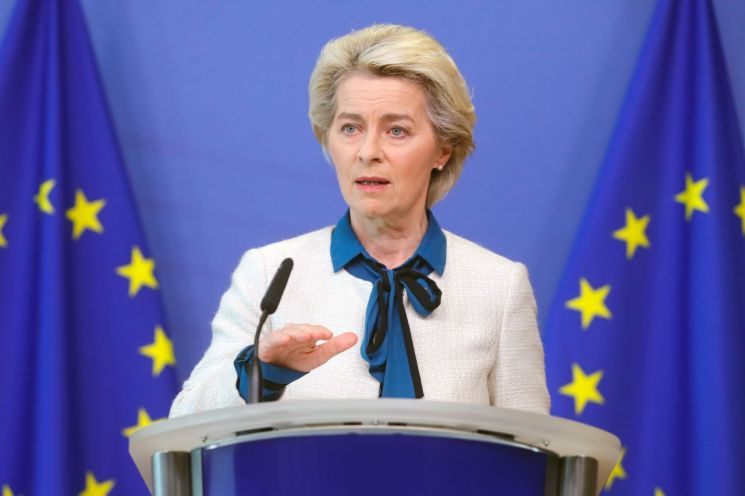
[Asia Economy Reporter Hyunwoo Lee] The European Union (EU) has announced a plan to accelerate renewable energy in order to break free from dependence on Russian energy, declaring an investment of 300 billion euros (approximately 400 trillion won) by 2030.
According to the Associated Press on the 18th (local time), Ursula von der Leyen, President of the European Commission, stated in a press release that "to reduce dependence on Russian energy, the renewable energy target, which was previously set to reach 40% by 2030, will be raised to 45%," adding, "300 billion euros will be invested in this plan by 2030."
The European Commission plans to first double the solar power generation capacity by 2025 as part of this plan. It proposed a goal of producing 320 GW of solar power capacity by 2025 and a total of 600 GW by 2030. Through measures such as mandating the installation of solar panels on rooftops of major and new buildings, more than 210 billion euros will be invested in solar power facilities over the next five years.
According to the plan, the EU's total renewable energy generation capacity will increase to 1,236 GW by 2030, with a higher reliance on solar thermal and biomethane energy, and the electrification of European heavy industry is expected to accelerate. Additionally, 10 billion euros will be invested in gas infrastructure to break free from Russian natural gas, and more than 2 billion euros will be invested in oil infrastructure to reduce dependence on Russian oil.
The Commission also announced that it will further shorten the approval period for installing renewable energy facilities, including wind and solar power plants, and proposed a goal to reduce the EU's energy consumption by more than 13% compared to projected usage by 2030.
However, it is pointed out that it will realistically be difficult to reduce fossil fuel use immediately, as it is expected to take time to replace energy in Eastern European countries where coal and oil thermal power generation still account for a high proportion. The UK’s Guardian, citing an EU senior official, reported, "The halt of Russian gas imports means coal-fired power plants will have to be used longer than expected, and there will be many difficulties in actually reducing emissions."
© The Asia Business Daily(www.asiae.co.kr). All rights reserved.
![Clutching a Stolen Dior Bag, Saying "I Hate Being Poor but Real"... The Grotesque Con of a "Human Knockoff" [Slate]](https://cwcontent.asiae.co.kr/asiaresize/183/2026021902243444107_1771435474.jpg)
















