[Seoul District News] Mapo-gu Provides Services to Families with Pregnant Women Over 20 Weeks and Children Under 2, Including Postpartum Depression Screening and Breastfeeding Education; Online or In-Person Application... Seodaemun-gu Collaborates with Hospitals to Prevent Care Gaps After Discharge... Jungnang-gu Recruits Participants for Swimming Classes to Promote Sports for Disabled Persons... Dongjak-gu Installs Public Solar Power Facility in Front of National Seoul Memorial Cemetery... Seongbuk-gu Reopens 7 Senior Dining Centers
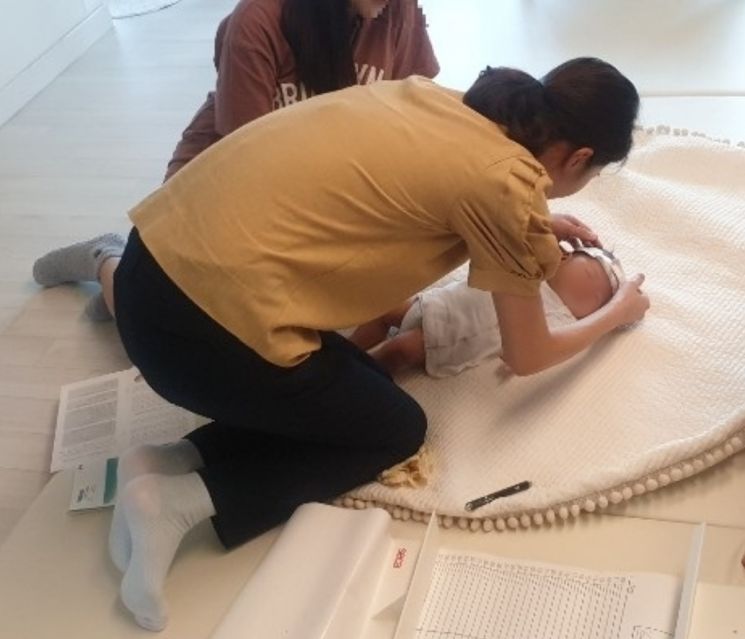
[Asia Economy Reporter Park Jong-il] “A nurse visits homes with newborn babies.”
Mapo-gu announced that it will operate the ‘Seoul Baby Health First Step Project,’ where infant health nurses visit homes to support the healthy development of babies.
The district switched the ‘Seoul Baby Health First Step Project,’ which was conducted non-face-to-face due to COVID-19, to an in-person service starting in April. This project, initiated to ensure an equal start for all children in Seoul, benefits families residing in Mapo-gu with pregnant women over 20 weeks and infants under 2 years old.
The home visit service consists of a ‘universal visit’ once within 6 weeks after childbirth and a ‘continuous visit’ with a total of 25 visits until the infant turns 2 years old.
The service includes ▲prenatal and postpartum depression screening ▲health assessment of mother and newborn ▲breastfeeding education ▲newborn care ▲education on baby crying and sleep issues. Additionally, for high-risk families experiencing depression or domestic violence, customized support is provided through community linkage to help families overcome crises.
Applications can be made online via the Seoul Baby Pregnancy and Childbirth Information Center website under ‘Maternal and Child Health Service Guide ? Seoul Baby Health First Step Project’ or by visiting the Maternal and Child Home Nursing Office on the 2nd floor of Mapo-gu Public Health Center.
For more details, inquiries can be made by calling the Maternal and Child Health Center at Mapo-gu Public Health Center.
The district is also conducting a community randomized controlled trial with Seoul National University Industry-Academic Cooperation Foundation through the ‘continuous visit’ program to identify the effects on child health development and maternal health.
Pregnant women willing to participate in the study are being recruited until December this year, and participating families can receive various benefits such as free Bailey Child Development Tests.
A district official said, “We hope this Seoul Baby Health First Step Project will help close the health gap among infant families. We will also do our best to detect at-risk infant families in welfare blind spots such as child abuse early and help them build healthy families.”
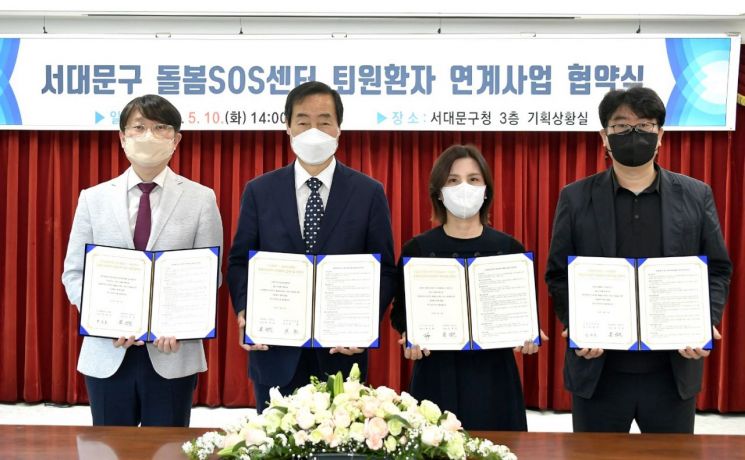
Seodaemun-gu (Mayor Moon Seok-jin) announced on the 18th that it will promote the ‘Discharged Patient Care SOS Center Linkage Project’ with local hospitals including Woorinaeil Hospital (Bukhahyeon-dong), Dongseo Korean Medicine Hospital and Dongseo Hospital (Yeonhui-dong), Sarang Nursing Hospital (Bukgajwa 1-dong), and Hyodam Nursing Hospital (Hong Eun 1-dong).
This is to promptly connect discharged residents who need temporary home care (support for daily life of mobility-impaired residents), meal support, accompaniment support, and welfare checks to the ‘Care SOS Center Service.’
The number of medical institutions participating in Seodaemun-gu’s ‘Discharged Patient Linkage Project’ has increased to nine, including five general hospitals (Kangbuk Samsung, Dongshin, Seoul Red Cross, Seran, Severance) that signed a business agreement in April last year, allowing for more thorough linkage.
Residents hospitalized in these hospitals can apply for care services through the medical institution before discharge without visiting the local community center separately. The district conducts comprehensive welfare counseling for these residents as a mandatory step.
Nurses and welfare officials are assigned to each community center as ‘care managers’ to guide and connect patients to appropriate health and welfare services based on their health status and crisis situations.
This project, first implemented by Seodaemun-gu, has spread to 11 autonomous districts in Seoul. So far, Seodaemun-gu has linked 58 cases of Care SOS Center services to 40 discharged patients, recording the highest number of cases.
Furthermore, the district plans to include family caregivers and youth in addition to the elderly, disabled, and residents aged 50 and over as targets of the ‘Discharged Patient Care SOS Center Linkage Project’ to ensure thorough identification of welfare beneficiaries from medical institutions.
At a recent agreement ceremony held at the district office’s planning situation room, Seodaemun-gu Mayor Moon Seok-jin said, “We will cooperate more organically with medical institutions so that residents can receive customized care services and live healthily in their communities after discharge.”
Woorinaeil Hospital CEO Hwang Dong-hwi said, “The hospital will actively cooperate to ensure patients can continuously use satisfactory care services after discharge without any gaps.”
The ‘Care SOS Center Service’ connects residents in need of care to appropriate service providers based on their health status and crisis situations.
The services include temporary home care, short-term facility use, meal support, housing convenience support, accompaniment support, health support, welfare checks, care, case management, and emergency support, totaling 10 types.
Basic livelihood security recipients, near-poverty groups, and residents with income below 85% of the median income can use the services free of charge up to an annual limit of 1.6 million KRW. Due to COVID-19, temporary cost support is provided to those with income below 100% of the median income. Those exceeding the criteria can use the services with self-payment.
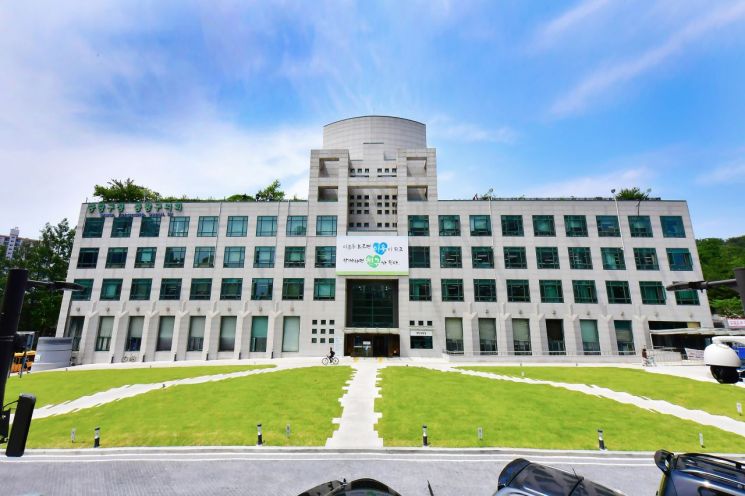
Jungnang-gu announced on the 18th that it is recruiting participants for a swimming class for local residents with disabilities.
The swimming class, running from June to November, was established to promote sports for people with disabilities and increase physical activity through aquatic exercise.
Classes will be held at Jungnang Cultural Sports Center swimming pool every Tuesday and Thursday from 4 PM to 5 PM. Eligible participants are residents aged 14 or older with disabilities who can use the pool and participate in aquatic activities. The number of participants is limited to 8 per day, and participants can only attend once a week without overlapping attendance.
Residents wishing to participate can apply by phone through the Jungnang-gu Disabled Sports Association starting from the 23rd, with applications accepted on a first-come, first-served basis.
For detailed information about the swimming class for people with disabilities, please refer to the notice board on the Jungnang-gu Disabled Sports Association website or contact them by phone.
A district official said, “We hope that people with disabilities who have low physical activity will increase their exercise and lead a vibrant life by participating in the swimming class. We will continue to strive and develop programs to improve the health of local residents with disabilities.”
Meanwhile, in addition to operating the swimming class, the district is making various efforts for disability welfare. These include a contest for disability awareness improvement held on March 20 to commemorate Disability Day, support for childbirth costs for families with disabled members, and housing convenience support projects for low-income disabled residents.
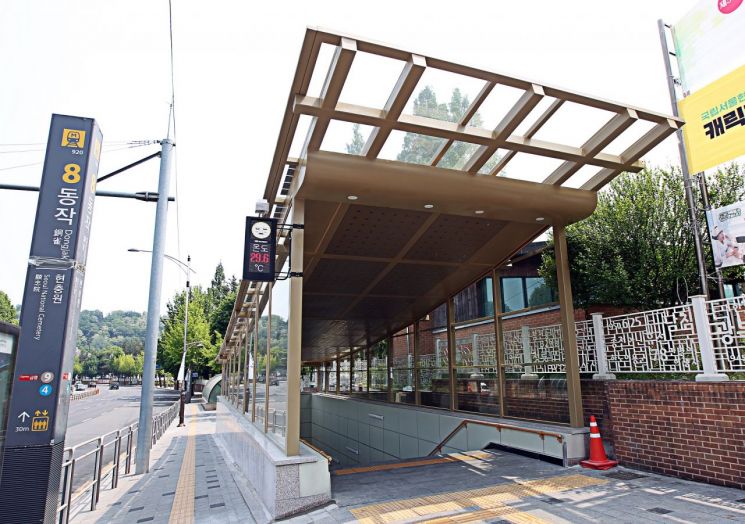
Dongjak-gu (Mayor Lee Chang-woo) announced on the 18th that it completed the installation of solar panels at Exit 8 of Dongjak Station, the entrance to the National Seoul Memorial Cemetery.
On the 15th, the district completed the installation of building-integrated photovoltaic panels on the canopy above Exit 8 of Dongjak Station, the entrance to the National Seoul Memorial Cemetery.
This project was selected as the ‘2021 Autonomous District Solar Power Special Project’ hosted by Seoul City, securing 210 million KRW in city funds to promote energy saving and expand solar power dissemination.
The solar power facility has a total capacity of 8.0 kW and uses Internet of Things (IoT) technology to monitor the renewable energy generation facility in real time.
The eco-friendly electricity generated during the day is primarily used to illuminate the interior of the Dongjak Station underground passage from 5 PM to midnight and also powers nighttime lighting at the underground passage entrance, improving user convenience and urban aesthetics.
Additionally, a fine dust information board providing real-time air pollution data has been installed in front of the exit to offer easy-to-understand air quality information to users and nearby residents.
The solar panels are estimated to produce an average of 700 kW of electricity per month, saving about 70,000 KRW per month and approximately 840,000 KRW annually in electricity bills.
In the future, the site will be used for field visits during environmental and energy education such as energy self-reliant villages, expected to have triple benefits of energy saving, urban aesthetics improvement, and dissemination of BIPV (Building Integrated Photovoltaics) new technology.
Meanwhile, the district is making efforts to create a sustainable energy self-reliant city through solar power facilities such as the ‘Solar Guide Board’ kiosk function for revitalizing alley markets, the ‘Solar Rest Area’ in Noryangjin Neighborhood Park equipped with heated design chairs and mobile device charging facilities, and the ‘Solar Willow’ in Nodeulnaru Park producing 2,500 kW of electricity annually.
Park Yeon-su, head of the Clean Environment Division, said, “We will continue to expand solar power projects to lead carbon neutrality and contribute to improving urban aesthetics.”
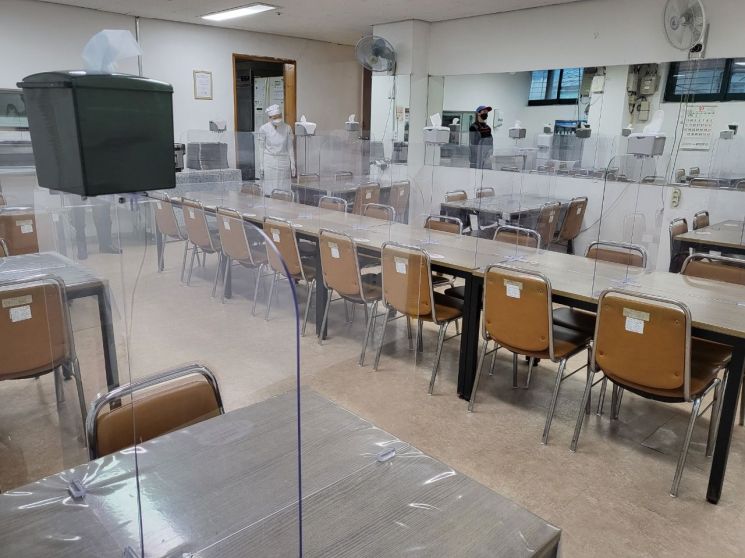
Seongbuk-gu will fully reopen seven senior citizen cafeterias in the district starting May 23.
Senior citizen cafeterias provide lunch six days a week to low-income seniors aged 60 and over who are at risk of skipping meals, ensuring basic nutrition through a community-based welfare project. However, due to the spread of COVID-19, alternative meals that can be easily consumed at home were provided to protect the vulnerable seniors.
A Seongbuk-gu official said, “With the lifting of mandatory social distancing and concerns about nutritional imbalance caused by long-term simple meals, we will resume operation of senior cafeterias.”
Currently, seven service providers including Seongbuk Senior Welfare Center, Lifeline Comprehensive Social Welfare Center, Jangwi Comprehensive Social Welfare Center, Gireum Comprehensive Social Welfare Center, Wolgok Comprehensive Social Welfare Center, Jeongneung Comprehensive Social Welfare Center, and Seongbuk Welfare Center for the Visually Impaired provide meals to a total of 505 seniors.
With the reopening of the cafeterias, Seongbuk-gu has completed thorough preparations for safe and smooth operation, including installing table partitions, providing hand sanitizers, and establishing an emergency response system for immediate action in case of confirmed cases. Only those who have completed the third vaccine dose can dine inside the cafeterias; unvaccinated individuals will be supported with take-out meals or alternative meals on the day of preparation.
A Seongbuk-gu official said, “We will do our best to provide healthy and safe meals to seniors at risk of food insecurity and help them return to stable daily life, including strict hygiene management of cooking facilities. We ask seniors to strictly follow personal quarantine rules.”
© The Asia Business Daily(www.asiae.co.kr). All rights reserved.
![Clutching a Stolen Dior Bag, Saying "I Hate Being Poor but Real"... The Grotesque Con of a "Human Knockoff" [Slate]](https://cwcontent.asiae.co.kr/asiaresize/183/2026021902243444107_1771435474.jpg)

















