JP Morgan "70% Probability of Stock Market Recession Reflected... Excessive Compared to Bond Market"
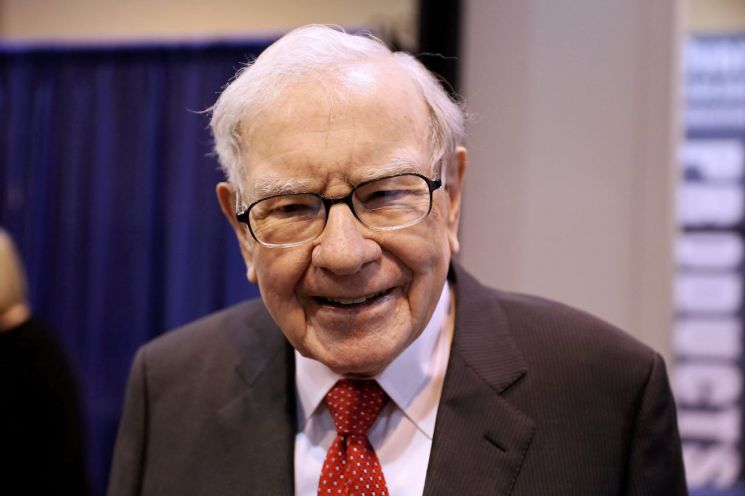
[Asia Economy Reporter Park Byung-hee] Investment genius Warren Buffett has been confirmed to have made strong bargain purchases this year.
According to the Wall Street Journal on the 16th (local time), Buffett's insurance company Berkshire Hathaway invested hundreds of billions of dollars in stock purchases over the past two months. According to a report submitted by Berkshire to the U.S. Securities and Exchange Commission (SEC) on that day, Berkshire's cash holdings, which were $146.7 billion at the end of last year, decreased to $106.3 billion as of the end of March.
Berkshire made large-scale investments in energy-related stocks. Just last week, it purchased 901,768 shares of Occidental Petroleum. Berkshire began buying Occidental shares at the end of February, and it appears that Occidental has become one of Berkshire's top 10 investment holdings. In addition, Berkshire has significantly increased its holdings in Chevron over the past few months.
This year, Occidental's stock price surged 134%, and Chevron's stock price also rose 47%. In contrast, the S&P 500 index fell 16%.
Berkshire also purchased shares of Activision Blizzard, Hewlett-Packard, Citigroup, Ally Financial, and Apple. On the other hand, it liquidated its Wells Fargo shares, which it had held continuously since 1989.
Buffett has always advised, "Be greedy when others are fearful." During the past two years when stock prices rose after COVID-19, there was no opportunity to be greedy, and Berkshire's cash holdings reached a record high, nearing $150 billion at the end of last year. This year, as the S&P 500 index fell sharply, Berkshire began large-scale stock accumulation.
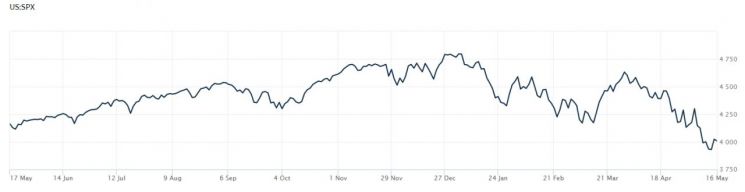
Buffett has started bargain buying based on his judgment that stock prices are at the bottom, but there are also opinions that the bottom has not yet been confirmed.
Michael Wilson, an investment strategist at Morgan Stanley, predicted in a report on the same day that the S&P 500 index could fall to around 3400. He believes it could drop about 15% more from the closing price of 4008.01% on that day.
Wilson said his base case scenario is that the U.S. economy will avoid a recession, but the risk of recession has recently increased significantly, making stock prices appear somewhat expensive. He expects the stock market to continue showing high volatility, with the S&P 500 index falling to a low of 3400 before rising back to around 3900 by next spring.
He described the 2.39% sharp rebound of the S&P 500 index on the 13th as merely a bear market rally. He downgraded it as a temporary rebound in a downward trend and predicted a larger decline.
Marco Koronovich, an investment strategist at JP Morgan Chase, analyzed that the recession risk reflected in the stock market is higher than the risk reflected in the bond market. This means stock market investors are more fearful of recession risk than bond market investors.
According to Bloomberg News, Koronovich analyzed in a report released that day that the current stock prices in the U.S. and European stock markets imply about a 70% probability of recession in the short term. In contrast, the investment-grade bond market sees a 50% probability, the non-investment grade bond market sees 30%, and the interest rate market sees as low as 20%.
He predicted that since stock market investors are overestimating recession risk, if recession fears subside, the stock market rebound could be strong. He also analyzed that if stock market investors' predictions are correct and a recession actually occurs, the bond market would fall even more sharply.
However, Koronovich stated that the probability of a recession occurring within the next 6 to 12 months is low.
© The Asia Business Daily(www.asiae.co.kr). All rights reserved.
![Clutching a Stolen Dior Bag, Saying "I Hate Being Poor but Real"... The Grotesque Con of a "Human Knockoff" [Slate]](https://cwcontent.asiae.co.kr/asiaresize/183/2026021902243444107_1771435474.jpg)
















