[Seoul District News] Jungnang-gu Starts Full Operation of Mist-type Cooling System from the 13th to Combat Heat... Operates Until Late September & Eases Citizens' Discomfort During Seoul Rose Festival Bloom... Dobong-gu Launches '2022 Summer Comprehensive Measures' for Health, Heatwave, Flood Control, and Safety... Yongsan-gu Accepts Applications for Employment Retention Support for Unpaid Leave Workers... Yeongdeungpo-gu Prevents Missing Developmentally Disabled with Smart Insoles and Watches
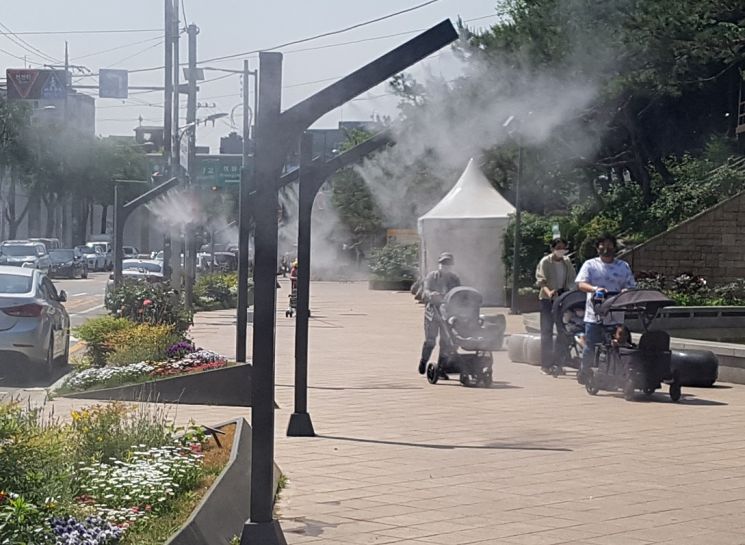
[Asia Economy Reporter Park Jong-il] Jungnang-gu resumed operation of the mist-type cooling water (cooling fog) device, a water mist spraying system, starting from the 13th.
The mist-type cooling water system, designed to prepare for summer heatwaves, absorbs dust and lowers the surrounding temperature by up to 10 degrees Celsius, providing outdoor cooling and reducing fine dust. Currently, the system is located in Junghwa Water Park, where various events such as the Rose Festival are held. Since its installation in 2019, operation was suspended from 2020 to prevent the spread of COVID-19.
With the lifting of social distancing measures, the district decided to operate the system this year starting May 13, the rose blooming day, to ensure residents visiting the park for the Seoul Rose Festival do not suffer from the heat. A trial operation was also completed last month.
Notably, one more location will be added this year: Yongma Waterfall Park, a popular climbing spot frequently visited by local residents. Installation will be completed by June, and operation will begin immediately.
A district official said, “We hope residents visiting the festival can enjoy it more comfortably by cooling off with the refreshing water mist amid the early heatwave. We will continue to actively introduce innovative technologies to proactively respond to heatwaves and do our best to protect the safety of our residents.”
The mist-type cooling water system operates daily from 9 a.m. to 6 p.m. and is flexibly managed depending on weather conditions. It automatically stops when humidity exceeds 70%.
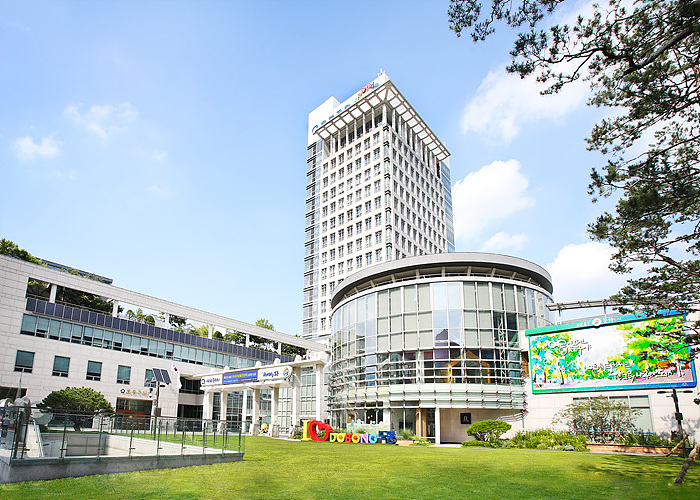
Dobong-gu (Mayor Lee Dong-jin) has established the ‘2022 Summer Comprehensive Measures’ to prevent summer disasters and safety accidents and minimize inconvenience to residents, which will be implemented over five months (May to October 2022).
According to the Korea Meteorological Administration, ozone advisories have increased over the past two years. The summer of 2022 is expected to have higher temperatures than average and a higher probability of heavy rain, necessitating proactive preparation for air pollution, heatwaves, and heavy rainfall.
Accordingly, Dobong-gu has formulated 17 detailed measures across four areas: health, heatwave, flood control, and safety, aiming to prevent summer accidents and enable rapid recovery in emergencies.
First, to respond swiftly to summer food poisoning outbreaks, a continuous reception and dissemination system will be maintained, and a food poisoning cause and epidemiological investigation team will operate. To prevent mass food poisoning, joint inspections will be conducted on school meal facilities and food suppliers. Approximately 400 small businesses, seafood restaurants, and side-dish shops with hygiene concerns will undergo ATP contamination level testing to check hygiene status. Consumer food hygiene inspectors will conduct on-site guidance and inspections at 199 mass catering facilities.
The ‘1830 Handwashing Experience Classroom’ will be expanded. Handwashing education equipment will be provided to five elementary schools and four daycare centers to teach proper handwashing. A ‘Food Poisoning Prediction Index SMS Alert Service’ will also operate. Using the Food and Drug Safety Ministry’s food poisoning prediction map, 3,189 food service establishments in the area will receive daily SMS alerts about the food poisoning prediction index (risk, warning, caution, attention) and precautions.
To minimize the impact of air pollution, an ozone warning and alert system will be operated. The system issues alerts in the order of advisory, warning, and severe warning, implementing phased measures for air pollutant emission sites, vehicle operation, public facilities, and outdoor activities.
An air pollution situation room will operate daily to inspect vehicle emissions and idling, and maintain rapid dissemination and inspection systems when ozone advisories are issued.
Second, for heatwave measures, a task force for heatwave situation management will be formed and operated during the comprehensive measures period. When a heatwave alert is issued, a comprehensive support situation team consisting of six divisions (overall situation, facility measures, welfare measures, rescue and first aid, energy measures, administrative support) will operate 24/7.
To protect vulnerable groups from heat, 161 cooling shelters (open weekdays from 9 a.m. to 6 p.m.) will be operated at senior centers, with 12 shelters open during nights and weekends.
For vulnerable residents such as elderly living alone, disabled persons, chronic patients, and those in poor housing, dedicated health management personnel will conduct welfare visits and health checks. High-risk groups will be prioritized to receive heatwave preparedness health supplies (cool mats, parasols, etc.).
Third, to protect residents from natural disasters such as typhoons and floods, a flood and wind disaster safety countermeasures headquarters will be organized into 13 divisions and operated in stages.
For flood-vulnerable households, 117 care officials and 64 private emergency volunteers will be assigned for management. Flood prevention facilities will be intensively installed before the rainy season in 150 flood-prone households, including low-lying underground homes, to prevent damage.
Additionally, partial support for flood insurance premiums will be provided to actively encourage enrollment. Dobong-gu’s flood insurance enrollment target for this year is 246 households.
Meanwhile, a river patrol team has been formed to expand 45 remote access control facilities for river entry and exit to ensure local residents’ safety. Inspections will be conducted on four local rivers, including Jungnangcheon, covering 18.12 km. Early dredging of sewer pipes and rainwater inlets in vulnerable areas will be performed before the rainy season.
To prepare for unexpected flood damage, 164 disaster relief kits including emergency relief and cooking sets are stocked, and 30 temporary housing facilities capable of accommodating about 39,000 people will be operated.
Finally, pre-inspections will be conducted on disaster-vulnerable facilities such as apartment complexes, construction sites, and road facilities to prepare for summer safety accidents. Outdoor advertisements, including fixed advertisements (rooftop signs, banner stands, protruding signs) and movable advertisements (air light signboards, vertical banners), will be inspected in preparation for typhoons. During heavy rain or typhoon warnings, patrols will be intensified with a situation duty system.
From May 16 to June 3, safety inspections will be conducted on 56 construction sites and disaster-risk facilities (aged buildings, retaining walls, structures, etc.). Safety inspections will also be carried out on 23 routes including Dobong-ro and 73 road facilities.
Additionally, inspections will be conducted on three social welfare centers, 138 elderly and disabled welfare facilities, 188 childcare facilities, and multi-use facilities (6 performance halls, 9 cultural heritage sites, 9 large distribution centers, 6 traditional markets, etc.).
Lee Dong-jin, Mayor of Dobong-gu, stated, “As this is the first summer after the full return to daily life post-COVID-19, we will thoroughly implement measures across the four major areas to ensure no inconvenience to residents. We will make every preparation so that residents can have a safe and comfortable summer.”
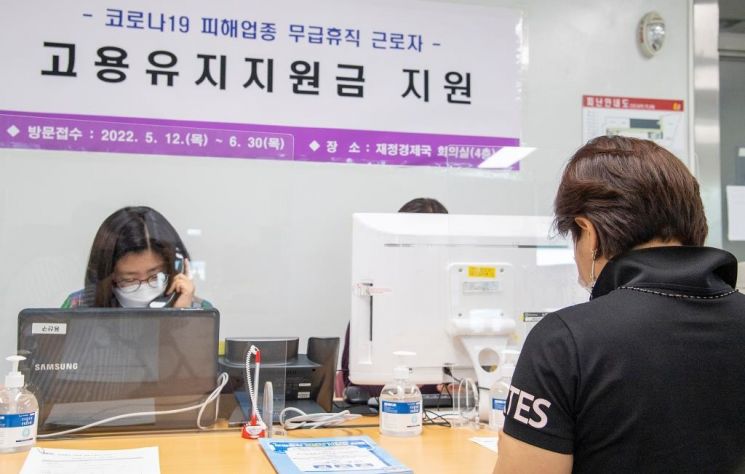
Yongsan-gu (Mayor Seong Jang-hyun) is accepting applications for the unpaid leave worker employment retention support fund until June 30.
Eligible applicants are workers at companies with fewer than 50 employees in the district who have taken unpaid leave of 7 days or more per month between April 1, 2021, and June 30, 2022, and who maintain employment insurance coverage until July 31, 2022.
The district prioritizes small business owners and workers in special employment support industries, providing up to 500,000 KRW per month for a maximum of three months.
Applicants can submit their application forms at the district office’s 4th floor reception desk (in front of Elevator No. 1). Applications by email, fax, or mail are also accepted. Related forms are posted in the news section of the district website.
The district will notify applicants of selection results and payment dates via text message. Applications submitted by the 25th of this month will receive support in June, and those submitted afterward will receive support in July.
A district official said, “If fraudulent receipt is confirmed during post-inspection, recovery measures may be taken. We ask for cooperation to prevent fraud and duplicate claims.”
The ‘Unpaid Leave Worker Support Fund’ has been implemented since 2020 to support unpaid leave workers at small businesses with fewer than 50 employees, who are in a blind spot of the government’s employment retention support policy.
The district has paid a total of 1.43 billion KRW (1,783 cases) in employment retention support funds to unpaid leave workers in the area over three rounds.
Seong Jang-hyun, Mayor of Yongsan-gu, said, “We are supporting workers who had no choice but to take unpaid leave due to COVID-19. The district will continue to do its best to prevent unemployment among workers and help business owners recover.”
Yeongdeungpo-gu announced it will promote a smart device support project to prevent missing incidents of people with developmental disabilities and assist their independent living.
According to data from the National Police Agency, over 8,000 people with developmental disabilities go missing annually. There is a high risk of exposure to various crimes after going missing, making prevention and early detection efforts crucial.
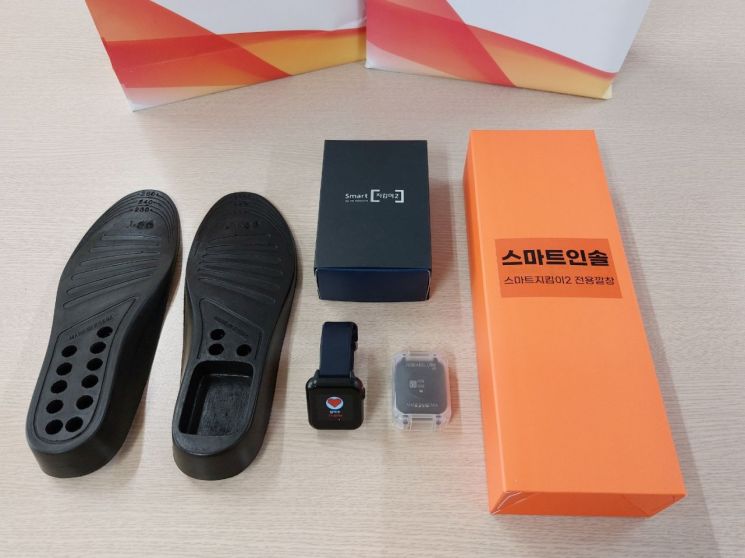
Accordingly, the district decided to support smart devices equipped with a satellite positioning system (GPS) to prevent missing incidents and enable quick response in emergencies.
The supported smart devices can be chosen and worn as either shoe insole type or wristwatch type, tailored to the characteristics and situations of people with developmental disabilities.
When wearing the device, the location of the person with developmental disabilities can be checked in real-time on the guardian’s smartphone. If the person leaves a pre-set safe zone, an alert message is immediately sent to the guardian, enabling prompt response.
The support targets 52 residents of Yeongdeungpo-gu with developmental disabilities such as intellectual disabilities and autism spectrum disorder, prioritizing low-income vulnerable groups including basic livelihood security recipients and near-poverty households.
Selected individuals will receive the smart device along with two years of communication fee support.
Those wishing to apply, either the person with developmental disabilities or their guardian, should apply at the community service center of their registered residential district by May 20. The district will review applications and priorities to select recipients and notify them individually.
For more details about the smart device support project, contact the Social Welfare Division of Yeongdeungpo-gu Office.
A district official said, “Through this smart device support, we expect to help people with developmental disabilities live independently in the community and reduce the caregiving burden on families. We will continue to promote projects that support safe daily life and social activities for people with developmental disabilities.”
© The Asia Business Daily(www.asiae.co.kr). All rights reserved.
![Clutching a Stolen Dior Bag, Saying "I Hate Being Poor but Real"... The Grotesque Con of a "Human Knockoff" [Slate]](https://cwcontent.asiae.co.kr/asiaresize/183/2026021902243444107_1771435474.jpg)

















