Major Producing Countries Prioritize 'National Interest' and 'Domestic Market Supply First'
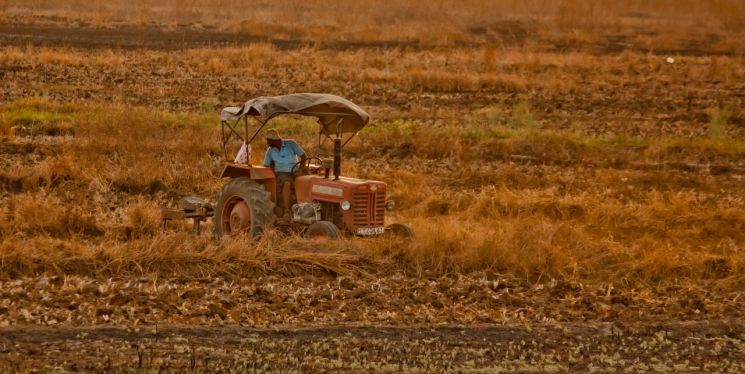 Following Indonesia's suspension of palm oil exports, India has also imposed controls on wheat exports, signaling a spread of food protectionism. The photo is unrelated to specific expressions in the article. [Image source=Pixabay]
[Asia Economy Reporter Kim Jung-wan] As the Ukraine crisis causes international food prices to soar, food protectionism is spreading, with Indonesia abruptly halting palm oil exports and India, the world's second-largest wheat producer, controlling wheat exports.
Major producing countries are prioritizing 'national interests' and 'domestic market supply first,' raising concerns and anxieties that the international market will face considerable shocks.
India, the world's second-largest wheat producer, abruptly banned wheat exports starting the night of the 14th and decided to export only quantities approved by the central government, which is expected to be a massive negative factor for the already unstable international market.
This is because wheat harvests sharply declined after Ukraine was invaded by Russia, and Russia's blockade of the Black Sea coast has made exports difficult, while major producers have banned exports.
With Ukraine and Russia, which account for more than 25% of global wheat exports, reducing their supply to the international market, wheat flour prices have risen, followed by increases in bread and ramen prices.
India exported 1.4 million tons of wheat last month, more than five times the volume compared to the same period last year, and despite concerns about poor harvests due to heatwaves, it had forecast that production would not significantly decrease this year, providing some relief to the international market.
However, the Indian government reversed its initial stance of 'no wheat export restrictions' citing 'food security' and banned exports starting from this day.
This phenomenon had already appeared in Indonesia. Despite being the world's largest palm oil producer, exporters focused solely on exports, causing domestic cooking oil prices to soar and shortages to occur. Accordingly, Indonesia halted palm oil exports starting from the 28th of last month until cooking oil prices return to early last year's levels.
Indonesia's government's decision drew external criticism that it would fuel global food price inflation and disrupt international market prices, but the government did not relent. President Jokowi took a firm stance, saying, "It is ironic that a cooking oil shortage is occurring in the world's largest palm oil producing country."
This phenomenon is not limited to Indonesia and India. Several other countries are also strengthening 'food protectionism' by prioritizing domestic market supply, halting food exports, or expanding stockpiles.
Egypt has suspended exports of major grains such as wheat, flour, and soybeans for three months, and Turkey, Argentina, and Serbia have either already banned exports or are considering controls.
© The Asia Business Daily(www.asiae.co.kr). All rights reserved.
![Clutching a Stolen Dior Bag, Saying "I Hate Being Poor but Real"... The Grotesque Con of a "Human Knockoff" [Slate]](https://cwcontent.asiae.co.kr/asiaresize/183/2026021902243444107_1771435474.jpg)
















