[Asia Economy Reporter Kwon Jae-hee] LG Household & Health Care, once regarded as the epitome of 'Hwangjeju' (Emperor Stock), has faced humiliation. The main cause of the sharp stock price decline is attributed to poor performance due to the impact of COVID-19.
According to the Korea Exchange on the 15th, LG Household & Health Care closed at 694,000 KRW on the 13th, up 0.43% from the previous trading day. On the previous day, the 12th, the stock price fell to 680,000 KRW, hitting a new low. This marks a return to stock price levels from as far back as seven years ago.
At one point, LG Household & Health Care reigned as an 'Emperor Stock' with a price exceeding 1,000,000 KRW per share. As of July 1 last year, the stock price peaked at 1,784,000 KRW, and has been steadily declining since then. If purchased at the peak, the return would be -61.10%.
The cause of LG Household & Health Care's stock price decline is attributed to poor earnings. On the 11th, LG Household & Health Care announced its Q1 earnings, reporting an operating profit of 175.6 billion KRW on a consolidated basis, down 52.6% year-over-year. During the same period, sales and net profit were preliminarily estimated at 1.645 trillion KRW and 113.8 billion KRW, down 19.2% and 56%, respectively. This performance fell short of market expectations, constituting an 'earnings shock.'
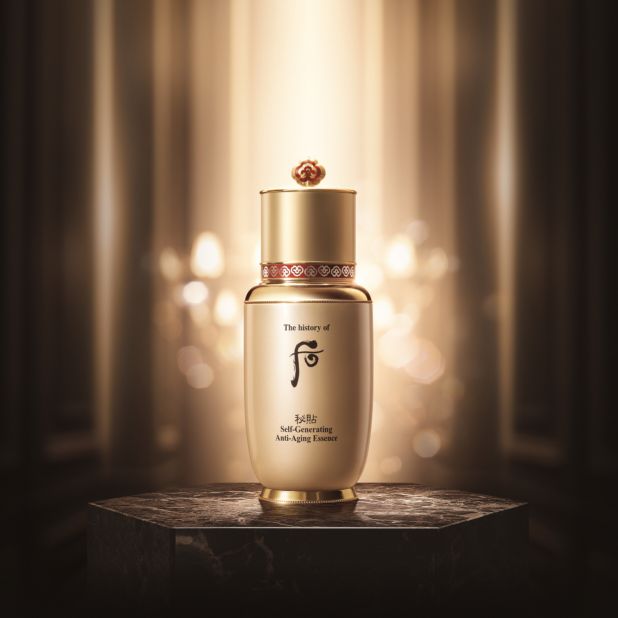
In particular, the sales decline in the cosmetics division, which had been a pillar for LG Household & Health Care, dealt a direct blow. Duty-free sales dropped by 68%, and sales from the Chinese subsidiary plunged by 32%. This performance is significantly weaker compared to the Chinese cosmetics retail market and domestic and international competitors.
As a result, the securities industry has been lowering their price targets for LG Household & Health Care one after another. Samsung Securities cut its target from 1,150,000 KRW to 630,000 KRW (-45.22%), DB Financial Investment lowered it from 1,100,000 KRW to 700,000 KRW (-36.36%). Meritz Securities reduced it from 1,000,000 KRW to 700,000 KRW, KB Securities from 1,000,000 KRW to 750,000 KRW, Daol Investment & Securities and Yuanta Securities from 1,000,000 KRW to 800,000 KRW, and Cape Investment & Securities from 1,400,000 KRW to 880,000 KRW.
Orin Ah, a researcher at Ebest Investment & Securities, analyzed, "With the Chinese lockdown expected to continue until as late as October, it is necessary to maintain a somewhat conservative view on duty-free shops and local businesses, which had a high base last year, even in the second quarter."
On the other hand, some securities firms have issued optimistic forecasts expecting a recovery in performance starting from the second quarter.
Sojeong Cho, a researcher at Kiwoom Securities, said, "LG Household & Health Care raised prices for cosmetics and household goods from the beginning of this year," adding, "The effect of product price increases will become visible from the second quarter, so cost burdens are expected to gradually ease."
Jiyoung Ahn, a researcher at IBK Investment & Securities, also stated, "If the lifting of China's lockdown becomes visible in the second half of the year, the recovery of fundamentals and stock price sentiment will proceed rapidly," and maintained a buy rating.
© The Asia Business Daily(www.asiae.co.kr). All rights reserved.
![Clutching a Stolen Dior Bag, Saying "I Hate Being Poor but Real"... The Grotesque Con of a "Human Knockoff" [Slate]](https://cwcontent.asiae.co.kr/asiaresize/183/2026021902243444107_1771435474.jpg)















