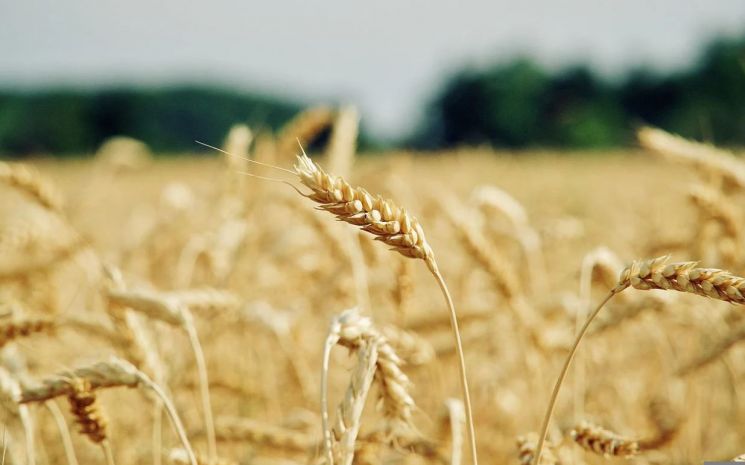
 India, the world's second-largest wheat producer, has banned wheat exports, which is expected to impact domestic food prices. The photo is unrelated to any specific expressions in this article. [Image source=Pixabay]
[Asia Economy Reporter Hwang Sumi] The ban on wheat exports by India, the world's second-largest wheat producer, is expected to impact domestic food prices in South Korea.
According to recent statistics from the Korea Flour Mills Association, the total wheat imports in South Korea amounted to 2,182,000 tons in 2020. Of this, the largest portion, 51.1% (1,115,000 tons), was imported from the United States, followed by Australia at 43.5% (949,000 tons), and Canada at 5.4% (117,000 tons).
Imports from other countries accounted for only 0.05% (1,000 tons). This indicates that the volume of wheat imported from India to South Korea is relatively small.
However, with India's export ban expected to drive up international grain prices, there are concerns about negative effects domestically. South Korea relies heavily on imports for most of its grains, so fluctuations in global grain prices threaten the cost of processed foods and dining out.
In fact, global grain prices are rising rapidly. The United Nations Food and Agriculture Organization (FAO) reported that the global grain price index in March, following Russia's invasion of Ukraine, reached a record high of 170.1 points.
Wheat production is also facing a crisis. Not only the war-affected Russia and Ukraine but also regions worldwide including France and the United States are experiencing significant disruptions in wheat production due to hot and dry weather conditions.
Bloomberg News projected that global wheat production this year will decrease by 4.4% from last year to 774.4 million tons. This decline in wheat production is the first in four years since 2018. Wheat stocks are also expected to fall by 3.4% to 275 million tons.
Along with the decrease in wheat production, India's recent wheat export ban is likely to further increase wheat prices.
Industry insiders expect that, considering domestic stock levels, immediate direct damage may not be significant, but they expressed concerns over the long term. According to a Yonhap News report, the Ministry of Agriculture, Food and Rural Affairs stated that the domestic grain-related industries such as milling and feed have stockpiles sufficient for use from July to September, and are currently securing additional supplies.
© The Asia Business Daily(www.asiae.co.kr). All rights reserved.

















