Despite the Surge in Touch-Based Convenience Devices... Visually Impaired and Other Vulnerable Groups Still Face Difficulties
Physically Disabled with Limited Mobility Struggle to Adjust Position, Elderly Unfamiliar with Touch Screens Experience Inconvenience
Some Companies Developed 'Barrier-Free' Solutions but "Legal Amendments Needed"
Experts Call for Practical Legislation Including Physical and Software Accessibility
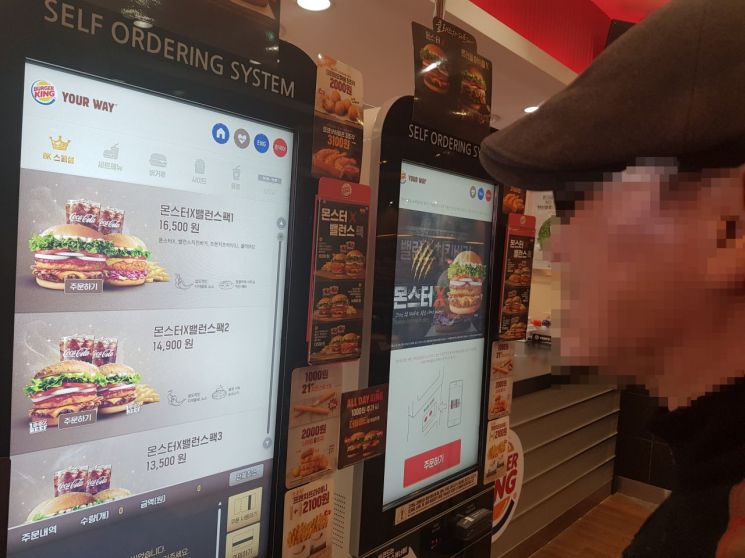 Visually impaired Jo Min-ho (52, pseudonym) stood in front of the kiosk for a long time. He soon realized it was a futile attempt and began calling for an attendant.
[Asia Economy Reporter Kim Jeong-wan] Recently, as the installation of 'wall pads' inside and outside apartments and houses has increased, and with the rise of contactless payment systems following the spread of COVID-19, voices have emerged from visually impaired people and others stating that touchscreen-based convenience devices such as 'kiosks' are inconvenient to use and exclude their access rights. Wall pads are intelligent home networks composed of home gateways, household terminals, and complex network equipment, all characterized by operation through touch.
Intelligent home networks provide services that allow convenient control of household appliances inside and outside the home through interconnection between internal appliances and portable information communication devices. However, these services have been criticized for infringing on the housing rights of people with disabilities. Since there is no separate Braille and operation is done entirely through touch, users feel inconvenienced. Besides visually impaired people who find touch-based device operation difficult, people with physical disabilities who have difficulty adjusting position and elderly people unfamiliar with touch services also face challenges in using home networks.
Although discussions about vulnerable groups' access have taken place as the domestic market grows, fundamental solutions remain insufficient. According to the Korea Smart Home Industry Association, the domestic smart home market size was 78.2837 trillion won in 2020, a 10.4% increase from 70.9398 trillion won in 2019, and it is expected to surpass 100 trillion won by 2023, indicating steady growth in distribution.
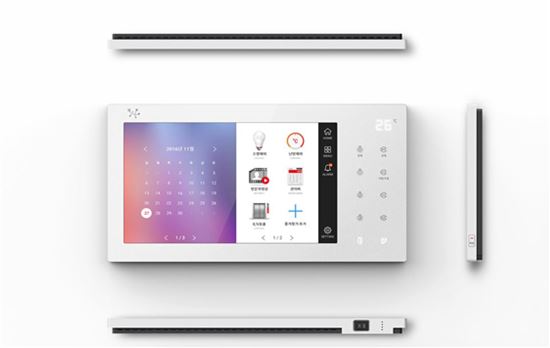 The intelligent home network "Wallpad," composed of home gateways, unit terminals, and complex network equipment, operates entirely on a touch-based interface, highlighting the need for measures to address the difficulties faced by visually impaired and other accessibility-vulnerable groups. Photo by a photographer unrelated to specific expressions in the article.
In response, in March last year, Rep. Kim Ye-ji of the People Power Party introduced a bill to amend the Housing Act to guarantee accessibility by adding features such as △Braille and voice functions △screen reading programs △height adjustment functions to intelligent home networks, but it is currently pending in the Land, Infrastructure and Transport Committee.
Besides wall pads, the spread of contactless payment systems due to social distancing after the COVID-19 outbreak has led to a rapid increase in the distribution of 'kiosks.' According to the 'Domestic Kiosk Distribution Status (Estimate)' data released by the Science, Technology, Information and Broadcasting Communications Committee last year, the number of kiosks increased from 189,000 units in 2019 to about 210,000 units in 2021. In particular, the private sector, including restaurants and convenience facilities, saw a surge from 8,587 units in 2019 to 26,574 units in 2021, more than tripling.
As kiosk distribution increased, calls for measures to support vulnerable groups in using touch-based electronic devices also followed. Accordingly, on October 14 last year, the People's Solidarity for Participatory Democracy and nine disability organizations held a press conference in front of the National Human Rights Commission (NHRC) and submitted a petition to the NHRC, stating, "Reasonable accommodations must be provided so that people with disabilities can use kiosks and other devices at the same level as the general public."
The groups pointed out, "People with disabilities are still discriminated against even in essential everyday spaces such as residential areas, libraries, hospitals, as well as ordering and payment at restaurants and cafes, which should be easily accessible and usable by everyone."
 On the afternoon of October 14 last year, a visually impaired person is speaking at a press conference held by the People's Solidarity for Participatory Democracy and nine disability organizations in front of the National Human Rights Commission of Korea in Jung-gu, Seoul. The press conference was about filing a complaint to the National Human Rights Commission and a lawsuit for damages regarding the violation of the obligation to guarantee kiosk accessibility and provide reasonable accommodations for the visually impaired.
 [Photo by Yonhap News]
Some companies have developed 'barrier-free kiosks' that provide Braille, height adjustment functions, and sign language support, making them convenient for people with visual and hearing impairments as well as wheelchair users. However, these are criticized for lacking fundamental solutions and thus having limited effectiveness. The government stipulated in June last year that national institutions must prioritize purchasing barrier-free kiosks when buying kiosks, but since this does not apply to private companies, legislative efforts are needed.
Rep. Kim said, "It seems necessary to amend laws such as the Housing Vulnerable Act, which defines housing for vulnerable groups, and the Act on the Prohibition of Discrimination against Persons with Disabilities," adding, "It is necessary to consider from the early stages of research whether people in various environments with diverse needs can all use these machines."
Meanwhile, at the 'Policy Discussion on Guaranteeing Accessibility of Intelligent Home Networks' held on the 12th, voices of consensus on legal and administrative solutions for wall pads were also heard. Kang Tae-seok, Director of Housing Construction Supply Division at the Ministry of Land, Infrastructure and Transport, said, "I agree with the criticism that not only people with disabilities but also elderly people find operation difficult," adding, "If the standards in the Act on Convenience for Persons with Disabilities change, construction standards can also be revised. We will consult with related ministries within a system where multiple ministries jointly issue notifications to improve accessibility of intelligent home networks."
Experts emphasized the need for substantive legal discussions including software and physical accessibility. Hong Seo-jun, a researcher at the Center for Support of Facilities for the Visually Impaired, said, "There are limits to the barrier-free services currently provided by some companies. The problem arises because they are not fully covered by the legal framework," adding, "Physical accessibility should be addressed by improving laws related to convenience for persons with disabilities, the elderly, and pregnant women, while software accessibility requires substantial legislation that sufficiently incorporates the Act on the Prohibition of Discrimination against Persons with Disabilities and web accessibility guidelines."
© The Asia Business Daily(www.asiae.co.kr). All rights reserved.


















