tvN Sat-Sun Drama 'Our Blues' Depicts Jeju Society
"There Is No Maenom (Perfect Man) in the Village"
Outsiders Are Called 'Yukji Geot' (Mainland Things)
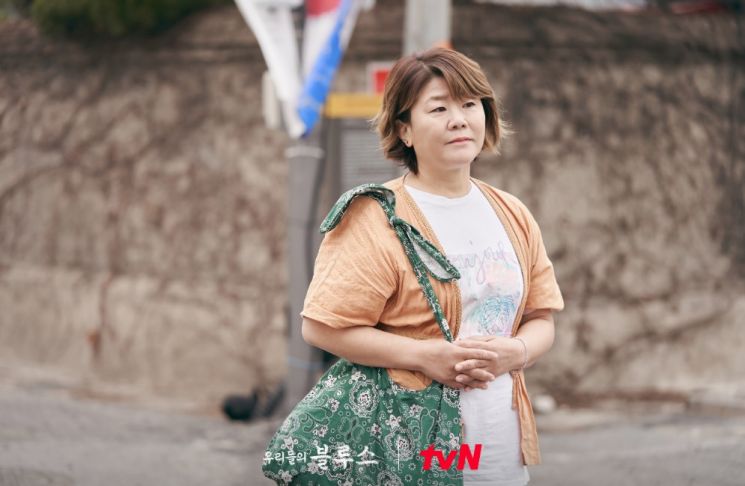 Our Blues Episode 3, Eun-hee Travels to Mokpo with Han-su / Photo by tvN Official Website of 'Our Blues'
[Asia Economy Intern Reporter Joo-eun Lee] "This is not Seoul but Jeju. You even know how many pairs of panties and how many pairs of spoons and chopsticks the next-door neighbor has." - Our Blues Episode 3, line by Eun-hee in the drama
Recently, the tvN weekend drama 'Our Blues' has gained popularity with its vivid Jeju dialect. Whenever the dialect is spoken on screen, subtitles show the standard Korean equivalent. This naturally piques viewers' curiosity about the origins of the dialect and why such dialects developed.
Among these, the term 'Gwandang,' unique to Jeju, is a central theme throughout the drama. While the dialect stimulates listeners' curiosity, the Gwandang culture well represents the culture of Jeju residents. The paternal and maternal sides are distinguished: the paternal side is called 'Seongpen Gwandang,' and the maternal side 'Wepen Gwandang.' Additionally, the husband's family after marriage is called 'Cheo Gwandang,' and the wife's family after marriage is called 'Si Gwandang.'
This refers to a culture where, due to the narrow regional characteristics, overlaps in regional and blood relations occur, leading to the belief that everyone is related if you look closely. It means that without strictly verifying kinship, if you trace back your hometown and genealogy, you might even be distantly related through marriage.
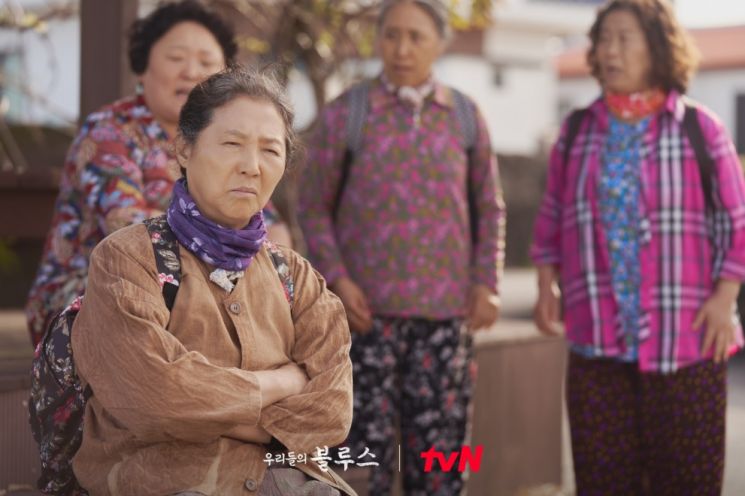
In the drama, characters often call neighborhood elders or guests 'Samchun (uncle).' In Jeju, there is a saying that "there is no completely unrelated man in the village," meaning that all villagers are intertwined as relatives. Calling neighborhood elders 'uncle' is a unique practice in Jeju stemming from this Gwandang culture.
The communal spirit derived from the Gwandang culture strongly influences daily life and broadly affects human relationships and social life. Mr. Lee (55), born and raised in Jeju, said, "In Jeju, Gwandang is stronger than school or regional ties," adding that the strong bond among native Jeju people comes from the island's geographical characteristics."
The drama aptly utilizes this Gwandang culture. The daily lives of those who work hard and endure each day on the island of Jeju are full of conflicts and quarrels. Yet, as if nothing happened, they cry, laugh, and embrace each other again. This background is rooted in the Gwandang culture.
Of course, there is also fatigue. In Episode 5 of 'Our Blues,' the character Young-joo says, "I want to run away from this small village where no one doesn't know me. I feel like my neck will fall off from greeting people all day. It's exhausting." Market vendors recognize Young-joo as "Ho-sik's daughter" and greet her warmly. Young-joo passes through the market repeating "Hello" with a lifeless expression, and the narration reveals her exhaustion from being recognized everywhere in the village.
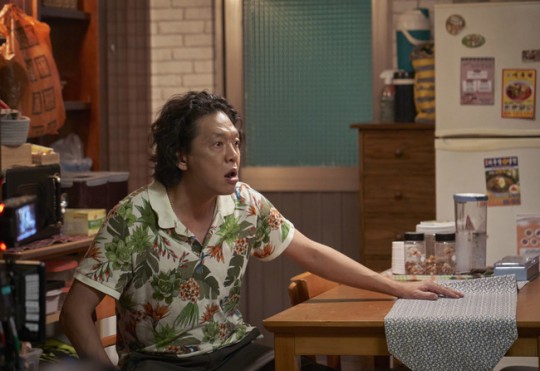 Jeong In-gwon, who runs a sundae gukbap (Korean blood sausage soup) business. Photo by tvN, captured from the 'Our Blues' homepage.
Because of this, there are also concerns about the Gwandang culture. It can lead to nepotism, prioritizing traditional social relationships such as blood ties, regional ties, and school ties in local politics. This is why during election seasons in Jeju, phrases like "Gwandang over political parties" and "Gwandang is better than this or that party" are commonly heard.
As Jeju people call newcomers from other regions 'Yukji geot (mainland folks)' and as shown in the above dialogue, Jeju's strong internal cohesion through the Gwandang culture can also foster exclusiveness toward outsiders.
Experts view Jeju's Gwandang culture as a regional culture that also has the downside of exposing private lives. Cultural critic Jung Deok-hyun said, "In Jeju, it is called Gwandang culture, but it is actually a characteristic of regionalism," adding, "Unlike Seoul, where anonymity is the norm, regional cultures basically know everyone in the neighborhood."
He continued, "The advantage is the strong bonds among locals, which help those in need and prevent people from being ignored. That is a strength." However, "The downside is the lack of anonymity that cities have. Everything is exposed, and people interfere in every matter. Even private matters are revealed. It is a double-edged sword of regionalism," he explained.
© The Asia Business Daily(www.asiae.co.kr). All rights reserved.
![Clutching a Stolen Dior Bag, Saying "I Hate Being Poor but Real"... The Grotesque Con of a "Human Knockoff" [Slate]](https://cwcontent.asiae.co.kr/asiaresize/183/2026021902243444107_1771435474.jpg)


















