Low-Sugar, Low-Calorie 'Zero Drinks' Popular... 'Healthy Pleasure' Consumer Trend as Background
Zero Carbonated Drink Market Size More Than Doubled in Last 5 Years
"Delicious and Health-Boosting Healthy Pleasure Is a Trend Among MZ Generation"
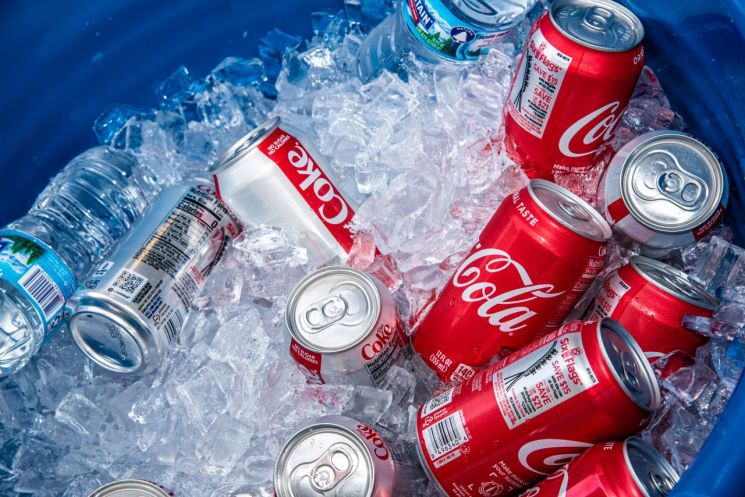 As "Healthy pleasure" emerges as a new consumer trend, zero-calorie beverages are gaining explosive popularity. Photo by Pixabay
[Asia Economy Reporter Park Hyun-joo] Recently, as interest in healthy eating habits has increased mainly among consumers in their 20s and 30s, zero-calorie beverages have emerged as a major trend in the food and beverage industry. The zero-carbonated beverage market size has explosively grown more than twice over the past five years.
Zero beverages contain artificial sweeteners such as aspartame and sucralose instead of sugar, resulting in no sugars and nearly zero calories. They are known not to directly affect blood sugar levels, making them a burden-free option for diabetic patients. Representative zero-carbonated beverages launched domestically include Coca-Cola Zero Sugar and Narangd Cider.
In the past, zero beverages were perceived as less tasty compared to regular carbonated drinks and did not gain much popularity. However, recently, with increased health awareness centered on the MZ generation (Millennials + Generation Z), they have shown explosive growth. According to market research firm Euromonitor, the zero-carbonated beverage market size was about 90.3 billion KRW in 2016, rose to 115.5 billion KRW in 2018, reached 131.9 billion KRW in 2020, and grew to around 218.9 billion KRW in 2021.
This is analyzed to be due to the emergence of a new consumer trend called 'Healthy pleasure.' Unlike the past when people strictly restrained themselves and starved, the recent trend is to enjoy delicious food while managing health happily. Accordingly, consumers tend to seek zero beverages with low sugar and calories rather than avoiding beverages altogether for health reasons. Additionally, with increased indoor living due to COVID-19 and decreased physical activity, some consumers choose zero beverages to reduce calorie intake.
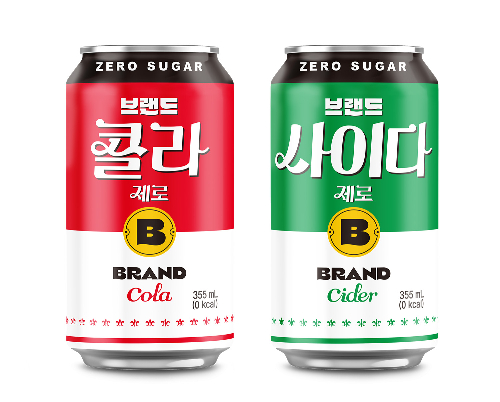
Food and beverage companies are launching various new products ahead of the summer peak season. Lotte Chilsung Beverage released three types of fruit-flavored carbonated drinks called 'Tams Zero' last month and plans to launch 'Milkis Zero' and 'Hot6 Zero' in the first half of this year. Nongshim introduced two types of 'Welch Zero,' which retain the fruit flavor of Welch's soda but with reduced calories, to the market last month. Woongjin Foods launched fruit-flavored carbonated drinks '815 Fizz Zero' and 'Teazle Sparkling,' and Shinsegae Food's No Brand Burger consecutively released 'Brand Cola Zero' and 'Brand Cider Zero.'
Along with zero beverages, 'low food' products that reduce specific ingredients such as fat and sodium are also popular. Lotte Confectionery planned the ZERO project in response to the popularity of low-sugar products and launched 'Petit Mon Cher Zero Cacao' and 'Ghana Zero Ice Bar.' Ottogi introduced five types of 'Light Tuna' with 40% less fat than before.
Professor Lee Eun-hee of Inha University's Department of Consumer Studies analyzed the zero beverage craze, saying, "The MZ generation is very interested in dieting, health, and exercise, and they pursue a firm, healthy, and beautiful body shape. Therefore, healthy pleasure, which helps maintain physical health without gaining weight, is gaining popularity." Professor Lee added, "Eating deliciously while not gaining weight and maintaining health is the trend that the MZ generation currently desires, so the outlook for the industry, including healthy pleasure products like zero beverages, appears bright in the future."
© The Asia Business Daily(www.asiae.co.kr). All rights reserved.
![Clutching a Stolen Dior Bag, Saying "I Hate Being Poor but Real"... The Grotesque Con of a "Human Knockoff" [Slate]](https://cwcontent.asiae.co.kr/asiaresize/183/2026021902243444107_1771435474.jpg)

















