Seoul National University Research Team Publishes Korea's First Scientific Study
Significant Decline in Pollock Spawning Grounds Confirmed Following Sea Surface Temperature Rise Due to Ocean Current Changes
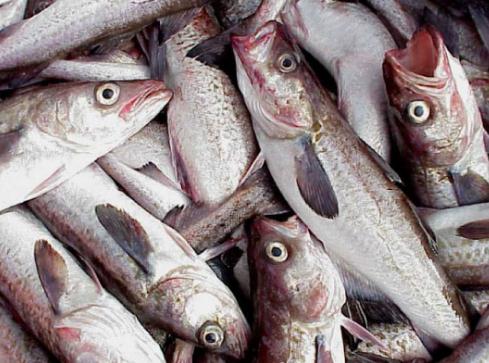 Pollock
[Asia Economy Reporter Kim Bong-su] The catch volume of Pollock, which was caught in tens of thousands of tons annually in Korean fishing grounds in the late 1980s, has sharply decreased. Domestic scientists have scientifically revealed for the first time that the cause was the approximately 2℃ rise in sea surface temperature due to changes in the East Sea currents.
Seoul National University announced on the 9th that Professor Jo Yang-gi's research team, together with Pusan National University, Gangneung-Wonju National University, and the Korea Hydrographic and Oceanographic Agency, conducted a study on the environmental changes causing the disappearance of Pollock along the East Coast and confirmed for the first time through satellite observation data and supercomputer simulations that changes in currents and rising water temperatures are the 'main culprits.'
To identify the impact of climate change on the sharp decline in Pollock catch volume in the late 1980s, the research team integrated satellite observation data with supercomputer simulation results to produce highly reliable reanalysis data of currents and water temperatures. The results confirmed that the sea surface temperature in the Pollock spawning areas rose by about 2℃ in the late 1980s, significantly reducing the spawning grounds along the East Coast. The team also developed a particle tracking model to trace Pollock eggs and larvae, revealing that the number of individuals moved from spawning grounds to habitats south of 38 degrees north latitude on the East Coast decreased by 74% due to the changed currents in the late 1980s.
The research team pointed to the strengthening of the East Korea Warm Current flowing northward in the late 1980s as the cause of the sharp decline in Pollock larvae moved to the southern region and the rise in water temperature, leading to the decrease of Pollock along Korea's East Coast. In other words, due to the rapid climate change in the late 1980s, the weakened monsoon caused winter temperature rises and northwest wind weakening, which failed to block the northward movement of the East Korea Warm Current as before, accelerating the warming of Pollock spawning and fishing grounds.
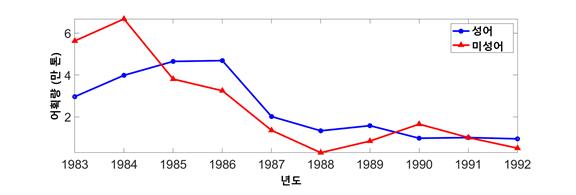
Professor Jo explained, "Until the early 1980s, tens of thousands of tons of Pollock were caught annually along the East Coast, but the catch volume sharply declined in the late 1980s. Although overfishing and climate change were suggested as possibilities, there was a lack of scientific data to support this," adding, "This is the first scientific revelation that changes in currents and rising water temperatures due to climate change transformed the East Coast into an unfavorable environment for Pollock spawning and larval settlement."
© The Asia Business Daily(www.asiae.co.kr). All rights reserved.
![Clutching a Stolen Dior Bag, Saying "I Hate Being Poor but Real"... The Grotesque Con of a "Human Knockoff" [Slate]](https://cwcontent.asiae.co.kr/asiaresize/183/2026021902243444107_1771435474.jpg)















