'Satori Generation' Faces Inflation for the First Time
Asahi Beer Raises Prices for the First Time in 17 Years
Chicken Prices Increase for the First Time in 36 Years
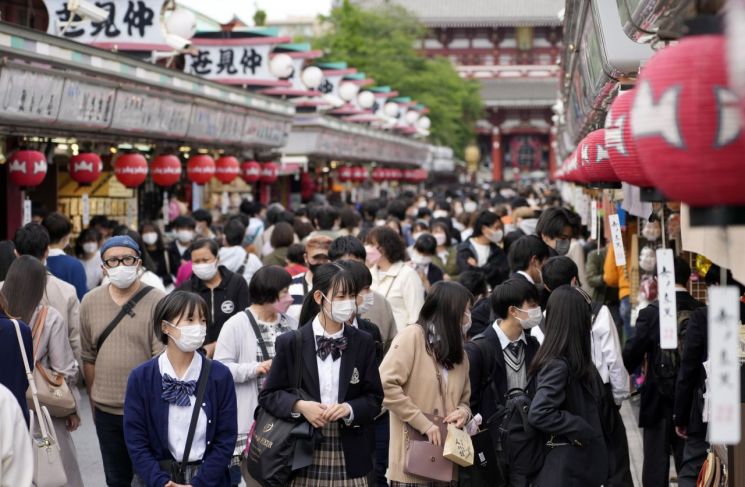
[Asia Economy Intern Reporter Kim Se-eun] Japan, known as the 'country of deflation,' is suffering from an unprecedented 'inflation shock' as the depreciation of the yen to its lowest level in 20 years coincides with the rise in raw material prices due to the Ukraine crisis.
The background of the price increase is attributed to the 'yen depreciation phenomenon.'
Recently, as the U.S. Federal Reserve (Fed) began raising the benchmark interest rate, investors started converting yen into dollars.
On the other hand, Japan announced it would maintain its existing zero interest rate policy, accelerating the decline in the yen's value, known as 'yen depreciation.' On the 28th, when the 'zero interest rate maintenance' was announced, the yen-dollar exchange rate plunged to the 130-yen range per dollar.
Among advanced countries, Japan has the highest national debt-to-GDP ratio (about 1,000 trillion yen, approximately 9,700 trillion won), so it cannot raise interest rates recklessly. Every time interest rates rise, the amount the government must bear skyrockets.
This inflation is causing even greater confusion as it is the exact opposite trend to Japan's traditional economic flow of 'recession.'
In particular, Japan's 'Satori' generation, born from the mid-1980s to mid-1990s, is experiencing inflation for the first time since birth.
They have suffered from recession and deflation for 30 years since the early 1990s, when the so-called 'bubble economy' collapsed.
Japan's research firm 'Teikoku Databank' reported last month that 105 companies raised prices on 4,081 items, including ramen, cooking oil, and beverages.
Even '100 yen shops,' which sold inexpensive items priced around 100 yen, are closing down as most products that could be sold for 100 yen have disappeared.
As a result, the low-cost household goods brand Daiso has opened offline shops using 300 yen, not 100 yen, as the base price.
On the 26th, Asahi Breweries, Japan's leading beer company, announced it would raise prices on major products for the first time in 14 years and 7 months. From October, beer prices will increase by 6-10%, and whiskey by 7-17%.
The company explained the reason, saying, "Costs inevitably continue to rise, and it is difficult to bear them through corporate efforts alone." It is interpreted that the rise in international oil prices, increased logistics costs, and the yen depreciation phenomenon have contributed to the increase in the cost of imported beer raw materials.
Price increases, such as chicken prices rising for the first time in 36 years, are impacting the dietary lives of Japanese people across the board.
© The Asia Business Daily(www.asiae.co.kr). All rights reserved.
![Clutching a Stolen Dior Bag, Saying "I Hate Being Poor but Real"... The Grotesque Con of a "Human Knockoff" [Slate]](https://cwcontent.asiae.co.kr/asiaresize/183/2026021902243444107_1771435474.jpg)















