[Seoul District News] Nowon-gu Opens Suraksan Circular Trail Section 1 (0.77km) from 30th with 1 Rest Deck, 4 Shelters, 23 Deck Steps; Total 1.68km Suraksan Circular Trail Sections 2 and 3 to be Completed by May... Mapo-gu Provides ‘Customized Exercise Prescription Service’... Gangseo-gu Publishes ‘Reflecting on Gangseo’ Book Introducing Various Local Spots
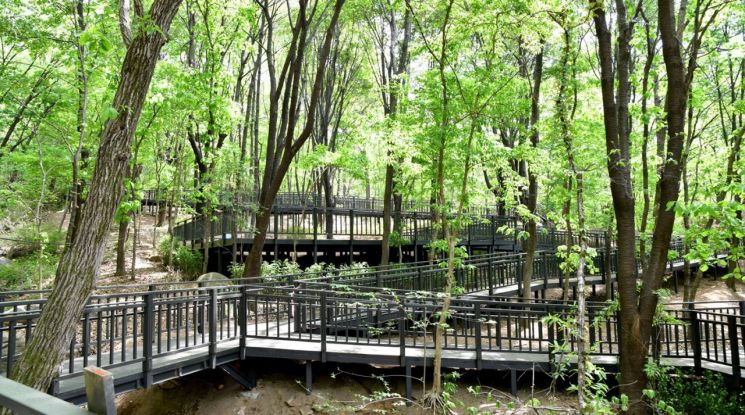
[Asia Economy Reporter Park Jong-il] Nowon-gu (Mayor Oh Seung-rok) has completed the creation of Section 1 of the Suraksan Circular Trail and will open it to residents starting from the 30th.
The district has been creating circular trails throughout neighborhood parks, including the 2.1km Bulamsan Circular Trail (2019) and the 3.39km Yeongchuksan Circular Trail (2021), focusing on promoting residents' health and securing leisure spaces.
The Suraksan Circular Trail project aims to create a barrier-free circular trail at Nowongol, the entrance to the Suraksan hiking trail, so that people with limited mobility such as infants, pregnant women, and the disabled can also enjoy the beautiful natural environment of Suraksan.
Since September 2020, the project has proceeded through land acquisition, resident briefings, and construction bidding, with construction starting in December last year. A total of about 7.5 billion KRW, including land compensation, has been invested.
The trail is planned to be 1.68km in total, developed in three phases: ▲ Section 1 Nowongol to Sangwon Middle School (0.77km) ▲ Section 2 Sangwon Middle School to Sanggye Jugong Complex 14 (0.55km) ▲ Section 3 Sanggye Jugong Complex 14 to Hanok Daycare Center (0.36km).
The entire trail will be constructed as a gentle wooden deck path at least 1.8m wide with a slope of less than 8%, allowing strollers and wheelchair users to move comfortably without inconvenience.
Since this project has been long-awaited by local residents, the district decided to open each section to residents immediately upon completion, rather than waiting for the entire trail to be finished.
The completed Section 1 will open from the 30th. Within this section, one resting deck, four rest areas, and 23 deck chairs have been installed so residents can rest at various spots. Additionally, walking lights are being installed along the deck to ensure safe nighttime strolls.
Sections 2 and 3 are expected to be completed and opened to residents by the end of May.
Meanwhile, the district is accelerating the creation of Seoul's first urban natural recreation forest in Dongmakgol, Suraksan. Plans include building forest houses and treehouses so that everyone from toddlers to seniors can fully enjoy nature within the city.
Mayor Oh Seung-rok said, “With circular trails established at Bulamsan and Yeongchuksan, residents' demand for accessible circular trails that everyone, including those with limited mobility, can enjoy is increasing. We hope the Suraksan trail, where residents can enjoy beautiful scenery and take care of their health, will receive much love from the community.”
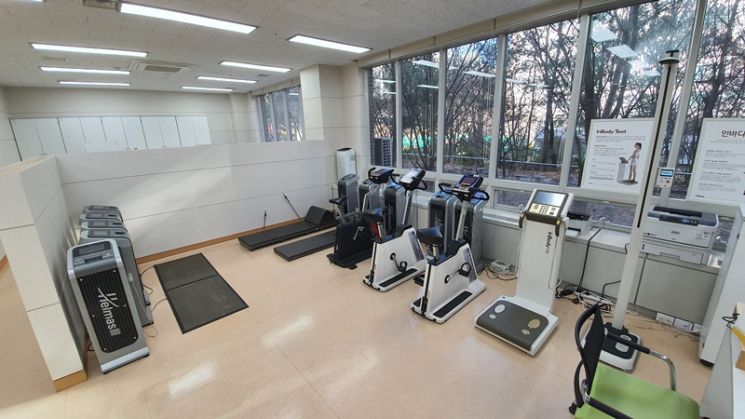
Mapo-gu announced on the 27th that it will provide a ‘Customized Exercise Prescription Service’ considering individuals’ lifestyle habits and physical characteristics starting in May.
The Mapo Health Management Center, located on the first floor of Mapo-gu Public Health Center, will resume normal operation of this service, which was temporarily suspended due to COVID-19, from May 2nd on weekdays from 9 a.m. to 6 p.m.
The ‘Customized Exercise Prescription Service’ is a systematic and scientific fitness management program that provides personalized exercise guidance based on body composition analysis and basic physical fitness tests.
Using the latest body composition analyzer (Inbody 770), it evaluates body fat, muscle mass, water content, and other body components, and assesses basic physical fitness such as cardiopulmonary endurance, muscle strength, flexibility, explosive power, and agility through comprehensive fitness testing equipment.
Based on these results, certified professional exercise prescribers provide tailored exercise programs to help participants prevent obesity and improve health.
Additionally, the district plans to support residents in maintaining their health and engaging in regular physical activity through continuous follow-up, including recommending re-examinations every three months for participants.
The ‘Customized Exercise Prescription Service’ is free and available to all Mapo-gu residents aged 20 and over. Considering that the test and exercise consultation take about 30 minutes, the service operates by appointment.
Those interested can visit the Mapo Health Management Center or call to make a consultation appointment, then visit the center on the appointment day wearing comfortable clothing.
For more details, contact the Exercise Prescription Office at the Mapo Health Management Center, Mapo-gu Public Health Center.
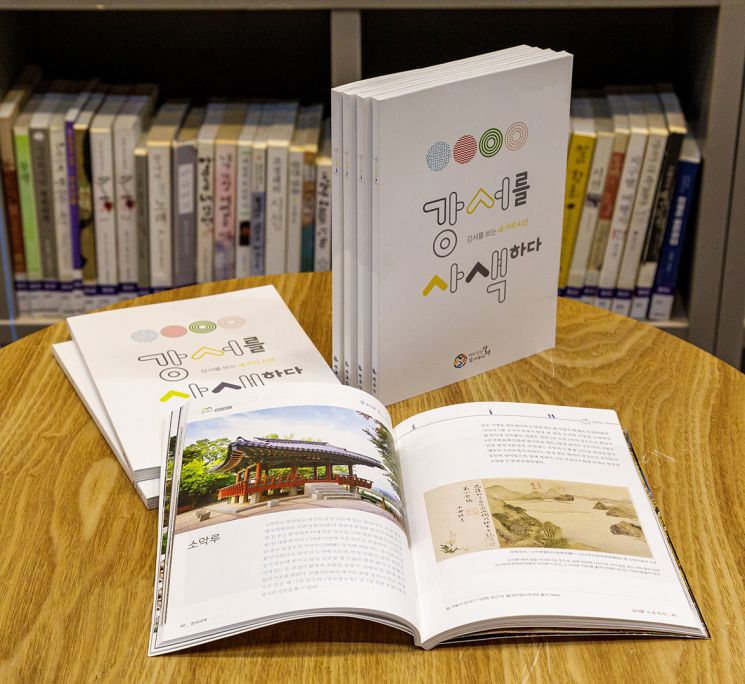
A book has been published that captures the representative attractions of our region.
Gangseo-gu, Seoul (Mayor Noh Hyun-song) announced that it has published a guidebook titled ‘Reflecting on Gangseo’ introducing local tourist spots, walking trails, festivals, and more.
The purpose is to inform residents about the region’s representative attractions and to introduce the local history and culture together.
The ‘Reflecting on Gangseo’ guidebook is organized into four themes?History, Nature, Culture, and Future?to help residents more easily find, experience, and relate to local attractions.
The first theme, ‘History,’ introduces historical figures representing Gangseo-gu and the places associated with them.
It introduces the Heojun Museum, built to honor Heojun, a prominent figure born and active in Gangseo-gu, the Heojun Rock where the Donguibogam was said to have been written, and the Heojun Theme Street created to promote Heojun’s life and achievements.
Also featured are Jeong Seon, a master of true-view landscape painting active in Gangseo during the Joseon Dynasty, with the Gyeomjae Jeong Seon Art Museum where his works can be appreciated; the Gungsan Tunnel built during the Japanese colonial period; and Yangcheon Hyanggyo, the only remaining Confucian school in Seoul.
The second theme, ‘Nature,’ covers places where residents can relax surrounded by nature. It introduces Gangseo Wetland Ecological Park, one of Seoul’s representative eco-tourism spots that restored wetland ecosystems, and Seoul Botanic Park, Seoul’s first urban botanical garden now attracting many visitors nationwide.
The third theme, ‘Culture,’ provides detailed explanations of major local festivals held in Gangseo-gu. It includes the Heojun Festival, the largest festival in Gangseo held every October to honor Heojun, as well as the Children’s Fairy Tale Festival, Gaehwasan Spring Flower Festival, and Ujangsan Silrok Festival, among other various local festivals.
Finally, the fourth theme, ‘Future,’ introduces newly developed places in Gangseo-gu as an advanced future city.
These include the Magok Cultural Street, a digital landscape street symbolizing the future city and vibrant cultural sensibility; ‘Space K Seoul,’ a cultural and artistic sharing space opened in Magok in 2021; and the ‘LG Art Center,’ scheduled to open this year.
The district produced 2,000 copies of the guidebook and distributed them evenly to the district office’s civil service center, each community service center, and museums frequently visited by residents.
It was also produced as an e-book, accessible to anyone at the ‘Gangseo-gu Culture and Tourism Website (homepage) - Tourism/Attractions - Gangseo Cultural Tour.’
A district official said, “Besides well-known places like Seoul Botanic Park and Heojun Museum, there are many hidden gems in the district. We hope families visit various local attractions together this weekend.”
For more information, contact the Gangseo-gu Culture and Sports Division.
© The Asia Business Daily(www.asiae.co.kr). All rights reserved.
![Clutching a Stolen Dior Bag, Saying "I Hate Being Poor but Real"... The Grotesque Con of a "Human Knockoff" [Slate]](https://cwcontent.asiae.co.kr/asiaresize/183/2026021902243444107_1771435474.jpg)


















