Gentiloni, EU Commissioner: "Two-Thirds Reduction Target by the End of This Year"
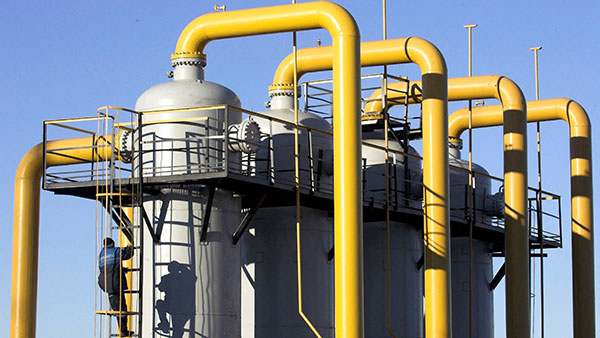
[Asia Economy Reporter Kim Heeyoon] The European Union (EU) is pushing for a plan to reduce its dependence on Russian oil and natural gas to zero by 2027.
On the 26th (local time), Paolo Gentiloni, the EU Commissioner for Economy, stated in an interview with the Italian daily Il Messaggero, "We have set a goal to reduce dependence on Russian oil and gas by two-thirds by the end of this year and to completely stop imports by the end of 2027."
Previously, the EU had been discussing banning imports of Russian oil and natural gas as a means to sanction Russia for its invasion of Ukraine. However, due to differing opinions among member states, the plan failed, leading the EU to consider gradually reducing import volumes or imposing tariffs if prices exceed certain levels.
Currently, the EU imports 90% of its gas and 97% of its oil products, of which about 40% of gas and 25% of crude oil come from Russia. In response, reports have emerged that Germany is pushing to build offshore liquefied natural gas (LNG) terminals.
The German daily Die Welt reported that the governor of Schleswig-Holstein, Germany, announced that construction work on an offshore LNG terminal aiming for operation in early next year is underway.
Germany, which has so far received natural gas directly from Russia via pipelines, starting construction of offshore LNG terminals?an import infrastructure?is interpreted as a preparatory move to secure alternative suppliers outside Russia and replace imports.
In February, the EU Commission announced that the overall GDP growth rate of the EU for this year is expected to increase by 4.0%. This is lower than last year's forecast of 4.3%, with expectations that it could decline further. The EU will announce a new forecast on May 16.
Meanwhile, Commissioner Gentiloni explained that it is still too early to determine whether the current economic slowdown will lead to stagflation.
© The Asia Business Daily(www.asiae.co.kr). All rights reserved.
![Clutching a Stolen Dior Bag, Saying "I Hate Being Poor but Real"... The Grotesque Con of a "Human Knockoff" [Slate]](https://cwcontent.asiae.co.kr/asiaresize/183/2026021902243444107_1771435474.jpg)















