One-Year Extension of Land Transaction Permission Zones
Market Stirring Around Reconstruction Complexes
Maintaining a 'Buffer' for Housing Price Stability
Limited Effect on Market Stabilization
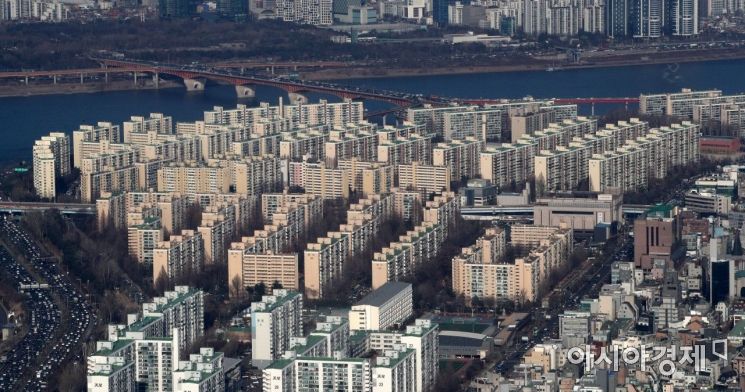
[Asia Economy Reporter Kim Min-young] The Seoul Metropolitan Government has re-designated four areas?including the Apgujeong, Yeouido, and Mokdong apartment districts and the Seongsu strategic maintenance zone?as land transaction permission zones. This move comes amid signs of housing price fluctuations following President-elect Yoon Seok-yeol's declaration to ease reconstruction and redevelopment regulations, interpreted as a signal that the government does not intend to stimulate housing prices with another 'regulatory easing' measure. However, since the designation of land transaction permission zones has not led to housing price stabilization, there are criticisms that this regulation is ineffective and only hinders transaction activation.
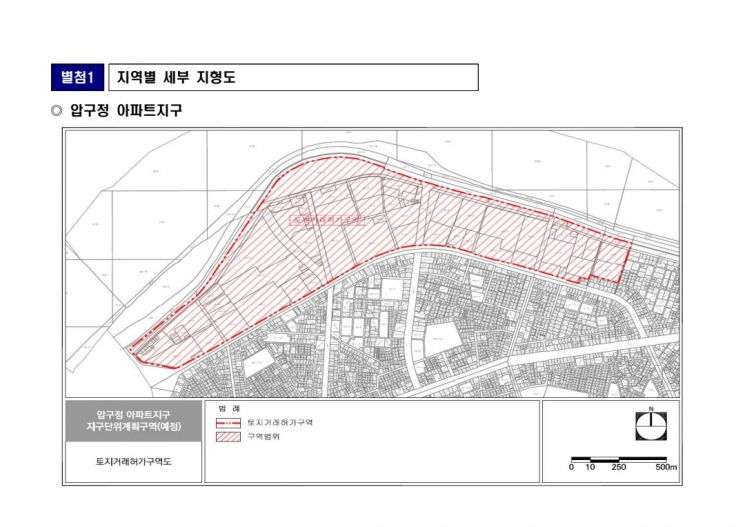
According to Seoul City on the 21st, at the '4th Urban Planning Committee' held the previous day, the agenda to re-designate (extend by one year) the land transaction permission zones for the areas whose designation period expires on the 26th was approved. The target areas include 24 complexes in the Apgujeong apartment district in Gangnam-gu (1.15㎢), the Yeouido apartment district and 16 nearby complexes in Yeongdeungpo-gu (0.62㎢), 14 complexes in the Mokdong housing development district in Yangcheon-gu (2.28㎢), and the Seongsu strategic maintenance zone in Seongdong-gu (0.53㎢), totaling 4.57㎢.
When designated as a land transaction permission zone, contracts for acquiring land exceeding the permitted area require prior approval from the head of the relevant district office. Residential land must be used for actual residence only for two years, during which sales or leases are prohibited. The purpose is to prevent short-term speculative forces aiming for development profits from entering the market.
The Urban Planning Committee's decision appears to reflect the recent market atmosphere showing signs of rising prices centered on reconstruction complexes. The intention is to ease reconstruction regulations to contribute to supply while maintaining a buffer to stabilize housing prices. According to the weekly apartment trend report by the Korea Real Estate Board, Seoul apartment prices stopped declining and stabilized in April, with Gangnam-gu playing a significant role. In Gangnam-gu, apartment prices turned to a 0.01% increase on March 21 after the presidential election and have continued to rise for four consecutive weeks. As of the 11th, apartment prices in the southeastern area, including Songpa, Gangnam, and Seocho, rose by 0.01%. Apartment prices in Yangcheon-gu, which includes Mokdong with many reconstruction complexes, recorded stability at the end of March and turned to an increase last week.
Seoul Mayor Oh Se-hoon also mentioned recent market movements at his first anniversary press conference, stating, "Under the policy of suppressing price increases as much as possible, we will closely cooperate with the central government to implement housing supply," aligning with this approach.
However, some view the city's measures as causing only a transaction freeze without significantly stabilizing the market. According to KB Real Estate on the 10th, the average apartment price in Apgujeong-dong, included in the land transaction permission zone, rose 21.3% from 3.49748 billion KRW in March last year to 4.24341 billion KRW last month. Apartment prices in Mokdong, Yangcheon-gu (9.8%), and Yeouido-dong, Yeongdeungpo-gu (12.2%), also rose similarly to the averages of Yangcheon-gu (9.5%) and Yeongdeungpo-gu (10.9%). However, the transaction freeze persists. According to the Seoul Real Estate Information Plaza, the number of apartment transactions in Seoul decreased from 1,087 in January this year to 811 in February, then increased to 1,302 in March but has not recovered to previous years' levels. In March last year, the number of transactions was 3,762.
A Seoul city official said, "The purpose of designating land transaction permission zones is to prevent market instability caused by speculative forces rather than price factors and to encourage actual residence," adding, "The decision to re-designate was made according to the re-designation criteria stipulated by law."
Lee Eun-hyung, a research fellow at the Korea Institute of Construction Policy, said, "At a time when the new government has launched and the Seoul mayoral election is approaching, there is no need to introduce change factors to Seoul's real estate market, represented by maintenance projects," adding, "In a situation where practical maintenance project plans have not been confirmed, there is no reason to unnecessarily stimulate market expectations."
© The Asia Business Daily(www.asiae.co.kr). All rights reserved.
![Clutching a Stolen Dior Bag, Saying "I Hate Being Poor but Real"... The Grotesque Con of a "Human Knockoff" [Slate]](https://cwcontent.asiae.co.kr/asiaresize/183/2026021902243444107_1771435474.jpg)
















