Webzen Union Approves First Strike in Gaming Industry
'High Salaries' Envied in IT Sector
Controversies Over Intense Workload and Crunch Time
Recent Changes Emerging in Some Workplaces
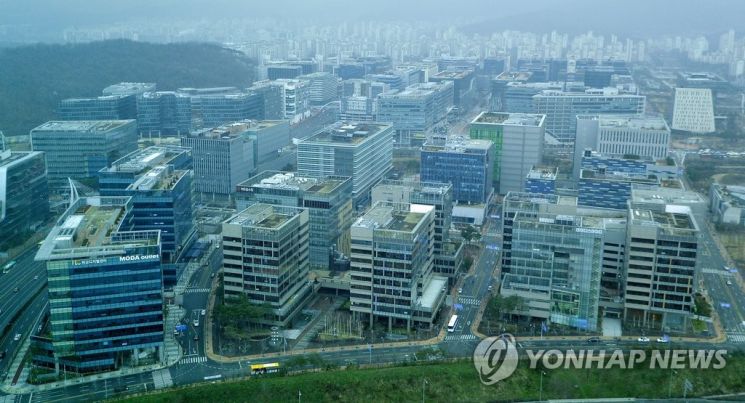 Aerial view of the domestic IT industrial complex, Pangyo Techno Valley. The game developer Webzen also has its headquarters in Pangyo. / Photo by Yonhap News
[Asia Economy Reporter Lim Juhyung] The labor union of the online game service company 'Webzen' has decided to strike, marking the first strike in the domestic gaming industry. The union claims that despite the company recording its highest-ever sales, it has not provided fair compensation to its workers. The information and communication (IT) industry, including gaming, has traditionally seen few collective actions by workers despite harsh conditions such as frequent overtime and high labor intensity. However, recently, signs of a 'change' in labor culture have been observed, especially among some companies.
◆Webzen Union Approves First Strike in Domestic Gaming Industry
The Webzen branch of the National Chemical, Textile, and Food Industry Labor Union (Webzen With) conducted a strike authorization vote from the 7th to the 8th. With 92.78% of union members participating, the strike was approved by more than two-thirds majority.
The specific dates and schedule for the Webzen union strike have not yet been finalized. On the 11th, the union issued an official press release stating, "We have once again urged the company for dialogue today and are awaiting a response."
One day after issuing the press release, on the 12th, the Webzen union participated in a joint discussion on future directions at the Chemical Fiber IT Committee meeting held in Webzen's main conference room. This committee includes unions from Naver, Kakao, Nexon, Smilegate, Hancom, and POSCO ICT, among others.
The Webzen union and management have been in conflict over wage negotiations. Initially, the union proposed a 10 million KRW wage increase, but after failing to narrow differences with management, they adjusted the proposal to a 16% increase plus a one-time payment of 2 million KRW. However, management insists on an average 10% raise and plans to guarantee the one-time payment only to employees who receive a 'B grade' or higher in internal evaluations.
According to the union, Webzen recently achieved record-breaking performance. In 2020, Webzen's annual sales were 294 billion KRW, operating profit was 108.2 billion KRW, and net profit was 86.2 billion KRW, representing increases of 67.0%, 109.0%, and 104.5% respectively compared to the previous year. Last year, the company posted similar results with sales of 284.7 billion KRW, operating profit of 102.9 billion KRW, and net profit of 86.8 billion KRW. However, the union claims that management has not properly shared the fruits of growth with employees.
Management plans to continue communication with the union. They stated, "Even if the union stages an off-site strike, it does not mean all demands can be accepted," but added, "We intend to keep making efforts to communicate with the union."
◆High Salaries Admired but Development Jobs Marred by Crunch Time and Wage Imbalance
If the Webzen union officially goes on strike, it will be recorded as the first strike in the history of the domestic gaming industry. This is why the industry is closely watching the union's next moves.
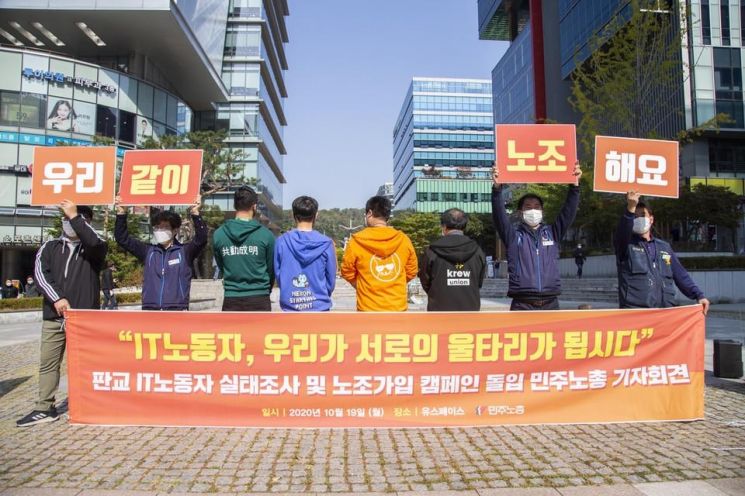 On October 19, 2020, the Korean Federation of Textile, Food, Chemical, and Pharmaceutical Workers' Unions announced the launch of a survey on the actual conditions of IT workers in Pangyo and a union membership campaign at the U-Space Plaza in Pangyo Techno Valley. Photo by Yonhap News
The domestic IT industry has achieved remarkable growth from the early 2000s to the present. Platforms and e-commerce sectors such as Naver, Kakao, and Coupang, as well as game companies like Nexon, Netmarble, and NCSoft, have all contributed significantly to this growth.
However, compared to the industry's dazzling development, collective actions by workers have been relatively rare. For example, Naver, one of the largest IT companies in Korea, only established its labor union in April 2018. The Naver union took the first collective action in the IT industry through a 'joint statement' dispute in February 2019, a year later.
IT and software (SW) development are known as high-paying white-collar jobs, but harsh working conditions within the industry have sparked controversy.
In particular, the gaming industry, which requires managing servers and regularly updating new content, has even more intense work demands. In 2016 alone, there were incidents where four game developers died from overwork, and game company offices were brightly lit late into the night, earning the nickname "lighthouse."
There was also the practice of 'crunch,' where developers worked overnight for one to two weeks before game software releases or major updates. Although this practice has been gradually improving year by year, it still remains in some companies. According to the '2021 Survey on Labor Conditions of Game Industry Workers' released last year by the Korea Creative Content Agency, the proportion of game developers reporting experiencing crunch decreased from 60.6% in 2019 to 15.4% last year.
High salaries, considered the biggest advantage in the IT industry, also show significant disparities depending on job duties and positions. A survey conducted by the career platform 'Programmers' at the end of last year targeting 5,362 developers found that nearly half (49.8%) of developers earn less than 40 million KRW annually. Only 1.3% of developers earn more than 100 million KRW.
◆"An Unimaginable Situation a Few Years Ago... It Seems the Times Have Changed"
Given this situation, workers in the IT industry have responded to the increasing collective actions within companies by saying it is "the beginning of change."
A man in his 30s, A, who used to work at a small game company and now runs an independent game studio, said, "In the mid-2010s, overtime and crunch were considered natural duties as a developer. High salaries were stories about some employees in large companies; I remember many developers suffering from low pay," adding, "But now it seems the times have changed."
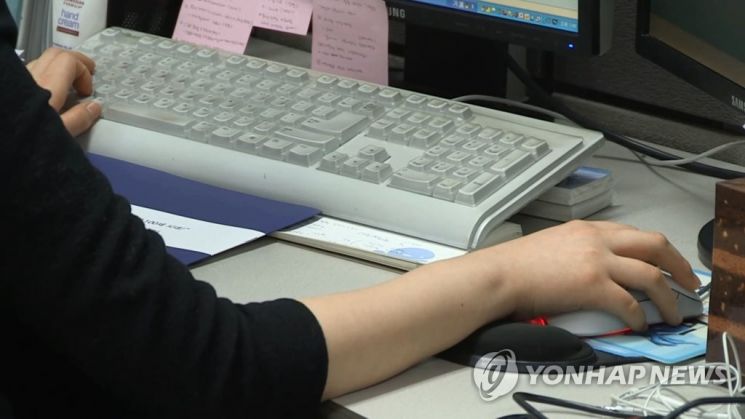 Developers are known as a representative high-salary occupation, but controversies have persisted due to high work intensity issues such as frequent overtime and crunch culture. / Photo by Yonhap News
He added, "A few years ago, it was unimaginable that developers would form unions. With new generations of developers entering the industry and changing perceptions about development and labor, I think the culture in this industry is also changing."
Lee, a 30-year-old developer working at a security company in Seoul, said, "Recently, the atmosphere in Korea has been shifting to regard developers as important human resources. There are signs of management trying to improve salaries and welfare benefits," adding, "Developers now voice their dissatisfaction instead of enduring it silently, so the balance between management and workers seems to be starting to align."
Experts foresee that labor relations in the IT industry could shift from an asymmetrical to a symmetrical relationship, leading to changes in working conditions.
Cho Hyukjin, a senior researcher at the Korea Labor Institute, said, "Labor union activities in Korea's IT industry have been weak relative to its size," and explained, "However, if union organization becomes more active, the relationship between management and workers will develop into a symmetrical one."
He continued, "Among workplaces with unions, depending on detailed sectors and company sizes, there is potential for development into super-company-level negotiations. Unions are acting on common issues such as resolving long working hours, work-life balance, wage system reform, and securing rest rights. If unions conduct united negotiations, improvements in common labor conditions for all workers can be expected," he added.
© The Asia Business Daily(www.asiae.co.kr). All rights reserved.
![Clutching a Stolen Dior Bag, Saying "I Hate Being Poor but Real"... The Grotesque Con of a "Human Knockoff" [Slate]](https://cwcontent.asiae.co.kr/asiaresize/183/2026021902243444107_1771435474.jpg)


















