President-elect Yoon announced 'Man-nai' age system unification pledge last January
Three Korean age counting methods... 'Jokbo breaker' early-borns voice complaints
Public opinion high... 7 out of 10 support 'Man-nai'
However, concerns remain that customs are hard to change despite legislation
 Attention is focused on whether President-elect Yoon Seok-yeol's pledge to unify the use of 'international age' will be realized. Photo by Pixabay
[Asia Economy Reporter Park Hyun-joo] Attention is focused on whether the unification of the 'age counting method'?which had been repeatedly stalled due to President-elect Yoon Seok-yeol's pledge to unify the 'international age'?will now be actively pursued. The international age has been widely used in East Asian cultural spheres but is currently uniquely used only in Korea, where it is also called the 'Korean Age.'
Complaints about the age counting method arise from the confusion caused by the difference between the age used in daily life and the legal standard, which is the international age. It has been pointed out that the discrepancy between the age on official documents and the age used in everyday life leads to administrative errors, confusion, and inconvenience. Depending on whether the birth moment is considered as 0 years old or 1 year old, the age is divided into 'year age' and 'counted age,' and adding the international age makes a total of three age counting methods used in Korea. According to the counted age, a person born on December 31 experiences being 2 years old just one day after birth.
In particular, there were strong complaints from early-born students who enter school one year earlier than those born in the same year. Early-born students born in January or February share the same identity as students one year older attending school together, but after entering society, they have to calculate their social age again using the counted age, causing significant inconvenience. A new term, 'Jokbo Breaker' (referring to a person who complicates the naming system based on age), was coined. This early admission system was abolished in 2009.
There is also a high level of public consensus on the call to unify the age counting method. According to a public opinion poll conducted by Korea Research on 1,000 adults from December 24 to 27 last year, 7 out of 10 people (71%) supported abolishing the Korean age and using the international age. This is why there is keen interest in President-elect Yoon's pledge to unify the international age.
During the presidential election process in January, Yoon uploaded a 59-second shorts video on his YouTube channel, presenting this pledge. The People Power Party's Policy Headquarters stated, "The international age is a meaningful standard for people's real lives, including taxes, medical care, and welfare," adding, "We plan to reduce confusion in the legal age standard through legal amendments and ensure it is socially established."
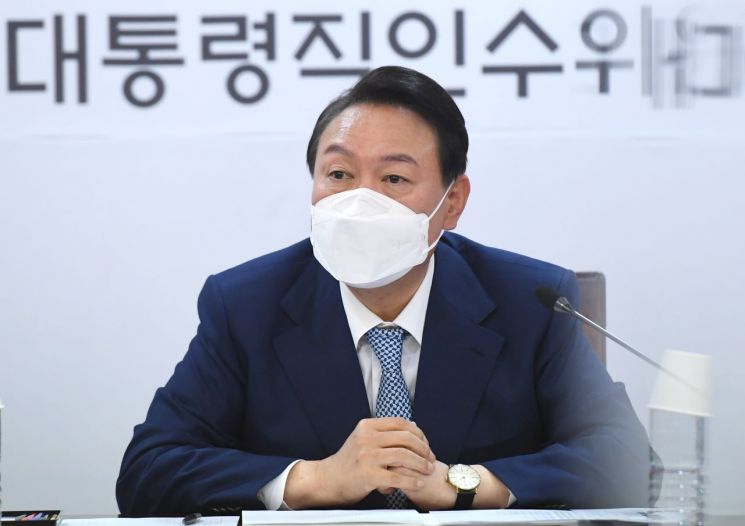 On January 17, President-elect Yoon uploaded a 59-second shorts video on his YouTube channel to announce his pledge to unify the age system.
 [Image source=Yonhap News]
There have already been attempts by the political sphere to overhaul the age counting method. On June 22 last year, Lee Jang-seop of the Democratic Party of Korea and 13 others proposed the 'Act on Age Calculation and Display' to the National Assembly's Administrative Safety Committee, but it did not pass the National Assembly.
At that time, the Senior Expert Office of the Administrative Safety Committee issued a review report stating, "Since this issue greatly affects daily life, social consensus should be prioritized." Earlier, in January 2019, Hwang Ju-hong, then a member of the Party for Democracy and Peace, submitted a bill to mandate the recording of international age on official documents and recommend calculation and display based on international age, but it also failed to pass the National Assembly.
However, some argue that there is no need to standardize the international age since it is already used in official documents. Korea has officially announced the international age as the official age since 1962 and uses it in official documents and legal texts. Some believe that even if the pledge to unify the international age is realized, citizens will continue to use the familiar counted age. They argue that as long as the tendency to rank people by age persists, it will be difficult to completely change customs or unique culture even if a law is enacted.
Nonetheless, many opinions suggest that unification should be made in either direction for convenience, given that the age used in government policies and official documents differs. In practice, government offices, hospitals, official documents, and courts use the international age, but the Youth Protection Act, which applies to military service and the purchase of alcohol and tobacco, uses the year age for convenience.
Meanwhile, there have been cases where local governments have requested 'unification of the international age' citing administrative inconvenience. On February 23, Pyeongtaek City in Gyeonggi Province requested the National Assembly and central government agencies to unify the age calculation method to the international age. They argued that since the international age is the international standard and legal age, and differs from the age used in daily life, many complaints arise in frontline administration. They also claimed that communication confusion occurs with foreigners and various side effects such as avoidance of December births have emerged.
© The Asia Business Daily(www.asiae.co.kr). All rights reserved.
![Clutching a Stolen Dior Bag, Saying "I Hate Being Poor but Real"... The Grotesque Con of a "Human Knockoff" [Slate]](https://cwcontent.asiae.co.kr/asiaresize/183/2026021902243444107_1771435474.jpg)
















