[Seoul District News] Pocheon City Operates Resident-Exclusive 'Nowon Healing Camping Site' with 39 Camping Sites, Picnic Zone, Bungalow, and 2-Family Camping Zone Tailored to Personal Preferences · Wolgye-dong Choansan Camping Site Also Popular with 50 Camping Sites and 3 Cabin Houses... Jung-gu Creates Flower Paths on 7 Routes Including DDP Green Area, Fountain in Front of Bank of Korea, Son Gijeong Sports Park · Various Spring Flowers Planted in Street Green Belts, Traffic Islands, Walkways, and Village Squares... Mapo-gu Operates Urban Agriculture Support Center to Foster Urban Farmers...
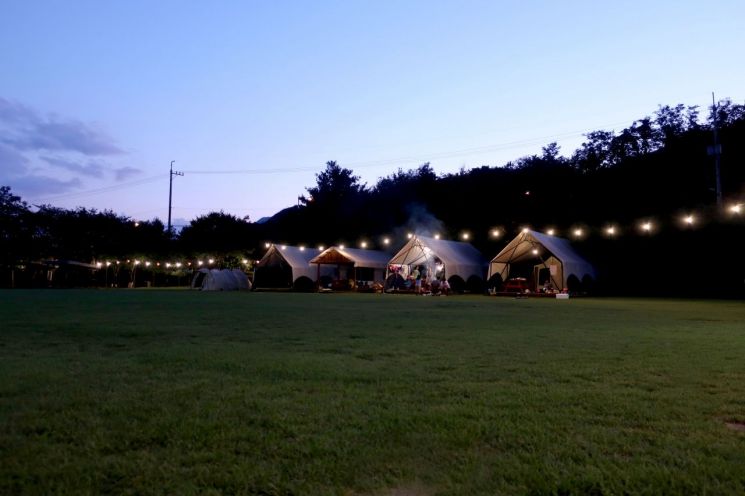
[Asia Economy Reporter Park Jong-il] Nowon-gu (Mayor Oh Seung-rok) announced that the ‘Nowon Healing Camping Site,’ where visitors can enjoy relaxation in nature, is gaining great popularity.
As camping has become a common leisure activity for families, couples, and solo campers, the district operates the camping site to support residents in leading a life filled with leisure and rest.
Located at 2530 Hwadong-ro, Idong-myeon, Pocheon-si, Gyeonggi-do, the ‘Nowon Healing Camping Site’ spans 13,656㎡ and offers a total of 39 camping sites. The camping site is divided into three zones: Upper Yard, Small Yard, and Large Yard, with seven different types of camping sites available to suit individual preferences and group sizes.
For day visitors, there is a ‘Picnic Zone’ equipped with tables, chairs, and sunshades; for comfortable overnight stays, there are ‘Bungalows’ and ‘Semi-Bungalows’ equipped with air conditioning and refrigerators; ‘VIP’ and ‘Comfort Zones’ decorated with shade tents and tents; a ‘Two-Family Camping Zone’ with two tents for use by two families together; and a ‘Camping Ground’ consisting of eight decks and eight gravel areas.
The camping site is equipped with basic facilities such as showers, washing areas, sinks, and a convenience store, as well as amenities and play facilities including a swimming pool, lawn yard, trampoline, and swings. Nearby, within a 5 to 10-minute walk, there are many tourist attractions such as Baegun Valley, Baegunsan Mountain, and Heungnyongsa Temple, allowing visitors to enjoy a variety of activities in nature according to their schedule and preferences.
With accessibility just one hour from Seoul and comfortable facilities, the camping site has long been popular among camping enthusiasts since its opening in 2018. Especially, the starry night sky viewed from the camping site is a spectacular sight.
While the healing camping site is open to everyone, on weekends (Friday and Saturday), reservations are accepted only from Nowon-gu residents or workers at businesses located in Nowon-gu, as it is a facility operated for Nowon-gu citizens. Usage fees are discounted by 50% for Nowon-gu residents, and national merit recipients and persons with disabilities can receive an additional 20% discount. Reservations can be made monthly on the Nowon-gu Office website, with applications accepted at 10 a.m. on the 9th of each month.
The district also operates a camping site in Choaansan, Wolgye-dong (89-27 Madeul-ro 5-gil), allowing residents to enjoy camping within Seoul without traveling far. Located in the forest of Choaansan, just a 2-minute walk from Nokcheon Station on Subway Line 1, the camping site covers 24,938㎡ and operates 50 camping sites and three cabin houses.
The camping site features three types of camping sites: ‘Healing Camping,’ ‘Terrace Camping,’ and ‘Park Camping Ville,’ as well as log cabin-style ‘Cabin Houses.’ The ‘Cabin Houses,’ equipped with bunk beds and heating/cooling systems, are especially popular among families with infants and young children. Additionally, visitors can enjoy various auxiliary facilities such as tree houses, foot baths, and combination playground equipment. Reservations can be made through the Nowon-gu Service Corporation website starting at 11 a.m. on the 9th of each month.
Oh Seung-rok, Mayor of Nowon-gu, said, “We are creating various healing spaces for residents who find it difficult to travel far due to COVID-19,” and added, “I hope families enjoy camping together and create precious memories.”
After Cheongmyeong (淸明), the time when the paulownia tree flowers begin to bloom, the season has already entered the heart of spring.
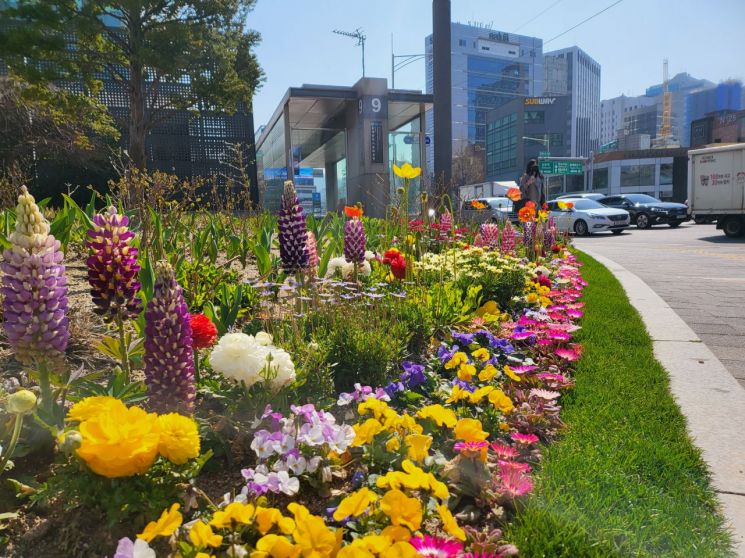
Jung-gu, Seoul (Mayor Seo Yang-ho) is introducing ‘7 Must-Visit Spring Flower Paths in the Heart of Seoul’ to invigorate residents’ daily lives, which have been subdued due to COVID-19.
The district announced plans to create a total of 11.6 km of flower paths along seven routes: Dongdaemun Design Plaza (DDP), Namsan Town Apartments, Bank of Korea Fountain, Son Ki-jeong Sports Park, Seoaero in Pildong, Hanbit Square in Cheonggyecheon, and the streets near Myeongdong Cathedral, aiming to make them popular attractions.
Residents can enjoy diverse flower paths according to the blooming periods of spring flowers. Between the 8th and 22nd of this month, colorful spring flowers such as Royal Ten (tulips), Anisida, and Marguerite will herald the approaching season. From the 23rd, wave petunia hanging pots will be installed on streetlight poles and roadside railings, coloring the streets pink. In May, the peak of spring, a festival of multicolored roses including Mothers’ Day and Grande Classe varieties will welcome residents.
Starting last month at Dongdaemun Design Plaza (DDP), 53 species of spring flowers totaling 50,427 plants?including violas, daisies, and poppies?have begun to bloom, blending with autumn-planted tulip varieties and alliums, filling the streets with a fragrant floral scent.
Flower beds with daffodils, lupines, and anemones have also been planted along popular walking trails, village squares, and parks, allowing residents to feel spring wherever they go.
A district official explained, “We created three-dimensional themed flower beds by varying planting patterns according to the type of green space and decorated streetlight poles with hanging pots to add rhythm to the monotonous streets.” They added, “In May, we plan to hold spring flower path participation events for local residents.”
The district is increasing green spaces throughout the city by creating small gardens with residents in leftover spaces around living areas. Areas that were once notorious for habitual illegal dumping are gradually being transformed into flower gardens.
On the 5th, various events were held in Cheonggu-dong to celebrate Arbor Day with residents. At Cheonggu Children’s Park, which is about to undergo renovation, a cherry tree symbolizing the village was planted to wish for successful construction. Residents also made environmental flower pots using empty PET bottles and coffee cups and planted begonias in schoolyard flower beds. They experienced healing through nature by touching soil and flowers and reflected on the importance of the environment.
Seo Yang-ho, Mayor of Jung-gu, said, “I hope residents find some comfort for their weary hearts from COVID-19 by walking along the spring flower-scented streets,” and added, “The district plans to continuously create seasonal flower paths so that residents can enjoy flowers and greenery throughout the year.”
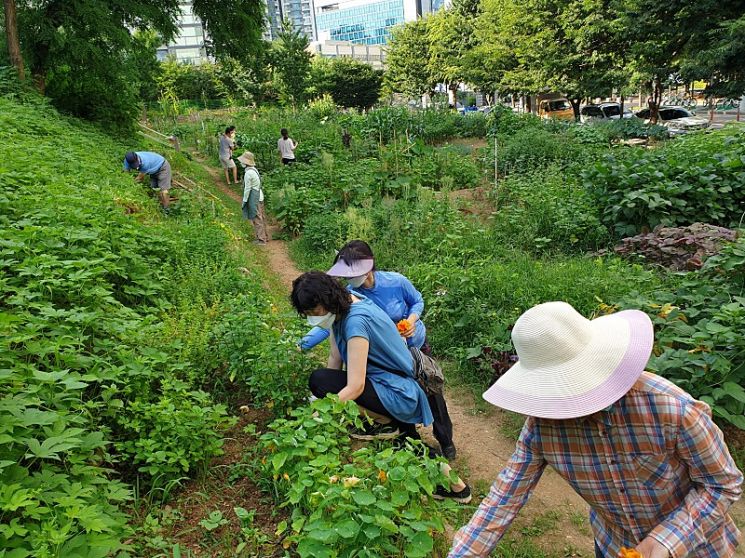
Mapo-gu (Mayor Yoo Dong-gyun) announced that it will operate the ‘Mapo-gu Urban Agriculture Support Center (1691 Sangam-dong)’ to provide various programs for novice urban farmers.
The Urban Agriculture Support Center is not a separate building but operates as an ‘on-site service center’ providing agricultural experience opportunities and support to urban farmers in community gardens.
Since March, the district has been operating 67 plots in the Sangam Dure Community Garden (2,342㎡) and 18 plots in the Samgak Education Garden (1,140㎡), allocated to residents through a lottery, providing a healing space for city dwellers to relieve stress in daily life.
Starting in April, the Urban Agriculture Support Center will offer programs for novice farmers such as ▲Eco-friendly Urban Farmer School ▲Community Garden Farming Program ▲Community Garden Maintenance.
Additionally, certified urban agriculture managers provide various consultation services including ▲Crop Cultivation ▲Pest and Disease Management ▲Agricultural Technology Education ▲Agricultural Supplies Provision ▲Community Garden Monitoring.
Consultations are available Monday through Friday from 1 p.m. to 5 p.m. Any Mapo-gu resident interested in urban agriculture can receive free consultations by phone or in person at the Regional Economy Division on the 8th floor of Mapo-gu Office.
Furthermore, from April to October, the district operates the ‘Urban Garden Experience’ program at the Sangam Neighborhood Park Healing Garden (1761 Sangam-dong), offering urban agriculture experiences.
The program is free for local daycare centers, kindergartens, and residents, held every Tuesday and Thursday, and on the second and fourth Saturdays of each month from 10 a.m. to 12 p.m.
Applications are accepted on a first-come, first-served basis through the Seoul Public Service Reservation website.
A district official said, “We hope residents tired of city life will enjoy the pleasures of urban agriculture through the various information and programs provided by the Urban Agriculture Support Center,” and added, “We will continue to promote urban agriculture as a healthy leisure activity that heals both body and mind.”
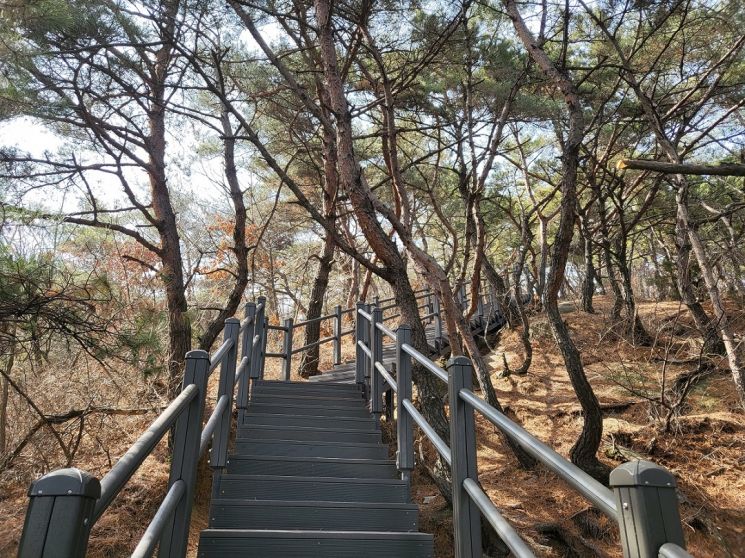
Jongno-gu completed the trail maintenance project for Inwangsan Mountain, which had been underway since last November, last month, providing a safe and pleasant environment for hikers as the outdoor activity season arrives.
The target area is a 0.6 km section starting from the trailhead near Jaham Art Museum, passing the old Buam Mineral Spring (now closed), and reaching Gichabawi Rock.
Due to steep slopes and exposed rock surfaces, there had been concerns about safety accidents, and some trails were damaged due to aging facilities, highlighting the need for eco-friendly maintenance. As a result, old fences were removed and replaced with wooden decks, safety railings, and walking mats.
Last year, the district maintained the trail section starting from Inwangcheon Mineral Spring in Okindong to the summit, and it continues to carefully manage aging trails annually to improve user convenience.
For resident safety, the district focuses on maintaining main trails and closes side paths where possible, while also closely monitoring nearby drainage channels to prepare for heavy rain. The use of minimal facilities and eco-friendly materials during construction also reflects consideration for the surrounding ecosystem.
Jongno-gu has also transformed various parts of Bukaksan Mountain, recently fully opened for the first time in 54 years, into easy walking paths for people of all ages. Extensive wooden decks and mats have been installed, and stone stairs have been maintained using nearby natural stones. In cooperation with related agencies, the district has created resting areas such as Cheongundae Shelter, three major base shelters, and Samcheong Trail Information Center, connecting the southern Bukaksan trail and fortress walls.
A district official emphasized, “With the weather warming up, more hikers are enjoying spring mountain walks. At times like this, careful attention is needed to prevent possible safety accidents and forest fires. Please refrain from drinking alcohol or smoking on the mountain, and take your trash home with you, demonstrating mature civic awareness.”
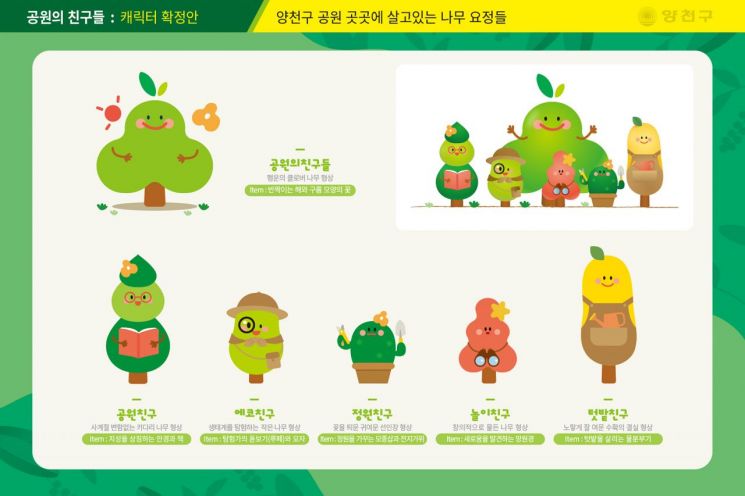
Yangcheon-gu (Mayor Kim Soo-young) announced that it has created brand images (BI) to promote the vision of ‘Garden City Yangcheon’ and the park volunteer system ‘Friends of Yangcheon Parks,’ and will actively promote them through related goods such as magnets and badges.
Since last year, the district has been ambitiously pursuing the vision of ‘Garden City Yangcheon, where culture flows,’ offering a rich environment where mountains, streams, and urban parks harmonize, and diverse cultural programs are operated so that anyone can rest, enjoy, and learn.
‘Garden City Yangcheon’ organically connects five major parks along green corridors such as Yongwangsan, Galsan, Sinjeongsan (Gyenam Park), and Jiyangsan (Onsu Park) surrounding the district, the aquatic ecological corridor of Anyangcheon Stream, the linear park above Gukhoe-daero, and the Mokdong central axis.
Along the green corridors, mountain-type base parks are established; along the aquatic ecological corridor of Anyangcheon, themed gardens and MZ Sports Plaza are developed on the left bank between Ogeum Bridge and Yanghwa Bridge; and along the Mokdong central axis, community facilities and book resting areas are expanded through remodeling, making the entire district a space filled with forests, parks, trails, and culture.
Additionally, the district has established the ‘Friends of Yangcheon Parks’ volunteer system to foster volunteers in various fields and promote a culture of park participation that adds value through residents’ direct involvement.
‘Friends of the Parks’ is a new platform organically connecting parks and people, consisting of ▲‘Garden Friends’ (Yangcheon Gardeners, gardening volunteers) who participate in gardening in parks, green spaces, and village squares; ▲‘Eco Friends’ (ecological environment keepers, ecology-related volunteers) who lead ecological monitoring and resource conservation; ▲‘Park Friends’ (volunteers related to park management and cultural facilities such as book resting areas); ▲‘Play Friends’ (Dream Playground activists) who support creative play activities in local dream playgrounds; and ▲‘Garden Plot Friends’ (urban agriculture resource volunteers) who participate in urban agriculture parks and community garden programs.
The BI for ‘Garden City Yangcheon’ embodies the image of an ‘urban park’ where people rest and prepare for a vigorous tomorrow between people and cities. The BI for ‘Friends of Yangcheon Parks’ characterizes the distinctive features of volunteers in each field.
To promote the two BIs, the district plans to operate promotional booths with magnets featuring the ‘Garden City Yangcheon’ image and character badges for each ‘Friends of the Parks’ category.
In particular, the badges will be attached to the uniforms of ‘Friends of the Parks’ volunteers by category to foster a sense of belonging and pride.
For more details about the ‘Garden City Yangcheon’ and ‘Friends of Yangcheon Parks’ BIs, contact the district’s Parks and Greenery Division.
An official from the Parks and Greenery Division said, “We plan to activate a participation culture where residents not only use nearby park facilities but also cultivate and enhance their value themselves,” and added, “Please watch as Yangcheon-gu rises to become a nationally renowned garden city beyond being the center of the southwestern region.”
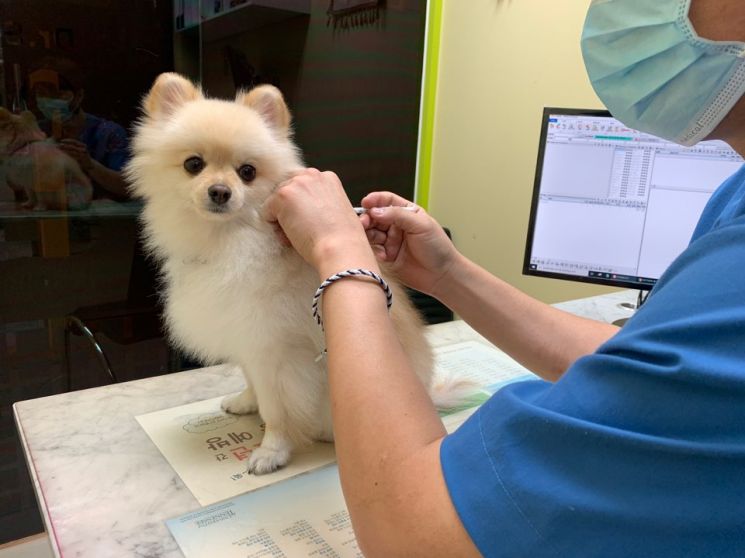
The number of households raising companion dogs has reached six million.
Dongjak-gu (Mayor Lee Chang-woo) is actively promoting projects to foster a proper companion animal culture and support companion animals.
First, from the 15th to the 29th of this month, the district announced on the 8th that it will support ‘Rabies Vaccination for Companion Animals’ for pets aged three months or older within the district.
Since dogs and cats kept at home can be exposed to viruses through contact with wild animals during outdoor activities, and rabies can be transmitted to humans through animals, vaccination is essential for both the family living with the pet and the pet itself.
The vaccination targets all dogs and cats aged three months or older. However, for dogs, vaccination is only possible if they are registered under the Animal Protection Act; unregistered dogs must be registered at an animal hospital before vaccination.
The district distributes vaccines free of charge to 21 animal hospitals within Dongjak-gu for mass vaccination. Pet owners visit nearby animal hospitals for vaccination, and the procedure fee of 5,000 KRW is self-paid.
The district conducts rabies vaccinations twice a year, in spring and autumn. There are about 11,500 registered companion animals in the district, and last year, 3,550 animals received free vaccines.
The list of animal hospitals is available on the Dongjak-gu Office website. For more details, contact the Health and Hygiene Division.
Additionally, since February 11 this year, with strengthened safety measures for companion dogs, the district is implementing a ‘Companion Animal Behavior Correction Program’ for households needing correction of problematic behaviors.
Animal behavior specialists visit target households to provide customized education, aiming to resolve conflicts caused by problematic behaviors and prevent safety accidents such as dog bites. Applications will be accepted this month, and the program will start in May.
Moreover, since last year, the district has supported up to 250,000 KRW for residents adopting abandoned animals from local animal protection centers for disease diagnosis and treatment costs, striving to establish a mature companion animal culture.
Meanwhile, dogs aged two months or older kept as companions are subject to mandatory registration under the Animal Protection Act, and failure to register may result in fines of up to 1 million KRW.
The district plans to promote the animal registration system alongside the vaccination period so that unregistered dogs can be registered and vaccinated.
Lee Soon-gi, head of the Health and Hygiene Division, said, “I hope everyone will vaccinate not only their precious companion animals but also for the safety of their family and neighbors,” and added, “We will strive to make Dongjak a better place to live with companion animals.”
© The Asia Business Daily(www.asiae.co.kr). All rights reserved.



















