Utilizing Intermediate Steps for Carbon Neutrality Implementation
Increasing Demand to Replace Russian Natural Gas
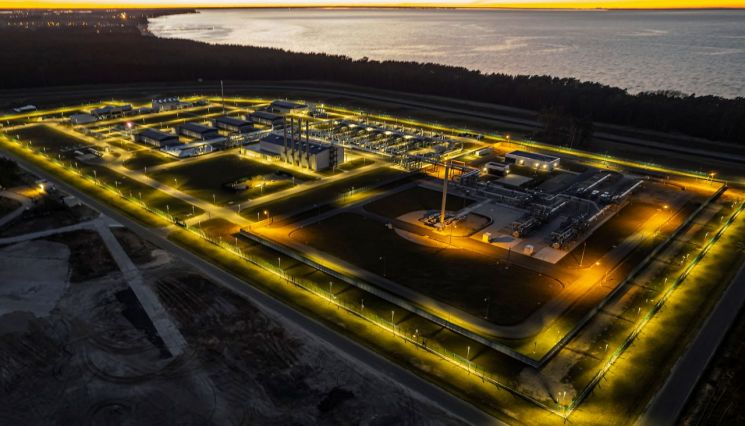
[Asia Economy Reporter Oh Hyung-gil] Competition among countries to secure liquefied natural gas (LNG) is intensifying. Plans have been announced to increase LNG dependence as an intermediate step toward achieving carbon neutrality. Since Russia's invasion of Ukraine, demand for LNG as an alternative energy source to Russian natural gas is expected to rise further.
According to the International Energy Agency (IEA), the European Union (EU) plans to increase LNG dependence by 55% compared to 1990 levels by 2030, and the United States aims to raise the share of gas in the power sector by 7% by 2030.
China is replacing reductions in coal-fired power, which has been an important energy source, with gas-fired power, and Japan is pursuing plans to maintain LNG dependence at around 20% by 2030.
Accordingly, global LNG demand is expected to increase by 14.6% by 2030 compared to last year.
The Korean government also expects LNG demand to increase by up to 22% by 2030 compared to 2020.
Power generation demand is expected to rise due to coal replacement and new LNG power generation demand, and industrial demand is also expected to increase due to substitution with eco-friendly fuels and raw materials. Additionally, there is a forecast for additional LNG demand for hydrogen production, which is attracting attention as a next-generation energy source.
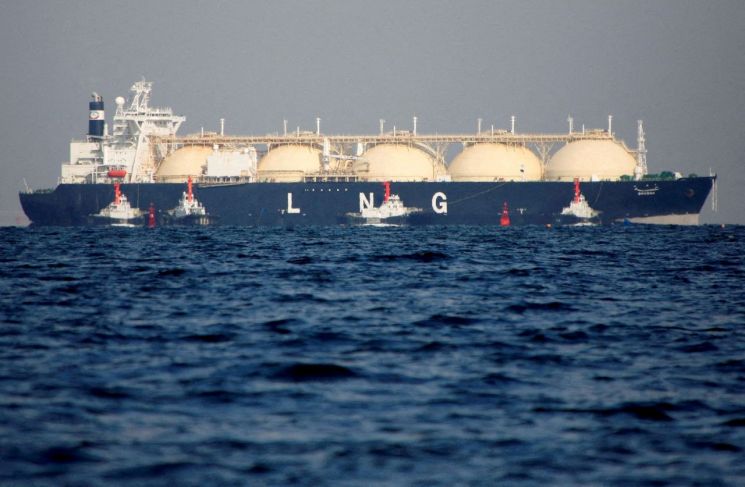
Domestic companies are also promoting infrastructure construction such as LNG storage tanks, expanding direct imports, and linking with hydrogen projects.
SK is increasing the volume of direct imports based on LNG terminals, and GS is expanding LNG direct imports and linking new businesses by securing shares in blue ammonia development in the United Arab Emirates (UAE).
Korea Gas Corporation is pursuing new businesses such as LNG bunkering for ships and LNG fuel supply for large trucks, and is reviewing commercialization of fuel cells, green hydrogen production, and carbon capture and storage (CCS) projects.
Since Russia's invasion of Ukraine, Europe has been in an emergency situation to secure LNG. The three Baltic states?Latvia, Estonia, and Lithuania?have already stopped importing Russian natural gas.
The British economic weekly The Economist recently pointed out, "If Russian President Vladimir Putin cuts off natural gas supplies to the Western world, it will not be easy to replace it with LNG," adding, "Europe must redirect LNG cargo ships bound for other countries to Europe. It is a situation that depends on the goodwill of countries around the world."
Europe relies on natural gas for 25% of its energy consumption, and about 40% of the natural gas used in Europe (as of 2019) comes from Russia.
Experts emphasize that private-sector joint cooperation must be strengthened to secure stable supply amid the global competition for LNG.
Jang Ki-yoon, senior researcher at POSCO Research Institute, said, "National reduction targets and follow-up measures to achieve carbon neutrality will continue to be strengthened, especially expanding the role of LNG in the energy sector," and added, "To revitalize the domestic LNG market, cooperation between the government and related industries must be strengthened, and regulatory relaxation and support measures should be promptly implemented."
© The Asia Business Daily(www.asiae.co.kr). All rights reserved.
![Clutching a Stolen Dior Bag, Saying "I Hate Being Poor but Real"... The Grotesque Con of a "Human Knockoff" [Slate]](https://cwcontent.asiae.co.kr/asiaresize/183/2026021902243444107_1771435474.jpg)
















