'Economic Capital' Shanghai Sees Surge in COVID-19 Cases, Prolonging City Lockdown
Economic Growth Rate Revised Downward Repeatedly This Year... Difficult to Modify COVID Policy
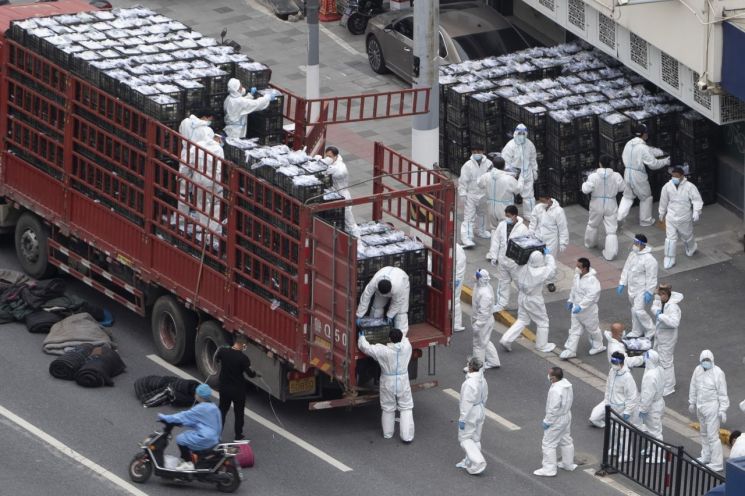
[Asia Economy Reporter Kim Hyun-jung] The surge in COVID-19 cases has made it difficult to predict the duration of the lockdown in Shanghai, China's economic capital, increasing the burden on the Chinese economy. As the possibility of achieving the 5.5% economic growth target set by China diminishes, attention is also focused on whether the long-standing zero-COVID policy will be revised.
According to the National Health Commission of China on the 6th, the daily number of new COVID-19 cases in China on the 4th reached 16,412, surpassing the previous record of 15,152 cases set on February 12, 2020, during the early stages of the outbreak. This was largely due to more than 13,000 cases confirmed simultaneously in Shanghai alone. Shanghai had initially planned to lift the city lockdown on the 5th, but city authorities announced they would continue the lockdown due to the surge in cases.
Shanghai is the financial and trade hub of China, accounting for 3.8% of the country's total Gross Domestic Product (GDP). Along with the neighboring Jiangsu Province, Zhejiang Province, and Anhui Province, it forms the Yangtze River Delta economic zone, sharing the role of a manufacturing base hinterland. These cities collectively account for 25% of China's GDP.
However, the strengthened quarantine guidelines have caused significant disruptions to logistics functions in these regions. Currently, freight drivers in China must confirm a negative COVID-19 test within 48 hours to enter their jurisdiction, with some areas requiring this within 24 hours. According to Wind Data, as of the 1st, the nationwide road freight flow index was 92.49, down 22.4% year-on-year. Shanghai (37.33) and Jilin (16.12) saw even larger declines of 69.7% and 86.7%, respectively. In the last week of March, cargo handling volumes at major public logistics hubs in China plummeted 23.4% compared to the previous year.
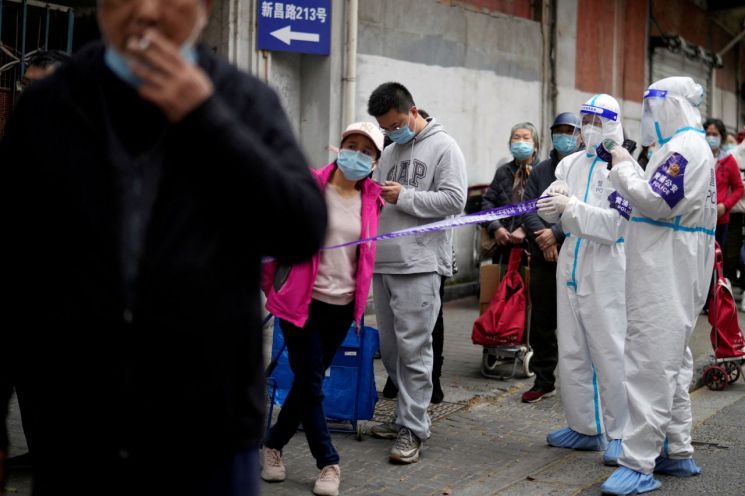
According to the National Bureau of Statistics, with widespread full or partial city lockdowns in Jilin and Guangdong provinces in March, China's manufacturing Purchasing Managers' Index (PMI) was 49.5, re-entering contraction territory for the first time in five months. The non-manufacturing PMI, reflecting the service sector, also fell below the critical 50 mark to 48.4, the first drop in seven months.
However, it appears difficult for China to immediately revise its 'zero-COVID' policy. This is especially true given that Chinese President Xi Jinping recently emphasized strict control and responsibility over quarantine measures in Hong Kong, underscoring the mainland's quarantine principles. International organizations, multiple credit rating agencies, and investment firms have all recently downgraded China's growth forecasts based on the assumption that the existing policy will be maintained.
The World Bank (WB) projected China's economic growth rate at 5% yesterday, below the target of 5.5%, and warned that if the COVID-19 situation and related controls persist, growth could fall to 4%. Morgan Stanley lowered its growth forecast from 5.1% to 4.6%, anticipating China will maintain its zero-COVID policy. Wang Tao, UBS's China economist, stated in a recent report, "At this stage, the Chinese government is expected to prioritize epidemic control over growth," adding, "If such controls continue throughout the year, the growth rate could fall into the 4% range."
© The Asia Business Daily(www.asiae.co.kr). All rights reserved.
![Clutching a Stolen Dior Bag, Saying "I Hate Being Poor but Real"... The Grotesque Con of a "Human Knockoff" [Slate]](https://cwcontent.asiae.co.kr/asiaresize/183/2026021902243444107_1771435474.jpg)
















