Strong Ultraviolet Rays Can Cause Eye Diseases Such as Cataracts and Pterygium
"Protect Your Eyes with Sunglasses and Hats During Prolonged Outdoor Activities"
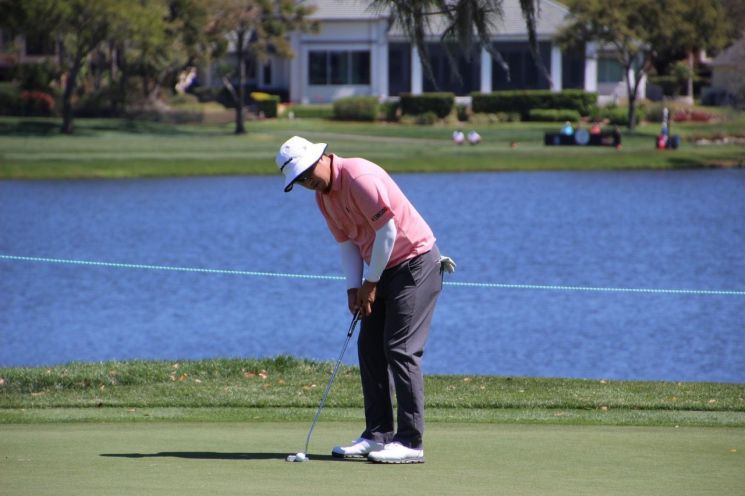
[Asia Economy Reporter Lee Gwan-ju] It is known that the golf population in South Korea exceeds 5 million annually. In particular, the number of people enjoying golf has significantly increased recently among young adults in their 20s and 30s, as well as middle-aged and older adults. As the spring season arrives, bringing the peak time for outdoor golf, one crucial aspect not to be overlooked is 'eye health.' This is because prolonged outdoor activities such as golfing can negatively affect eye health.
In spring, the ultraviolet (UV) index is more than twice as high compared to winter. Moreover, when on the field, it takes at least 5 hours, and being on grass without shade increases exposure time to UV rays. Prolonged exposure of the eyes to UV rays can cause damage to the corneal epithelium covering the pupil and allow UV rays to penetrate inside the eye, damaging the lens and retina. This not only accelerates retinal aging but can also lead to eye diseases such as cataracts or pterygium.
Cataracts, a condition where the lens becomes cloudy and vision appears blurry, are mainly caused by aging, but excessive UV exposure can accelerate their onset. The more the eyes are exposed to UV rays, the more degeneration occurs in the lens. Pterygium is an eye disease where fibrovascular tissue proliferates from the white part of the eye toward the pupil, growing in a triangular shape toward the center of the cornea, also known as "surfer's eye." Continuous and prolonged UV exposure causes repeated irritation and inflammation of the conjunctiva on the white part of the eye, leading to degeneration and making pterygium more likely to develop. In fact, it is more common among people who engage in outdoor activities with high sun exposure, such as surfing.
Besides UV rays, spring brings large temperature fluctuations, pollen, yellow dust, and fine dust, all of which can irritate the eyes during outdoor activities. This can cause allergic conjunctivitis, characterized by dry, stinging eyes, foreign body sensation, itching, swelling, and redness. Rubbing or touching the eyes during this time can cause corneal injuries and lead to keratitis, resulting in decreased vision and corneal opacity. If you have dry eye syndrome, symptoms can worsen. When the cornea is dry, dust and pollutants easily adhere to it, and insufficient tears make it difficult to remove foreign substances.
When going for a spring golf round, it is important to protect your eyes from external irritants by wearing a hat and sunglasses. Sunglasses with a UV protection rate of 99% or higher are recommended. However, UV coating effectiveness is known to decrease after more than two years, so it is advisable to check the UV protection rate at an optical store and replace sunglasses if the rate drops below 70%. Choose a hat with a brim that does not obstruct your field of vision but covers the sides and front as much as possible.
Jang Jae-woo, director of Kim Eye Hospital, said, “While enjoying various outdoor activities including golf, do not be complacent just because the sunlight is not strong, and be sure to take care of your eye health as well.” He added, “Especially for those undergoing treatment for macular degeneration, diagnosed with early-stage cataracts, or suffering from dry eye syndrome, it is recommended to pay extra attention.”
© The Asia Business Daily(www.asiae.co.kr). All rights reserved.
![Clutching a Stolen Dior Bag, Saying "I Hate Being Poor but Real"... The Grotesque Con of a "Human Knockoff" [Slate]](https://cwcontent.asiae.co.kr/asiaresize/183/2026021902243444107_1771435474.jpg)















