Knowing My Butt Shape Through Self-Diagnosis
[Asia Economy Reporter Jin-kyung Lee] The more time we spend sitting, the weaker our buttocks become? Then, what constitutes a healthy buttock? Although the shape of the buttocks can vary depending on lifestyle habits and body type, a common factor is that buttocks with adequate muscle are considered healthy. The muscles inside the buttocks not only make the buttocks look good externally but also play a very important role in stabilizing the body so that we can walk upright. Let's explore how neglecting the aging of buttock muscles affects joint health and gait, and take some time to check our own buttocks through self-diagnosis, showing interest and managing them healthily.
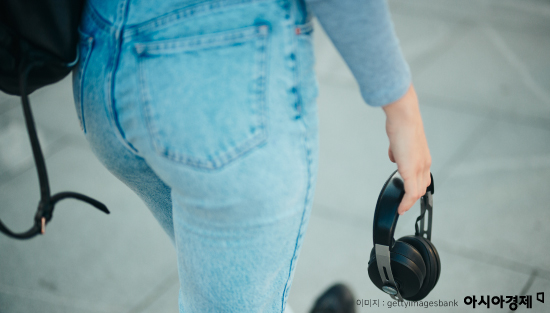
● Strong buttock muscles are essential for walking well?
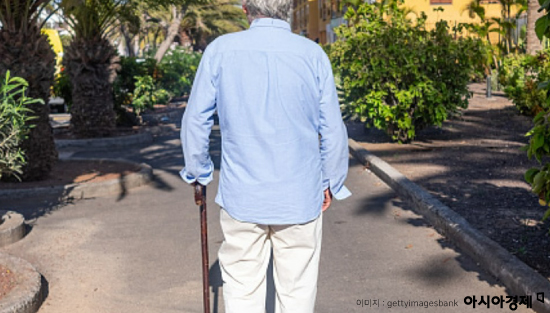
To walk upright well even as you age, you need to manage your buttock muscles properly. The buttock muscles are among the largest muscles in the body, and the 'antigravity muscles' that make up the buttocks support and balance the body, enabling upright walking. Due to aging, the buttock muscles weaken and degenerate. This weakens the support for the lower back, causing the back to easily bend and joints to be damaged, making it difficult to walk straight, often leading to the use of a cane or waddling gait.
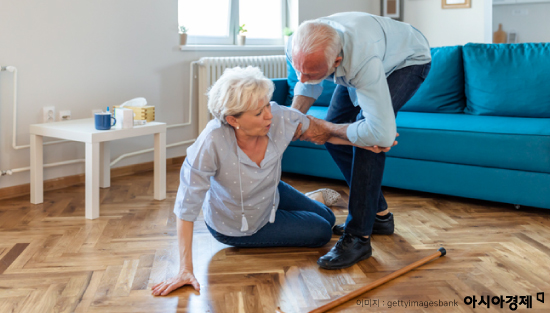
● Frequent falls are also due to buttock muscles?
Our body has a self-balancing ability called the 'righting reflex,' which is controlled by the 'antigravity muscles' that resist gravity. The largest 'antigravity muscles' in the body are located in the buttocks. As the buttock muscles gradually degenerate with aging, balance deteriorates, leading to more frequent falls. If you maintain strong buttock muscles through regular care, you can reduce the risk of falling and serious injuries, so it is advisable to pay attention to your buttock muscles as you age.
● When does buttock muscle degeneration begin?
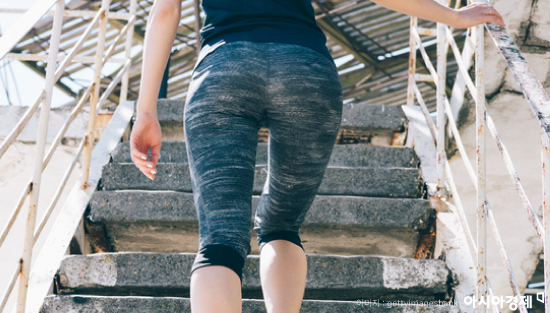
Aging can start as early as the late 20s, and muscle weakening due to aging typically begins in the 30s. Buttock muscles usually start to degenerate gradually from the 30s, often without noticeable symptoms. Additionally, prolonged sitting and lack of care can accelerate muscle weakening, so caution is necessary.
▶ Buttock health status in the 30s to 40s
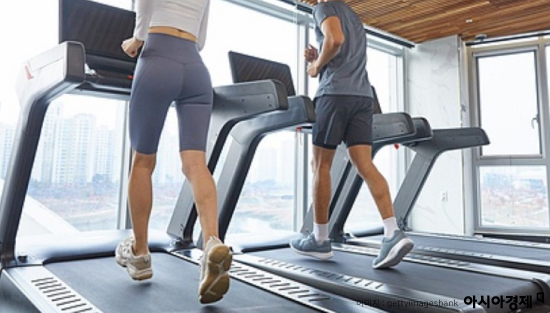
This is the period when fat increases from the boundary between the buttocks and thighs to the whole body. Compared to youth, the time spent walking or moving decreases, causing the buttock muscles to weaken and the shape of the buttocks to gradually flatten. The back may become hunched like a shrimp, increasing the burden on the shoulder and neck joints, potentially leading to joint diseases such as herniated discs.
▶ Buttock health status in the 50s to 60s
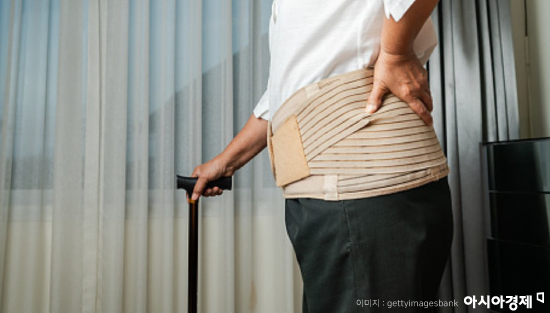
Muscle loss becomes so significant that the curvature of the buttocks disappears. The decline in buttock muscle strength becomes prominent, causing pain or discomfort in the lower body and lumbar joints, and walking speed slows down. People tend to avoid walking more than before, resulting in a more awkward gait and increased joint pain.
● What shape are my buttocks? Self-diagnosis
1) Stand with your back against a wall. (It is important not to lean on the wall!)
2) Spread your feet apart so that a fist can fit between them, with toes pointing in your usual standing direction.
3) Slowly move your back closer to the wall and stop when any part of your body touches the wall.
4) Check which part of your body is touching the wall.
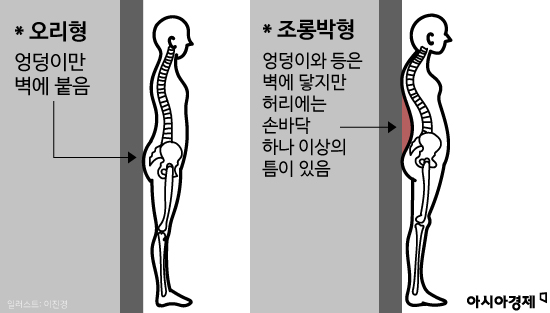
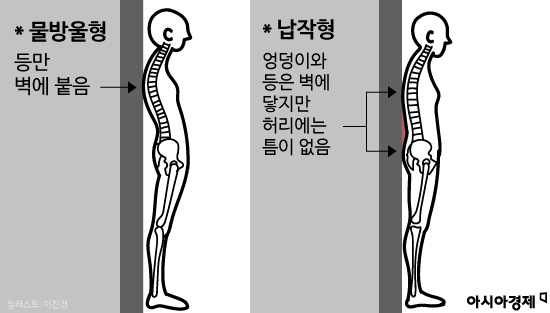
Buttocks are classified into four shapes: duck, flat, gourd, and water drop. Among these, the duck-shaped buttocks are the most developed. The development level decreases in the order of gourd, flat, and water drop. Diagnose yourself to see what shape your buttocks are and what points to be cautious about.
▶ Duck-shaped buttocks
If only the buttocks touch the wall, it is duck-shaped, the most developed type. The pelvis tilts clearly, and the upper body line is ideal. From the side, it is considered a type with a beautiful line. However, from the front, it often shows pigeon-toed feet, which can cause the buttocks to spread outward easily, so caution is needed.
▶ Gourd-shaped
The back and buttocks touch the wall, but there is a gap larger than a palm between the waist and the wall. The pelvis tilts slightly forward, often resulting in a hunched back. From the side, the boundary between the buttocks and thighs tends to sag. It is necessary to develop buttock muscles through exercises that strengthen them.
▶ Flat-shaped
If the back and buttocks touch the wall and there is almost no gap between the waist and the wall, it is considered flat-shaped. The pelvis tilts backward, and the buttocks hardly protrude. When viewed from the side, the spine has almost no S-curve, and the back appears nearly straight. Management and exercise are needed to prevent severe degeneration of the buttock muscles.
▶ Water drop-shaped
The upper body is clearly hunched, with only the back touching the wall and the buttocks not touching. The pelvis tilts backward, and the lower body shifts forward, so the buttocks are not prominent from the side. This is the least developed buttock shape, and efforts to manage buttock muscles are necessary for health and correcting the hunched upper body.
● Easy ways to protect your buttock muscles, try them out!
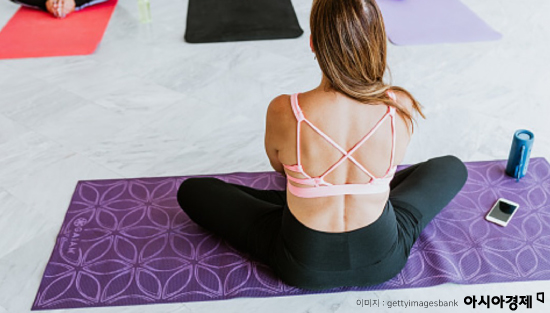
▶ Hip joint stretching (3 sets of 30 seconds each)
Sit on the floor with your knees wide apart as if sitting cross-legged, and place the soles of your feet facing each other. Leave a gap wide enough to fit a palm between the soles. Keep your upper body relaxed and place your hands behind you. Keep the outer sides of your knees close to the floor and spread them as much as possible, holding for 30 seconds. Perform a total of 3 sets.
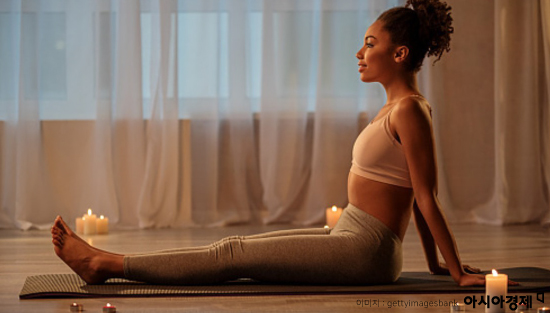
▶ Pelvic walk (walking with your buttocks)
Sit with your legs straight. Move your pelvis to walk forward four steps and then walk back four steps to return. This exercise involves walking with your buttocks, and it is important to focus on the returning movement.
© The Asia Business Daily(www.asiae.co.kr). All rights reserved.



















